
The lease is done, the eviction has gone through, and now you have furniture, clothing, random boxes and personal belongings scattered throughout the unit. The tenant is long gone. It’s still very much there. This puts landlords in a tough bind because the property needs to be ready for the next tenant, and you can’t simply toss everything in the dumpster, or you could be looking at a lawsuit. California’s abandoned property laws are strict, and they have tight deadlines, notices that you have to send and disposal requirements that you’ll have to follow. Messing them up can cost you real money.
This situation happens at thousands of California rental properties every year. The law is very strict about the timing and about the process - landlords have to send out the right notices, figure out what the belongings are worth and make sure everything gets stored correctly before they can take any next steps.
When you handle abandoned property, you get two big benefits - it protects you from wrongful disposal claims, and it proves you respect tenant property rights even after a tenant has moved out. A handful of steps are going to need your close attention along the way. You’ll have to figure out what the property is worth, deliver the needed notices on time, store everything securely during the mandatory waiting period and then dispose of the items based on their total value. Following these steps will keep you from running into expensive legal problems, and you can get your unit back on the market without any issues hanging over your head.
Here’s what California landlords need to know about abandoned tenant property.
Key Takeaways
- California landlords must mail and physically post written notices to tenants before handling any abandoned belongings.
- An 18-day mandatory waiting period applies to property worth under $700, counting weekends and holidays.
- Items totaling over $700 must be sold through a publicly advertised auction, not discarded or donated.
- Auction proceeds must be held temporarily for tenants to claim before landlords can keep the funds.
- Landlords should document everything with photos, inventories, and receipts, keeping records for at least two years.
Notice Requirements and the Waiting Period
After a tenant moves out and leaves their belongings behind, the first step is to send them a written letter. California law actually says you have to do this, and you’ll have to mail it to whatever address you have for them. Usually, that’s going to be the rental unit itself. But sometimes tenants will leave you a forwarding address when they move out. If they gave you one, that’s the address you should use for the letter.
After you’ve mailed the letter, you’ll also need to post a physical copy somewhere visible on the property itself. The reason for these two steps is to make sure your former tenant has the best possible chance of actually seeing the letter about their abandoned items. These aren’t optional steps either. The law says you’ll have to do both of them.

After you’ve mailed and posted the letter, you’ll need to wait for a bit before you can do anything with the items. Most belongings that are worth less than $700 need an 18-day waiting period, and you have to wait out the full 18 days before you’re allowed to sell or dispose of anything. The clock starts ticking on the same day that the letter goes in the mail. Weekends and holidays all count toward your 18 days - this detail is worth remembering because it sometimes creates uncertainty later on. If the 18th day happens to fall on a Saturday or Sunday, it doesn’t change the timeline at all. You count straight through every day without pausing or skipping over any weekends or holidays.
Sometimes you just won’t be able to find your former tenant at all. Maybe they never bothered to leave you a forwarding address, or the letter you sent in the mail came back to you because the address didn’t work. When this happens, you especially need to post that letter directly on the property. Even when there is no way to contact them, you’re still expected to wait out the full 18 days before you move forward with anything.
California law is pretty specific about what you’ll have to put in the letter. A couple of details need to be included. First, you’ll have to tell the tenant how they can claim their belongings. Second, the letter also needs to spell out what will become of their belongings if they don’t get back to you before the waiting period is up. It’s also worth reviewing what else managers should handle after a tenant moves out to make sure nothing falls through the cracks.
How to Review Property Value Thresholds
The $700 threshold represents an important legal benchmark for landlords who have to handle property that tenants leave behind. The law makes you calculate everything together as one combined total value - not look at each item separately. This distinction actually matters quite a bit in practice. Individual items like a lamp or chair won’t be worth much by themselves. Add up the smaller possessions (furniture pieces, kitchen supplies, clothing, random electronics and everything else) and the aggregate total climbs well past that $700 line quickly.
To work out what something is worth, your best bet is to look at what similar items are currently going for on the market. Online marketplaces are great for this - you can browse through active listings and see what buyers are actually willing to pay for used furniture or appliances that still have some life in them. Local resale shops are another great option to get a feel for what secondhand items go for in your local area. Every now and then, you’ll come across an item where the fair market value is hard to pin down on your own. In situations like that, it’s worth the investment to bring in a professional appraiser who will give you an accurate number to work with.

The value of an item can be pretty hard to pin down when the numbers don’t always line up. A beat-up teddy bear is a perfect example - the owner considers it priceless and irreplaceable, and the resale value is nothing to anyone else. Old electronics that are broken or outdated work just the same way. When they were brand new, fresh out of the box, they sold for premium prices at retail. Fast forward to now, and those same items in their broken condition won’t get you any buyers at all. The most reliable way to figure out the value is to base everything on what the item would actually sell for in the market, not what it originally cost, and not on whatever sentimental value the owner might attach to it.
Higher-value items follow different rules, and they give tenants more time and extra opportunities to come back and claim what they left behind. Understanding how to handle problem tenants in San Diego can also help you avoid these situations from the start. Landlords in California should also be familiar with California’s abandoned property laws to ensure full legal compliance when disposing of or storing leftover belongings.
Steps for Your Disposal and Auction
Once the needed storage period has wrapped up and your tenant still hasn’t come back for their belongings, you’ll need to work out what to do with everything that got left behind. What you’re allowed to do with the disposal can vary quite a bit and mostly depends on the total value of the items.
When everything comes to less than $700 in total, you have a few ways to take care of the disposal. Items that are worthless or broken can go right in the trash. Anything that’s still usable can either be donated to a local charity, or you can keep whatever you want for yourself. The $700 mark was designed to simplify matters for landlords who are working with smaller amounts of abandoned property - it just makes the disposal a whole lot simpler when the total value is that low.
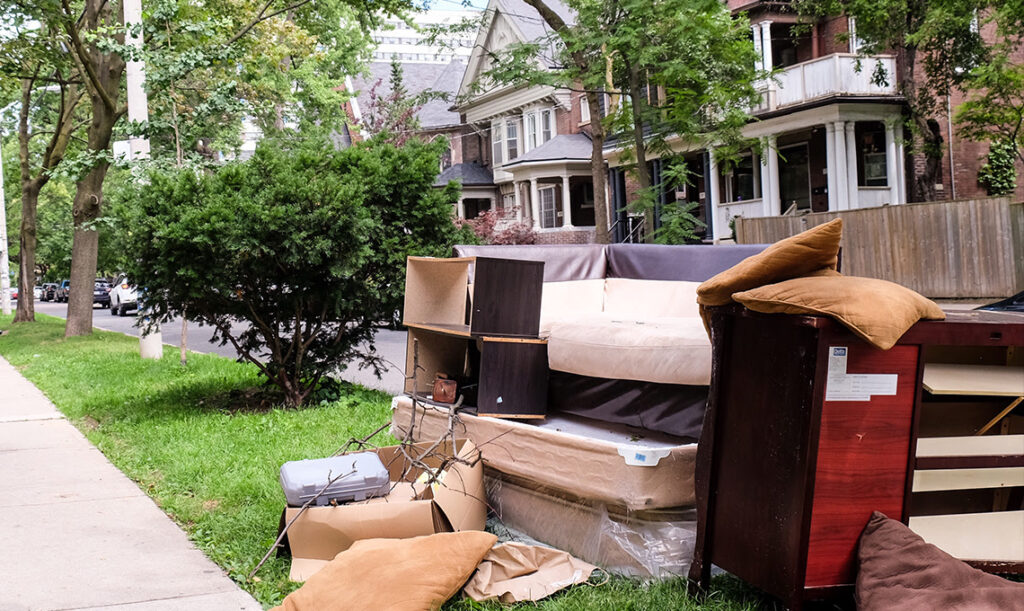
Once the total value goes above $700, though, you’re going to need to take care of the property differently. At that point, California makes you sell the items through a public auction. You can’t simply toss them or give them away once they’re worth that much.
A public auction has to be advertised because buyers can’t show up if they don’t know that it’s happening. The state actually put this into law to protect tenants and give them a fair shot at recovering at least some money from their property. The minimum bid amount should actually match what the items are worth, so the whole process makes financial sense for everyone involved.
The auction proceeds aren’t yours to keep yet. As the landlord, you’ll need to hold onto that money for a while just in case the tenant decides to come back and claim it. California law outlines how long you’ll have to keep these funds available before they officially become yours.
Some items just don’t work the same way, and they won’t follow the standard disposal process that you’re probably used to. Hazardous materials are a prime example of this - these actually need to go to designated places that can take care of them safely, and you can’t throw them in with your normal trash. Food that can spoil is another category that needs immediate attention because it’ll rot fast and create health problems (and the smell will be awful). Medications, especially prescriptions, also need special handling since controlled substances can’t legally go in the garbage or be given to others.
When you hold an auction and not a single person places a bid, you have a couple of options at that point. You can try to auction everything off again (maybe the timing was off, or the right buyers just weren’t there that day), or you can go ahead and dispose of the items as long as you’ve made a genuine attempt to sell them first. The law recognizes that some property just won’t interest any buyers even when you’ve done everything by the book.
Keep the Records That Protect You
Complete documentation is really important when you have to deal with abandoned property at one of your rentals. Former tenants have a habit of returning weeks or months after they’ve moved out to complain about how their belongings were handled, and without solid records on your side, you could be looking at a legitimate legal problem. Strong documentation protects you from disputes and gives you something concrete to reference if a tenant tries to claim you mishandled their property.
Documentation is probably your best protection when you deal with abandoned property. Take photos of everything before you touch or move anything around - what you’re creating is a visual record that shows what was left behind and what condition it was all in. A written inventory matters just as much as the photos, and it’s worth taking your time on this part. List out each item along with what you think it may be worth (even a rough estimate is better than nothing). The written list becomes part of your official documentation and could actually matter quite a bit if anyone ever disputes what was there or what shape it was in.
Keep a copy of each letter that goes out to your tenant. Save the first letter you send them about the abandoned property, and then hold on to any other messages or communications that go back and forth afterward. Every single receipt and paperwork from everything that you do moving forward needs to be saved with the rest of your estate documentation. Hauling a truck full of items to the dump means you’ll have to hold onto that receipt. Donating goods to a charity or local organization means you should get written confirmation from them before you leave. Selling items at an auction means those sales records need to be filed away, too.

These records need to stay in your files for a minimum of 2 years after a tenant moves out. A lot of landlords actually hold onto them for much longer than that, and it can help cover you later if any disputes or problems pop up. Electronic backups also make lots of sense to have alongside your physical files - they take up 0 storage space, and they give you an extra safety net in case anything ever happens to the originals.
All this documentation is extra work, and that’s for sure. But it serves one main purpose - it protects you later. Say a former tenant shows up months later and claims you mishandled their property. Well, if you’ve been keeping complete records all along, you’ll have everything you need to show what you did and when it all took place. Not having those records on hand means that your case just gets a whole lot harder to prove, even if you followed the process correctly. Understanding how to handle tenant damage documentation follows the same principles.
Organizing your files with just a little bit of effort on the record-keeping side will make the entire abandoned property process run much smoother for you, and it gives you some genuine confidence that you know where everything is, and you can put your hands on it right away. When you work with abandoned property situations, the last thing you want is to waste time digging through messy files to find one particular document. A basic system based on tenant names and addresses keeps everything accessible. Reducing your legal exposure as a landlord starts with habits exactly like this one.
Maximize Your San Diego Rental Property
Abandoned tenant property is one of the landlord’s responsibilities that most landlords don’t enjoy. The whole process can become a mess pretty fast if the right steps aren’t followed from the very beginning. Each state has different waiting periods and paperwork that need to be completed before any action can be taken on the items left behind. Once the right procedures have been followed completely, the unit can finally be cleared out and made ready for the next tenant without any worry about liability.
Abandoned property situations happen all of the time in the rental business, and newer landlords run into this problem more than they’d probably like to. Tenants leave their belongings behind for all kinds of reasons, and it turns into your job to take care of the items the right way.

Property management comes with all sorts of challenges, and abandoned belongings are one of the harder ones to work through. Your best protection is to have solid procedures already in place before these come up. When you’re prepared with reliable systems, you can work on what actually matters - keeping your investment profitable and your tenants satisfied.
Property management has many moving parts, and it takes experience to take care of the day-to-day operations well. At Palm Tree Properties, property owners are always our priority, and we take an active role with everything from tenant turnover to compliance with local laws. We help investors get the most out of their properties without having to stress about keeping up with every regulation and detail (and there are quite a few in San Diego). We’d love to talk about whether you need professional property management help or just want to know how much income your San Diego property should actually be generating each month. Ask for your free rental property evaluation, and we’ll show you how we can improve your returns and take all that stress off your plate.
FAQs
What must California landlords do with abandoned tenant belongings?
Landlords must send a written notice by mail and post it on the property, then wait 18 days before disposing of or selling items worth under $700.
How is abandoned property value determined in California?
Landlords must calculate the total combined value of all items using current market prices, not original retail cost or sentimental value. Online marketplaces and resale shops can help estimate worth.
What happens when abandoned property exceeds $700?
Items totaling over $700 must be sold through a publicly advertised auction. Proceeds must be held temporarily in case the tenant returns to claim the funds.
How long must California landlords keep abandoned property records?
Records must be kept for a minimum of two years. Many landlords keep them longer, and electronic backups are recommended alongside physical files.
Can landlords trash all abandoned items immediately after the waiting period?
No. Items under $700 can be trashed, donated, or kept. Items over $700 require a public auction. Hazardous materials, food, and medications require special disposal handling.