
For many San Diego rental owners, the decision to self-manage begins as a simple math problem. On paper, avoiding an 8% to 10% management fee feels like an immediate boost to your property’s cash flow. However, in a 2026 regulatory environment defined by the Tenant Protection Act (AB 1482), new appliance mandates (AB 628), and a surge in habitability litigation, “saving” that fee often triggers hidden costs that can exceed the expense of professional oversight by tens of thousands of dollars.
At Palm Tree Properties, we view residential property management as a discipline of risk mitigation and asset stabilization. The true cost of self-management isn’t just the hours spent coordinating repairs; it is the financial exposure created by outdated leases, slow delinquency response, and extended vacancies that erode your property’s valuation and your peace of mind.
The Reality of Self-Management in 2026
Self-managing a rental property in San Diego has transitioned from a part-time “hobby” into a high-stakes professional operation. Owners must now navigate a dense thicket of local and state regulations that change annually.
Why San Diego Self-Management is Growing More Complex:
- Habitability Compliance (AB 628): As of January 1, 2026, landlords are legally required to provide and maintain working refrigerators and stoves. Failure to comply can result in administrative fines of up to $2,500 and creates a binary “rent-withholding” defense for tenants.
- Security Deposit Modernization (AB 414): If a tenant pays a deposit electronically, you must now issue refunds via the same digital platform by default. Missteps in the strict 21-day move-out window can trigger statutory damages of up to twice the deposit amount.
- San Diego Tenant Protections (TPO): Local ordinances now provide “Just Cause” eviction protections that often apply from the first day of residency, removing the “no-fault” flexibility once enjoyed by small landlords.
Side-by-Side Comparison: Self-Managing vs. Professional Management
| Operational Feature | Self-Management (DIY) | Professional Management (Palm Tree Properties) |
| Leasing Velocity | 21–45+ Days on Market (DOM) | 14 Days or Less |
| Tenant Screening | Manual checks; risk of Fair Housing bias | Rigorous, compliant 2.5–3x income verification |
| Rent Collection | Personal follow-ups; high delinquency tolerance | Automated portals; immediate 3-Day Notice system |
| Legal Updates | Reactive (learning after a problem) | Proactive (systems updated before laws take effect) |
| Maintenance | “Retail” rates from random contractors | Volume-discounted, vetted vendor network |
| Refinance Readiness | Often lacks Trailing-12 (T12) clarity | Lender-ready monthly financial reporting |
| Eviction Handling | DIY legal research; high error rate | Coordinated through specialized counsel |
| HOA Oversight | Reactive response to violation letters | Proactive compliance monitoring |
| Inspection Cadence | Irregular or only when a problem arises | Scheduled move-in, periodic, and move-out audits |
| Reserve Management | Often non-existent or mixed with personal funds | Structured reserves for CAPEX and emergencies |
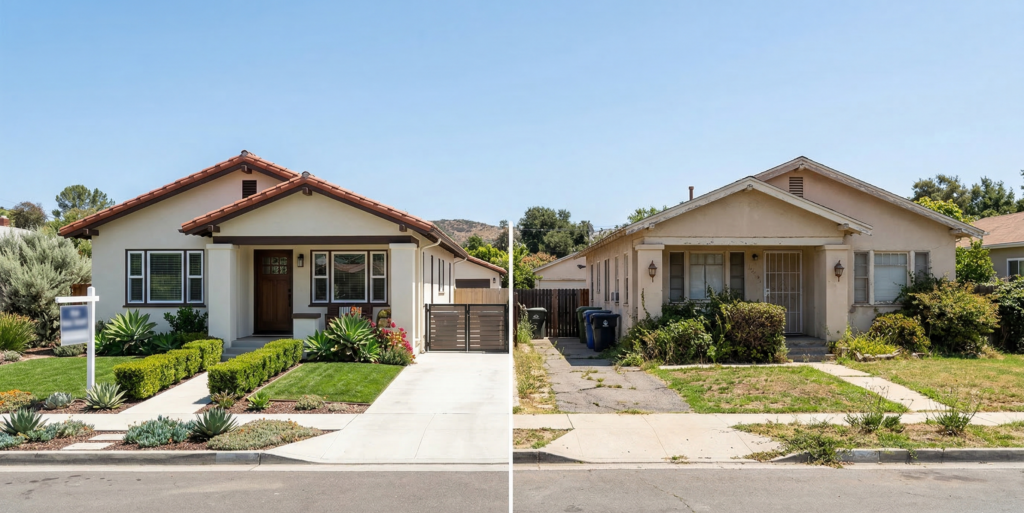
The Financial Modeling of Self-Management: The “DIY Discount” Debunked
To understand the true cost of self-management, you must look past the monthly fee and analyze the Effective Gross Income (EGI) and asset valuation.
Example: $3,500/Month San Diego Rental
Consider a standard single-family home. A DIY owner might save $350/month in fees ($4,200/year). However, consider these common DIY friction points:
- Vacancy Gap: If a professional manager leases the home 14 days faster than a DIY owner, that is a $1,633 gain in realized rent.
- Maintenance Inefficiency: DIY owners often pay 15–20% more for emergency repairs because they lack a dedicated vendor queue. On $5,000 of annual maintenance, that is a $1,000 loss.
- Rent Cap Miscalculation: Under AB 1482, if you miss a 5% + CPI increase window because you weren’t tracking the latest San Diego CPI (3.8% for 2026), you lose approximately $3,696 in compounding rent over three years.
The Math: The $4,200 “savings” is almost entirely wiped out by just two weeks of extra vacancy and a single missed rent increase. When you add the value of 100+ hours of owner labor, the “DIY Discount” actually becomes a net loss.

The High Cost of Habitability and Legal Failure
When self-management goes wrong in San Diego, the costs are not measured in hundreds, but in tens of thousands of dollars.
The “Slumlord” Lawsuit Exposure
In California, habitability lawsuits are a growing industry. Under Civil Code 1941, if a property is found to have “substantial” defects (mold, plumbing failure, or now a broken stove under AB 628), a tenant can sue for:
- Rent Abatement: A refund of all rent paid while the condition existed.
- Statutory Damages: Between $100 and $5,000 per violation.
- Attorney’s Fees: Recent San Diego jury awards have seen attorney fees exceed $50,000 for relatively minor habitability claims.
The Security Deposit Trap
Missing the 21-day deadline to return a deposit or provide an itemized statement is one of the easiest ways for a DIY landlord to lose in small claims court. If a judge finds “bad faith” retention (which often includes simply being disorganized), they can award the tenant three times the deposit amount. On a $3,500 deposit, a simple clerical error becomes a $10,500 judgment.
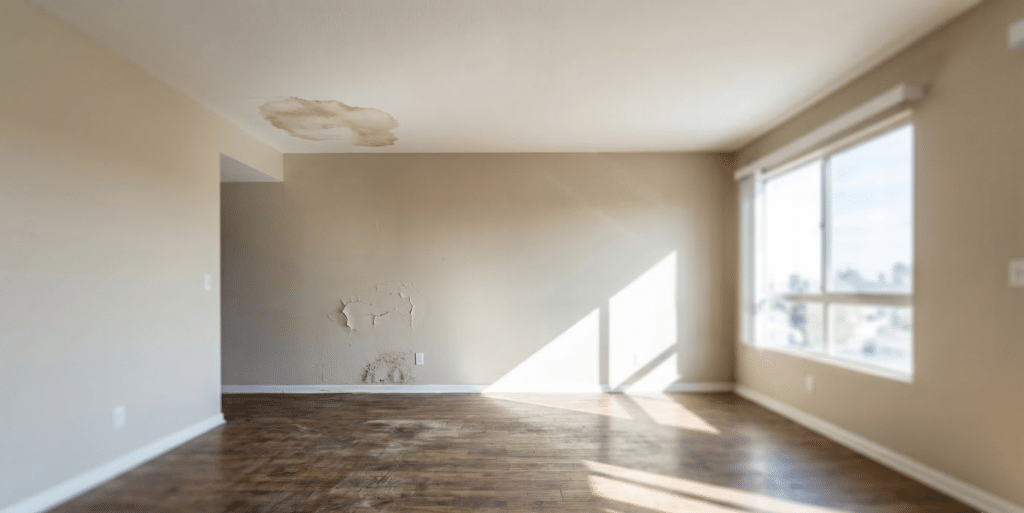
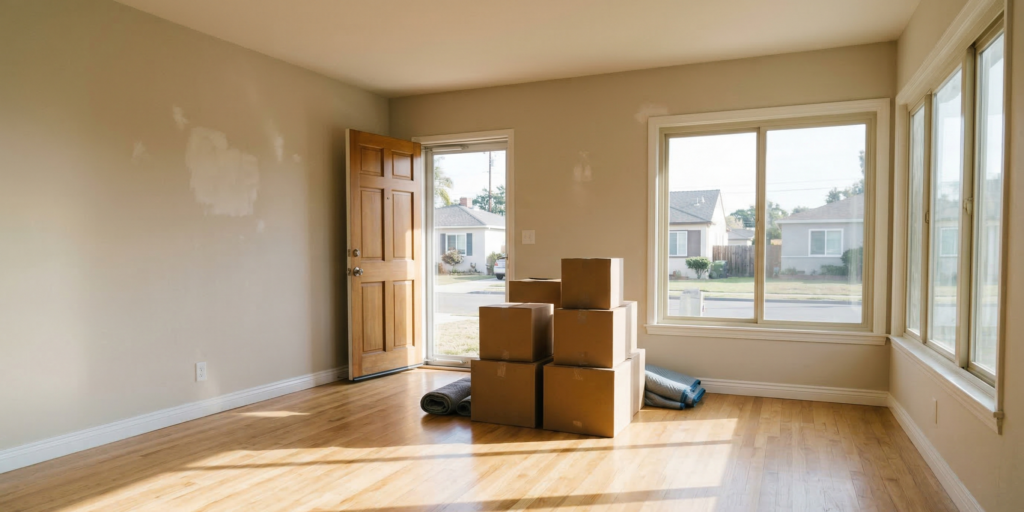
Itemizing Turnover Friction: The Cost of a Move-Out
A “turnover” is the most expensive event in the life of a rental property. DIY owners often underestimate the cumulative friction of a single move-out. For a $3,500/month San Diego home, a typical turnover breakdown looks like this:
- 30 Days Vacancy: $3,500 (DIY average DOM)
- Professional Painting: $2,200
- Deep Cleaning: $600
- Flooring Touch-ups: $1,500
- Lock Changes & Marketing: $500
- Utility Carry Cost: $250
- Total Friction: $8,550
Professional management focuses on “Turn Compression.” By pre-scheduling vendors and marketing 30 days before the move-out, we aim to reduce vacancy to 7–14 days, instantly saving the owner over $2,000 per turn.
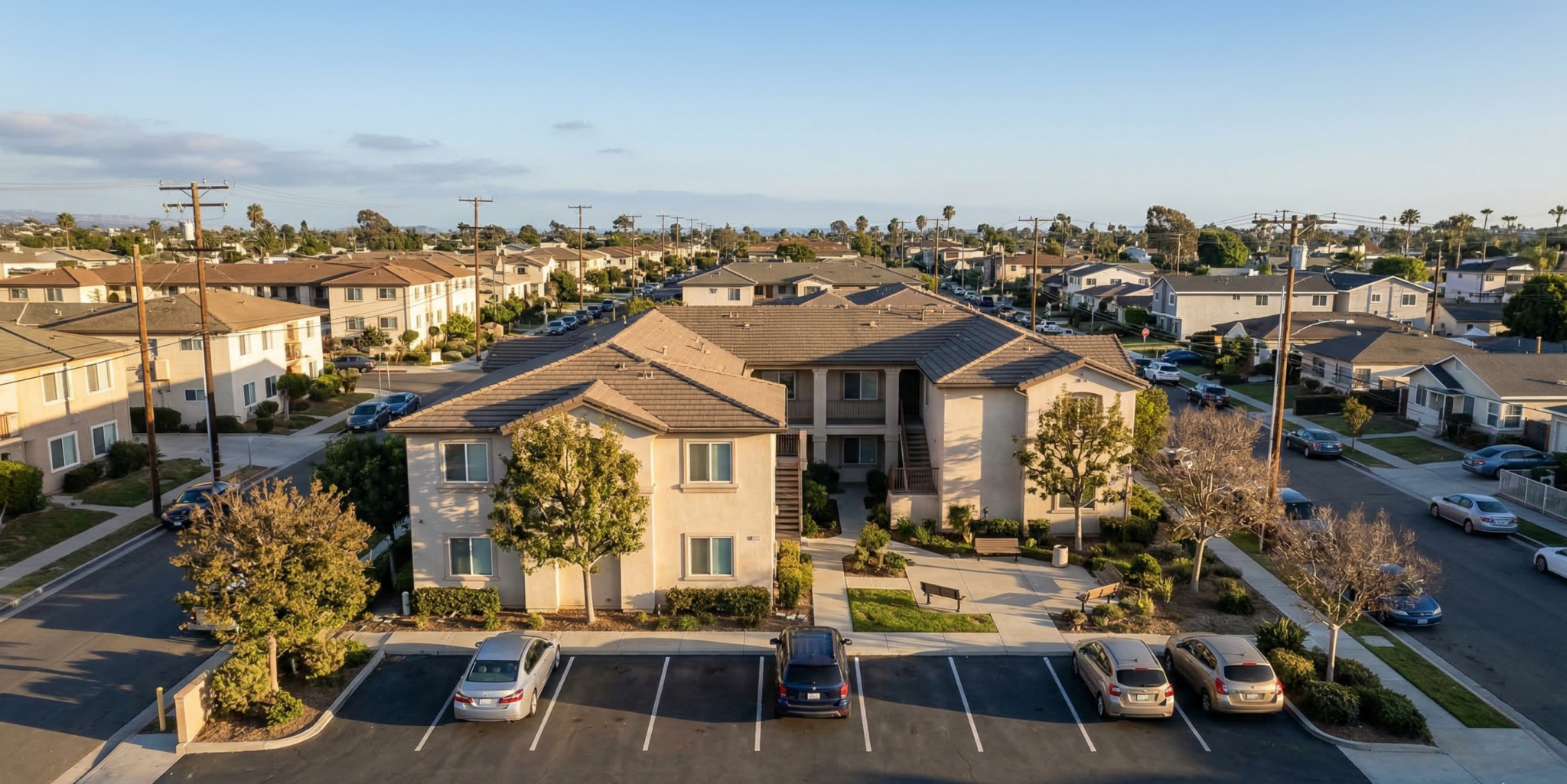
Small Multifamily Risk (2–20 Units): Beyond the Single Unit
Managing a 4-unit or 10-unit building in San Diego introduces “Multiplier Risk.”
- Stacked Vacancies: A DIY owner who has two units go vacant in December faces a “competing against yourself” problem. We use staggered lease expirations to ensure your rent roll remains stabilized.
- Expense Leakage: In small multifamily, common area maintenance (CAM) and water billing (RUBS) are the primary drivers of NOI. A DIY owner who isn’t aggressively auditing trash contracts or water meters often “leaks” 5–10% of their profit in unrecovered utility costs.
- T12 and CAPEX: Lenders look at your Trailing-12 (T12) statements. Inconsistent DIY record-keeping can disqualify you from the best interest rates during a refinance, costing you hundreds of dollars a month in debt service.
San Diego DIY Case Study: The Cost of Underperformance
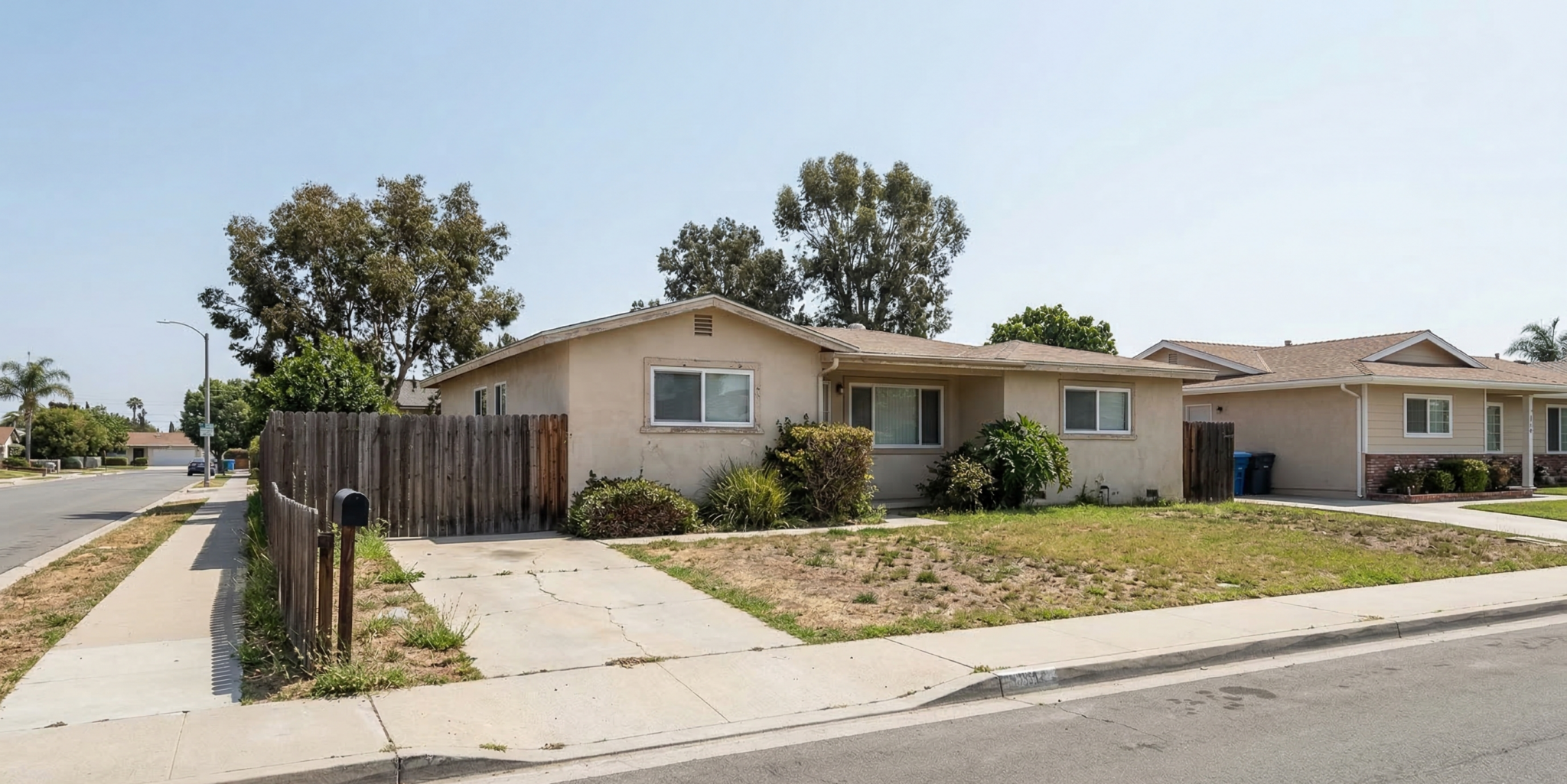
Consider a DIY owner of a 4-unit property in Mira Mesa.
- The Problem: The owner managed the property for five years without adjusting for AB 1482 rent caps or San Diego’s specific Tenant Protection Ordinance (TPO).
- The Friction: Two units became vacant simultaneously in December. Due to poor marketing, the units sat for 45 days.
- The Compliance Error: The owner issued a rent increase notice that used a generic template rather than the San Diego-specific CPI (3.8% in 2026), making the increase unenforceable.
- The Result: Between the extended vacancy and the lost rent growth, the owner suffered an $18,000 cumulative loss in a single year. Furthermore, when they attempted to refinance, the lender rejected the loan because the stabilized NOI was too low to meet DSCR requirements.
San Diego-Specific Management Challenges
The San Diego market presents unique geographic and infrastructural challenges that require local expertise:
- Coastal Corrosion: Properties in La Jolla and Pacific Beach face high salt air exposure, requiring specialized maintenance for HVAC and exterior fixtures.
- Aging Infrastructure: Neighborhoods like Clairemont feature 1960s-era plumbing (cast iron pipes). A DIY owner who doesn’t perform preventative hydro-jetting often ends up with a $15,000 slab leak emergency.
- Parking Constraints: In Metro areas like North Park, managing tenant parking is often more difficult than managing the rent. We implement strict parking addendums to prevent “unauthorized occupant” creep.
- ADU Complexity: With the surge of Accessory Dwelling Units, managing shared utilities requires sophisticated lease language that DIY templates lack.
20-Point Self-Management Risk Checklist
If you cannot confidently answer “Yes” to all 20, you are operating exposed.
- 2026 Lease Audit: Is your lease updated with mandatory AB 628 and AB 414 language?
- Habitability Defense: Do you have date-stamped photos of every appliance before move-in?
- 21-Day Deadline: Do you have a system to return deposits and receipts within exactly 21 days?
- AB 1482 Tracking: Do you know the exact maximum allowable rent increase for San Diego for 2026?
- Trust Accounting: Do you keep security deposits in a separate, non-commingled account?
- 3-Day Notice System: Can you serve a valid notice within 24 hours of a missed payment?
- Individualized Assessments: Do you have a written process for criminal background reviews?
- Insurance Gap Audit: Does your policy cover you if the property is vacant for more than 30 days?
- Utility RUBs: Are you accurately billing back for water/trash per local law?
- Vendor Insurance: Do you verify that every handyman has active general liability and workers’ comp?
- TPO Compliance: Can you provide “Just Cause” for a non-renewal under San Diego City rules?
- Notice of Entry: Do you provide the required 24-hour written notice for all entries?
- Rent Reporting: Do you report tenant payments to credit bureaus to incentivize behavior?
- Emergency Availability: Do you have a 24/7 response system that isn’t your personal cell?
- Lease Standard Reset: Have you audited your current tenants’ files for missing signatures?
- 1099 Compliance: Are you prepared to issue year-end 1099s to all vendors?
- HOA Coordination: Do you have a system to redirect violation letters to tenants?
- Refinance Preparation: Could you produce a clean T12 income statement for a lender tomorrow?
- Fair Housing Training: Have you completed a Fair Housing update in the last 12 months?
- Move-Out Logistics: Do you have a pre-vetted cleaning and “turn” crew on 48-hour notice?
FAQ
- What happens if I violate AB 1482?
Violating rent caps can result in court orders to return overpaid rent and statutory penalties. - How fast can a property manager lease my home in San Diego?
Our systems typically secure a qualified tenant within 14 days by syndicating the listing across 50+ platforms immediately. - Do managers charge on collected or scheduled rent?
We charge on collected rent. This aligns our interests with yours—we only get paid when you get paid. - Can I switch managers mid-lease?
Yes. We handle the “Lease Standard Reset” during transitions, auditing the existing security deposit and ledger for errors. - Can a property manager legally increase rent under AB 1482?
Yes. We track the annual CPI changes and provide the mandatory written notice required to implement legal increases up to the 10% state cap. - What happens if a tenant refuses entry?
Under Civil Code 1954, if a tenant refuses entry after proper 24-hour notice for a legal reason (repairs, inspections, or showings), it is a lease violation. We handle the enforcement and “Notice to Perform” process. - How long does an eviction take in San Diego?
An uncontested eviction in San Diego can take 30–60 days. However, if a tenant contests the case, it can extend to 90 days or longer. Professional screening is the only true defense. - What happens if I inherited a tenant with an outdated lease?
We perform an “Estoppel Certificate” process to lock in current terms and then implement a lease transition plan to move the tenant onto our legally vetted documentation.
Next Steps: Protect Your Rental Income
The difference between a successful investment and a legal liability often comes down to the quality of the operator. If you are currently self-managing, your highest risks are usually the ones you haven’t identified yet.
Request a “Second Opinion” Property Performance Review before your next lease renewal, insurance update, or refinance.


