For San Diego rental owners, the appeal of “cheap property management” is understandable. In a market where overhead costs-from rising insurance premiums to property taxes-continue to squeeze margins, a 4% or 5% management fee looks like an immediate win for your cash flow.
However, in the hyper-regulated California landscape of 2026, property management is not a commodity; it is a high-stakes operational discipline. When a firm competes primarily on price, they are forced to adopt a “high-volume, low-touch” business model. This approach often cuts corners in the three areas that dictate your asset’s success: tenant quality, maintenance oversight, and legal compliance.
At Palm Tree Properties, we view residential and commercial management as an investment in Net Operating Income (NOI) stabilization. What appears to be a $150-a-month savings in management fees frequently results in a five-figure loss when factoring in extended vacancies, legal penalties, and deferred maintenance.
The “Shadow Costs” of Discount Management
Low fees are rarely a result of superior efficiency. Instead, they usually indicate a lack of dedicated resources. In San Diego, “cheap” management often translates to an owner doing half the work while still paying for the privilege.
1. The Vacancy Math: Why Speed Beats Savings
Cheap property management companies often lack the budget for aggressive, multi-platform syndication. They may rely on a single free listing site, resulting in a property sitting vacant for 30-45 days while a performance-driven firm would have it leased in 14.
The Real Cost of a “Cheap” Manager’s Vacancy:
If your $3,500 rental sits vacant for an extra 20 days due to poor marketing, you lose $2,333 in realized rent. To “save” that much in management fees (assuming a 3% fee difference), it would take 22 months of management. You are essentially paying for two years of service in a single poorly managed vacancy cycle.
2. The “Nickel and Diming” Fee Structure
Firms that lead with a low base fee often make their profit through ancillary charges that are not immediately visible:
- Maintenance Surcharge: Adding 10-15% on top of vendor invoices.
- Leasing & Renewal Fees: Charging 50% to 100% of the first month’s rent for every new placement.
- Accounting/Portal Fees: Monthly charges just to access your own financial data.
Hidden Income Leaks in Small Multifamily Properties (2-20 Units)
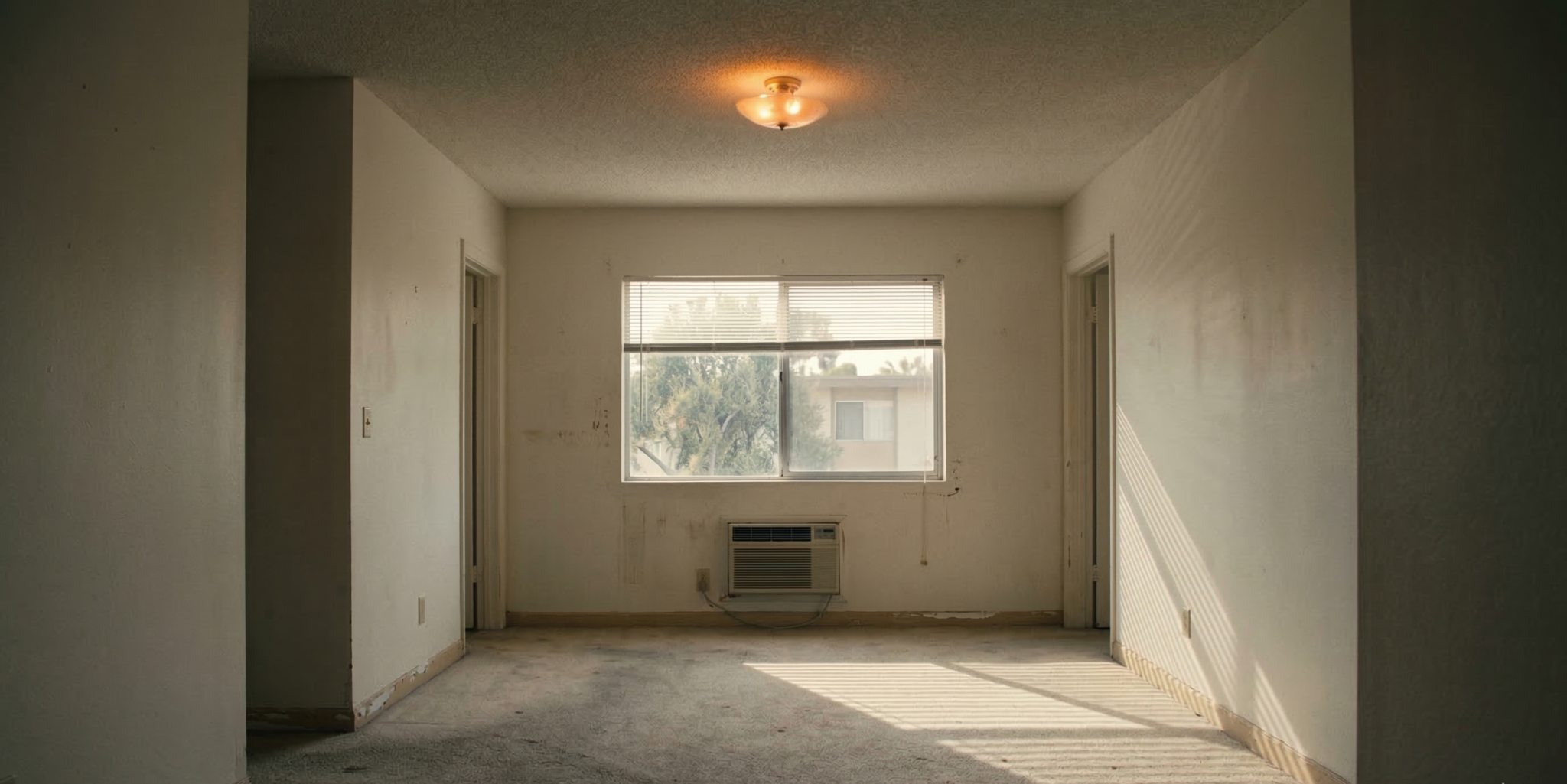
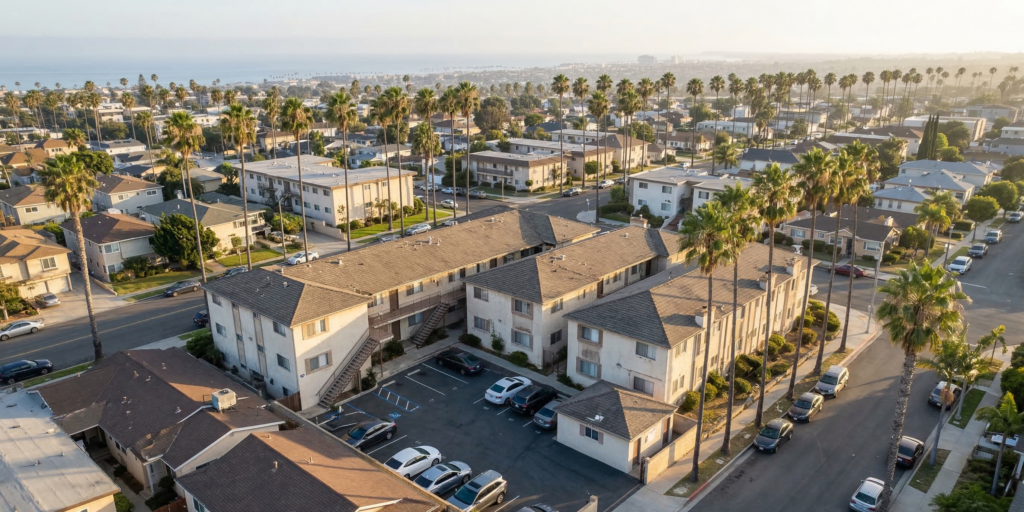
Small multifamily assets are the most susceptible to “revenue leakage” under cheap management. Without sophisticated systems, minor inefficiencies compound into significant NOI erosion.
- Under-Market Parking & Storage: In dense San Diego neighborhoods like North Park or Hillcrest, off-street parking is a premium asset. Cheap managers often bundle parking into the rent or fail to adjust storage fees annually, leaking $100-$300 per unit in potential ancillary income.
- Laundry Revenue Inefficiency: If your building has coin-op or app-based laundry, a low-cost manager rarely audits the vendor’s revenue splits or repair logs. This is “found money” that stabilizes your operating budget.
- Utility RUBS Failures: Ratio Utility Billing Systems (RUBS) allow owners to recover water, sewer, and trash costs. However, California’s 2026 regulations require strict disclosure of billing methodology. A cheap manager who miscalculates the formula or fails to provide the required itemized breakdown exposes you to tenant strikes and mandatory rent credits.
- Pet Rent Enforcement: With over 70% of San Diego renters owning pets, consistent pet rent ($50-$100/month) is an essential NOI driver. Cheap managers often fail to track unauthorized pets, losing revenue while increasing your wear-and-tear risk.
Why Cheap Management is Dangerous for Retail & Office Assets
Commercial assets carry a layer of operational complexity that discount firms simply cannot handle. When you pay for “cheap” commercial management, you are often buying a ticking time bomb in your ledger.
1. CAM Reconciliation Failures
Common Area Maintenance (CAM) reconciliations are the year-end process of comparing estimated charges against actual expenses.
- The Risk: Cheap managers often fail to reconcile within the 30-to-90-day window required by most San Diego leases.
- The Consequence: If you miss the deadline, you may lose the right to bill back for legitimate costs like property tax spikes or insurance increases.

2. NNN Lease & Estoppel Inaccuracies
In a Triple Net (NNN) lease, the tenant is responsible for base rent plus taxes, insurance, and maintenance. During a sale or refinance, a tenant must sign an estoppel certificate verifying lease terms. If a cheap manager has allowed unrecorded “handshake” modifications, these become binding upon you, potentially slashing your property’s value during a sale.
3. Certificate of Insurance (COI) Tracking Failures
The City of San Diego requires commercial vendors and tenants to maintain strict insurance levels. Cheap managers rarely perform the “policy-level” verification to ensure additional insured endorsements are actually in place. If a tenant’s policy lapses and an accident occurs, the liability rolls directly upstream to the property owner.

2026 San Diego Regulatory Risk Map: Operational Mechanics
Authority in property management is built on procedural literacy, not just naming laws. A discount firm “knows” the law; an elite operator has a “process” for it.
1. AB 1482 & TPO: The Procedural Trap
Under the California Tenant Protection Act (AB 1482), rent increases are capped at 5% plus CPI (3.8% for San Diego in 2026).
- The Process: For increases over 10% (cumulative over 12 months), California law now requires a 90-day written notice. For increases under 10%, a 30-day notice is required.
- Notice Delivery: Professional management uses certified mail or personal delivery with a signed proof of service. A “cheap” manager who sends a text or email is issuing an invalid notice that can be challenged in court months later, forcing you to refund all collected increases.
2. Just Cause & Relocation Triggers
San Diego’s Tenant Protection Ordinance (TPO) requires “Just Cause” for evictions. If an owner performs a “No-Fault” eviction (e.g., for a major remodel), they must provide relocation assistance equal to two or three months of rent. A low-cost manager who fails to document the “intent to remodel” or misses the relocation payment deadline can void the entire eviction, leaving you with a non-paying tenant and a massive legal bill.

The Insurance & Liability Red Flag Audit
Insurance carriers are tightening standards. A “cheap” manager who ignores property condition is often inviting a policy cancellation.
- Coastal Corrosion (La Jolla / PB): Properties near the ocean face salt air that accelerates the degradation of HVAC units. Skip the preventative maintenance, and a $1,200 repair becomes a $12,000 replacement.
- Deferred Maintenance Multiplier: Industry studies show that every $1 deferred in maintenance can translate into $4-$7 in future repair costs. Facilities with significant backlogs also suffer from reduced property values and difficulty attracting quality tenants.
- Loss-Run Impact: High-frequency, small-dollar claims-caused by poor screening or reactive maintenance-stay on your “loss-run” report for years, making your asset uninsurable for top-tier carriers.

Cheap vs. Professional Property Management: The Real Cost Breakdown
| Feature | Cheap Management (5% Fee) | Professional Management (Palm Tree) |
| Average Vacancy | 30-45 Days | 10-14 Days |
| Trust Accounting | Often non-compliant commingled funds | DRE-compliant, segregated trust accounts |
| Legal Compliance | Generic templates; high error rate | Hyper-local vetted documentation |
| Maintenance | Reactive / Unlicensed vendors | Proactive / Vetted vendor network |
| Refinance Impact | Low NOI due to under-market rent | Maximum NOI for optimal DSCR |
| Long-Term Value | Deterioration due to deferred repairs | Preservation & value growth |
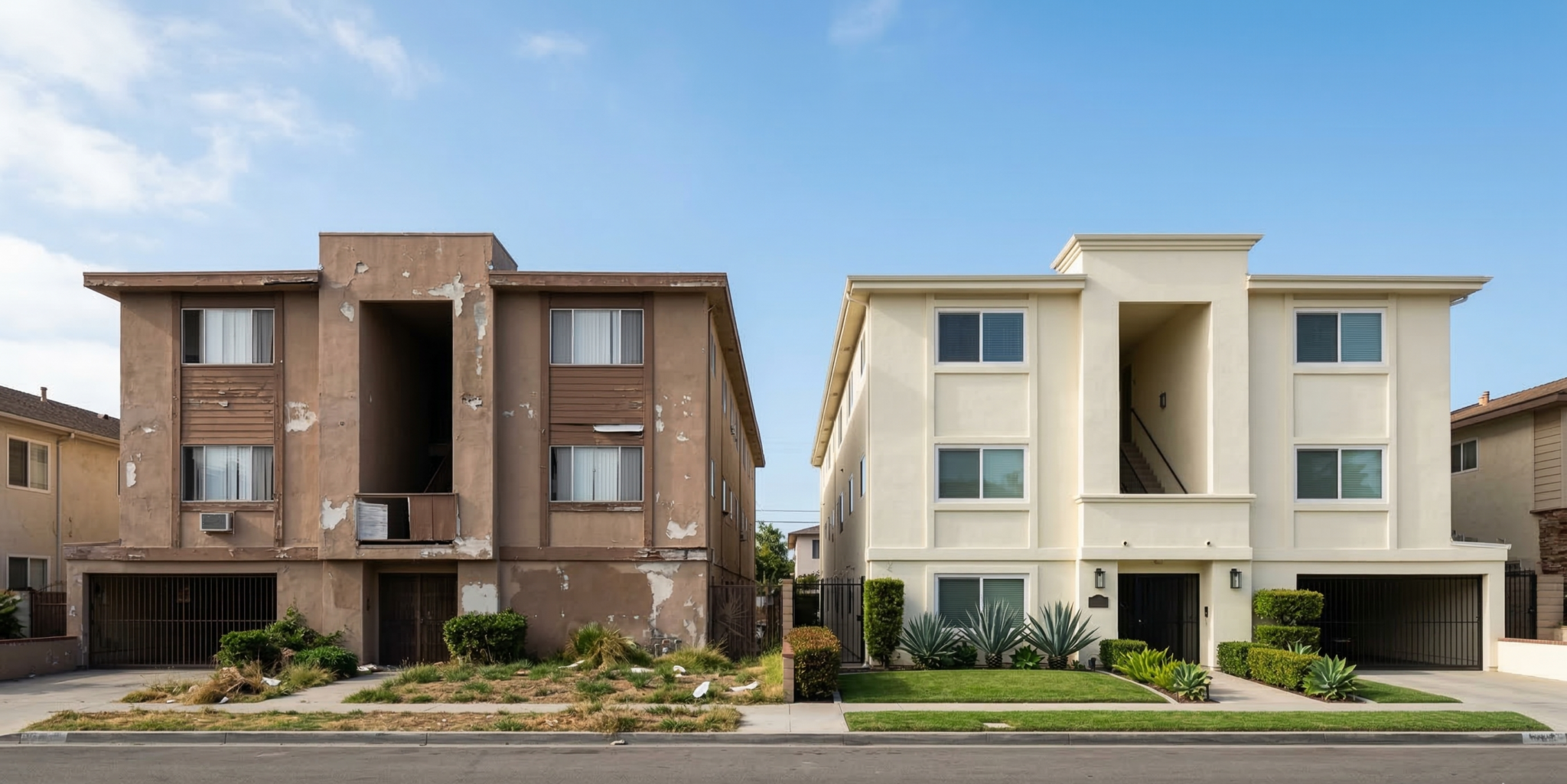
18 Warning Signs Your Property Manager Is Costing You Money
- Fee Secrecy: Advertising under 6% without a clear breakdown of ancillary costs.
- Communication Delays: Taking more than 24 hours to respond to owners.
- Generic Paperwork: Using non-California-specific lease templates.
- No Visual Proof: Claiming to perform inspections but providing no photos.
- High Vendor Turn: Frequently changing maintenance companies without explanation.
- Slow Lease-Ups: Properties sitting vacant for more than 21 days in high-demand zones.
- Rent Cap Ignorance: Not knowing the current San Diego CPI for AB 1482 increases.
- Incomplete Ledgers: Rent rolls that lack clarity on security deposit interests.
- Low Renewal Rates: High tenant turnover due to poor communication.
- Security Deposit Disputes: Frequent “small claims” friction regarding move-out itemizations.
- Lack of Submarket Knowledge: Pricing a La Jolla home the same as an inland El Cajon unit.
- Deferred CAPEX: No long-term planning for HVAC or plumbing lifecycles.
- Unrecovered CAM: For multifamily/retail, failing to reconcile utility usage.
- No Eviction Support: Charging you hourly fees for basic delinquency notices.
- Reactive Maintenance: Only fixing things after a tenant threatens to withhold rent.
- Missing Disclosures: Failing to include mandatory 2026 appliance habitability notices.
- Mixing Funds: No dedicated trust accounting for your property’s cash flow.
- “Overseer” Mentality: Simply relaying problems to you without providing solutions.

Switching to Palm Tree: The 30-Day Stabilization Timeline
If you recognize 3 or more of the signs above, you are operating exposed. Switching from a discount manager to a full-service operator is a structured process designed to stabilize your income.
- Day 1-7: Document Collection: We secure all tenant files, leases, and keys.
- Day 7-14: Lease & Compliance Audit: We review all active agreements for 2026 California compliance.
- Day 14-21: Tenant Notification: We introduce our professional systems and online portal to the residents.
- Day 21-30: Financial Stabilization: We perform a full rent-roll audit and initiate any necessary market rate adjustments or delinquency notices.
FAQ
- What happens if CAM is reconciled late?
If you miss the reconciliation window specified in your lease (usually 90 days post-year-end), you may be barred from collecting any underpaid expenses from the tenant. - How do I verify vendor insurance?
We maintain a database of COIs for all vendors, verifying they have active general liability and workers’ comp. A cheap manager often allows uninsured handymen on-site, shifting all injury liability to you. - Can deferred maintenance affect my sale price?
Yes. In a commercial sale, the buyer will perform a Property Condition Assessment (PCA). Every dollar of deferred maintenance found will often be “credited” back at a 2x or 3x multiplier against your sale price. - What financial reports should I receive monthly?
At minimum, you should receive a Cash Flow Statement, a Reconciled Bank Statement, and an Individual Beneficiary Ledger showing every dollar of trust activity. - How often should commercial tenants provide updated COIs?
Annually. We track expiration dates and block vendor payments or issue lease violations if a tenant’s insurance coverage lapses. - Is a 5% management fee ever legitimate?
Rarely for full-service management. A 5% fee is typically “rent collection only.” By the time you add leasing fees, maintenance markups, and administrative costs, the “true” fee is often 10%-without the professional oversight.
Free 12-Point Property Performance Diagnostic
If your property has not been audited in the last 12 months-specifically for 2026 compliance-you are likely underperforming. Don’t wait for a habitability lawsuit, an insurance cancellation, or a failed refinance.
Our Property Performance Review Audits:
- Lease Compliance: Alignment with 2026 AB 1482 and TPO standards.
- Rent Roll Accuracy: Comparison against current “Live Comps” in your submarket.
- Maintenance Backlog: Identification of deferred CAPEX and HVAC lifecycle risks.
- Vendor Licensing: Verification of current insurance and licensing for all labor.
- Insurance Exposure: Audit of current premium trends and coastal corrosion coverage.
- NOI Underperformance: Calculation of your true asset valuation at current market caps.