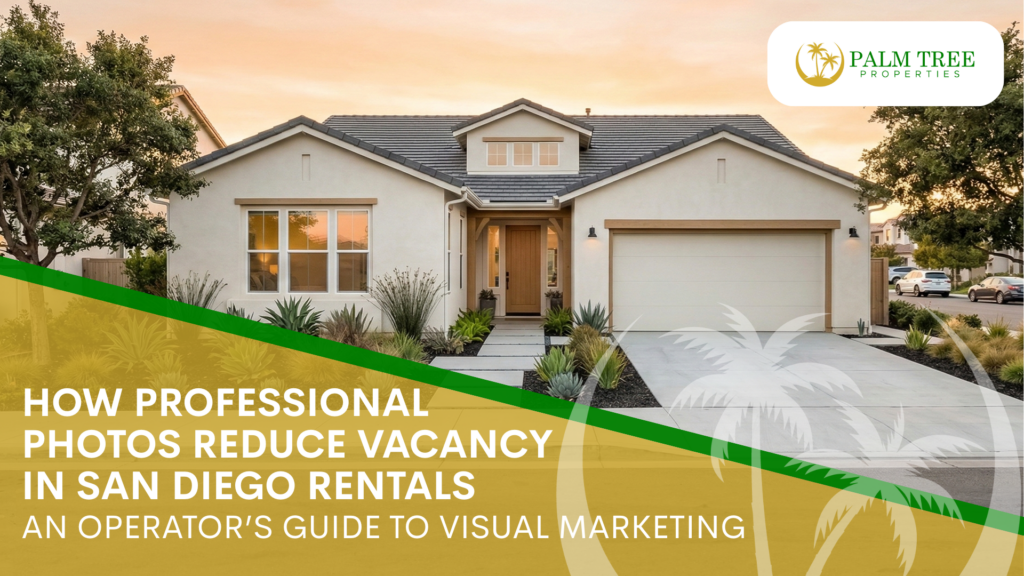
In the San Diego rental market, a listing’s first impression is often its only impression. For an elite property manager or an institutional investor, photography is not a creative choice-it is a critical component of a vacancy-reduction strategy. In a high-velocity market where the average vacancy period in late 2025 stabilized around 27 days, the ability to cut that timeline in half directly impacts the asset’s Net Operating Income (NOI).
Many owners view professional photography as an optional expense. However, with the median San Diego rent for single-family homes exceeding $4,800 in early 2026, a single week of vacancy costs an owner roughly $1,100. If a professional photo shoot costs $300 and reduces your “Days on Market” (DOM) by even four days, it has already achieved a 100% return on investment.
At Palm Tree Properties, we treat every rental listing like a high-stakes commercial asset. We understand that high-quality visuals do more than just “look good”-they signal professional management, attract higher-tier applicants, and create a legally defensible record of property condition under new California mandates.
The Statistical Advantage: Why Visuals Outperform Price
Data consistently shows that visual marketing is the most powerful lever in reducing rental vacancy. In a competitive environment like San Diego, you aren’t just competing with the property down the street; you are competing for the limited attention span of the modern “Lifestyle” renter.
- Leasing Velocity: Listings featuring professional photography generate up to 60% more interest in their first week on the market compared to those with amateur, smartphone-captured images.
- The 21-Day Threshold: In San Diego, if a listing has been live for 21+ days without a signed lease, the market is signaling a failure in either price or presentation. Listings with premium photos are 50% more likely to lease before hitting this high-risk zone.
- Inquiry Quality: High-quality photos act as a natural “pre-screen.” They attract “A-Class” tenants-professionals who value well-maintained properties and are willing to pay a premium for a home that is clearly cared for by a disciplined operator.

Vacancy Velocity Modeling: The Financial Cost of Delay
Every day a property sits vacant, the annualized ROI drops. In 2026, we utilize velocity modeling to determine when a listing is underperforming. Operators respond to hard numbers, and the math of vacancy is brutal:
Example Model: The $4,500 San Diego Rental
- 30-Day Vacancy Cost: $4,500 (Direct lost revenue).
- 5% Rent Reduction: If you drop the rent by $225 to “get it moving” after 30 days, that is an additional $2,700 annual loss.
- Total Annualized Friction: $7,200.
- Cap Rate Valuation Impact: At a 5% cap rate, this $7,200 loss in annual income results in a $144,000 reduction in property valuation.
| Days on Market (DOM) | Risk Level | Operational Action Required |
| 0-10 Days | Optimal | Maintain lead response velocity. |
| 11-21 Days | Normal | Audit lead-to-showing conversion rates. |
| 22-30 Days | High | Emergency Marketing Audit: Refresh photos or adjust price by 3%. |
| 31+ Days | Critical | Market Failure: Potential 5%+ price drop or “Listing Reset” required. |
If your property has been live for 21+ days without a lease, your marketing has failed. Every week beyond this point is a direct hit to your NOI that likely won’t be recovered by “holding out” for a higher rent.
2026 California Compliance: The AB 2801 Mandate
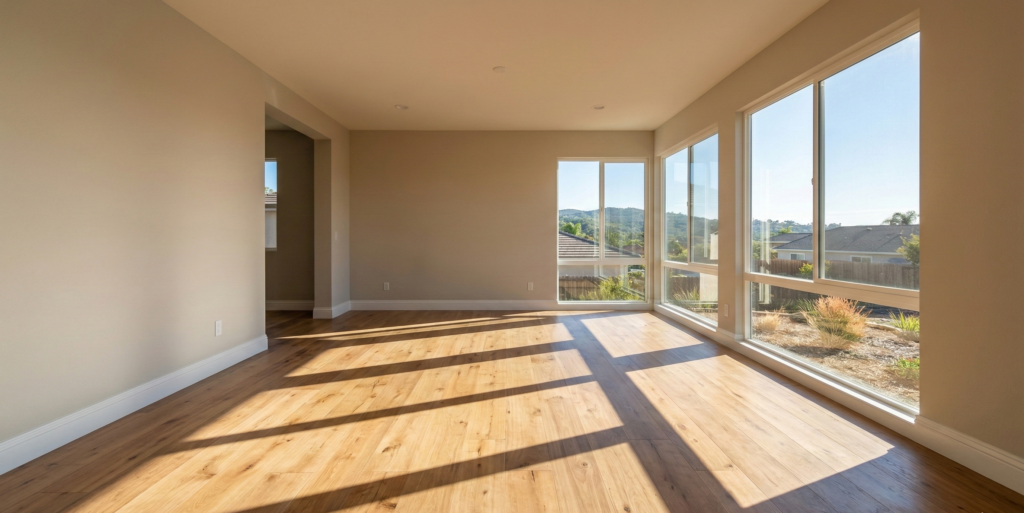
Beyond marketing, photography has now become a legal requirement in California. As of July 1, 2025, California Assembly Bill 2801 mandates a “photographic standard of evidence” for all new tenancies.
- Mandatory Move-In Photos: For all tenancies beginning after July 1, 2025, landlords must take and store photographs of the unit’s condition before the tenant takes possession.
- Security Deposit Deductions: You can no longer withhold funds from a security deposit for repairs or cleaning without providing “before and after” photographic evidence to the tenant within 21 days of vacancy.
- Statutory Penalties: Failure to provide these photos in “bad faith” can result in the loss of your right to claim any part of the security deposit and may lead to a court awarding the tenant twice the deposit amount in damages.
By investing in professional “marketing” photos at the start of a lease, you are simultaneously building a legally defensible baseline of the property’s condition, protecting you against future small claims disputes and habitability claims.

Professional Photography Checklist: The Operator Standard
A professional rental listing is more than just a few wide shots. At Palm Tree Properties, we follow a rigorous 20-point checklist to ensure every asset is positioned for maximum absorption.
Pre-Photography Turn Checklist
- Neutralize Odors: Ensure no pet or cooking odors are present during the shoot.
- Lightbulb Audit: Replace all burned-out bulbs with consistent “warm white” LED temperatures.
- Vent & Grate Cleaning: Dust all HVAC returns and baseboard heaters.
- Exterior Power Wash: Remove salt air residue and cobwebs from entryways.
- Dated Hardware Update: Replace rusted or dated cabinet pulls and faucets to modernize the “look” for pennies.
Interior & Compliance Focus
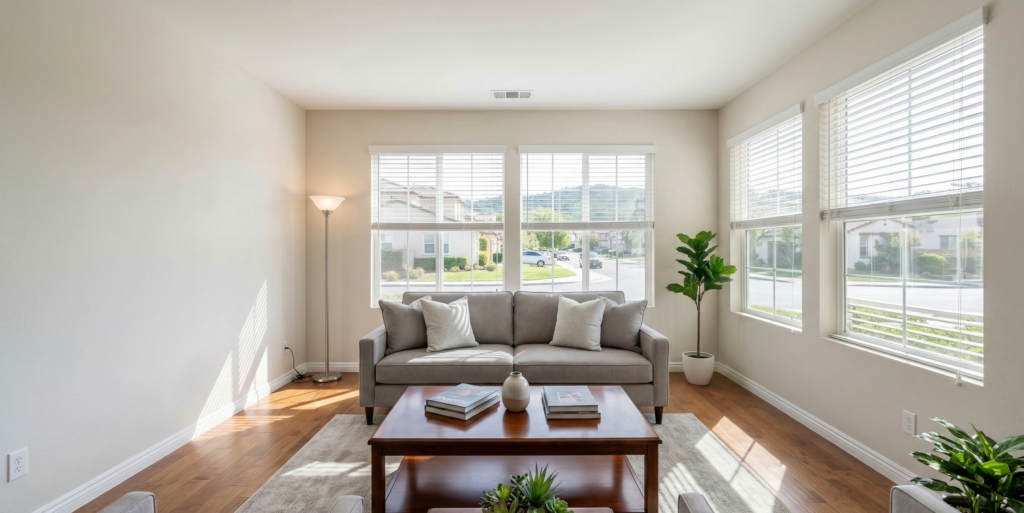
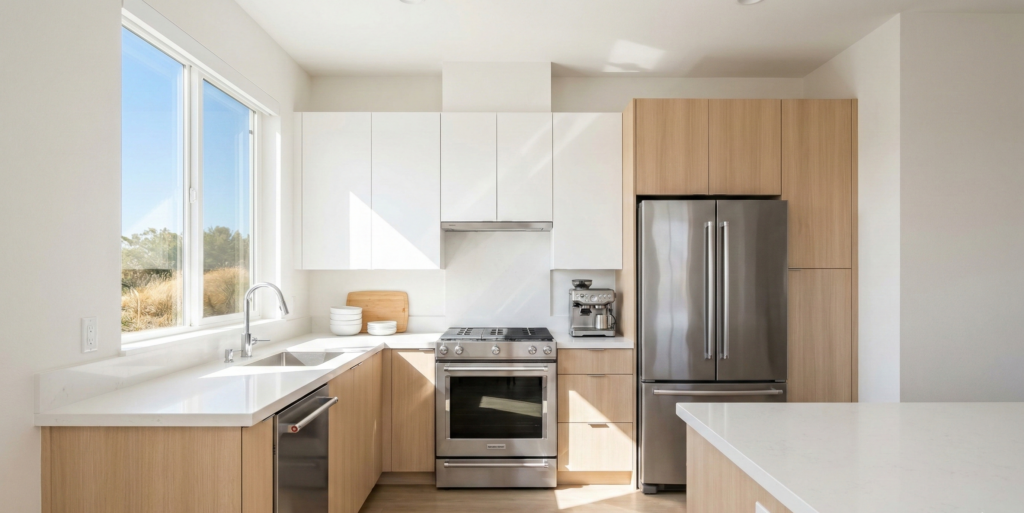
- The “Money Shot”: A bright, wide-angle view of the primary living space or kitchen.
- Natural Light Focus: All blinds open to showcase San Diego’s coastal brightness.
- Mechanical & Storage: Shots of the electrical panel, water heater, and storage areas (critical for tenant trust).
- Appliance Standards (AB 628): Close-ups of the stove and refrigerator to prove they are functional and clean.
- Laundry Facilities: High-resolution shots of in-unit laundry (a top tenant filter).
- Date-Stamped Set: A full 360-degree sweep of every room for the AB 2801 compliance file.
San Diego Submarket Strategy: Visualizing Local Value
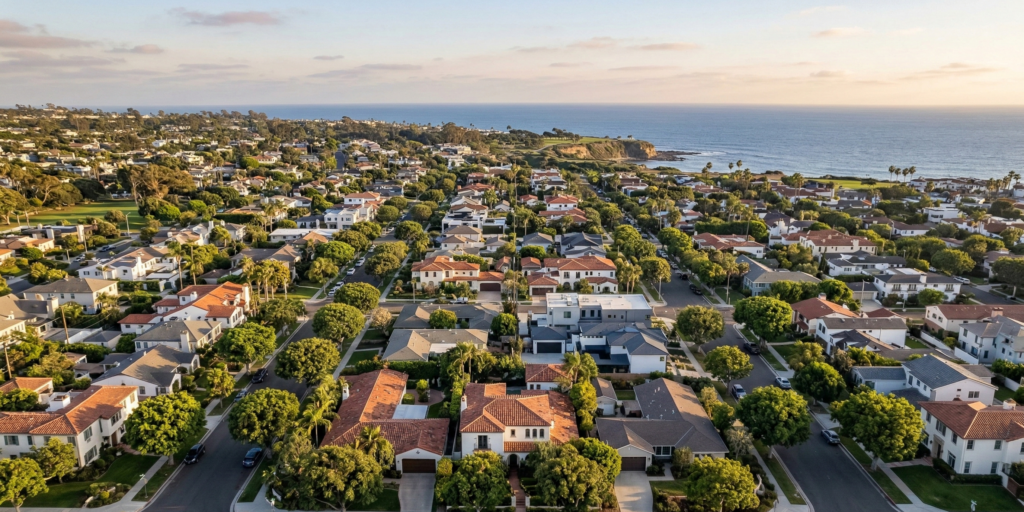
San Diego’s diverse geography requires a tailored visual approach. What works in a Downtown high-rise will not convert a family looking in Scripps Ranch.
- Downtown & Little Italy: Focus on “Lifestyle” amenities-rooftop views, gym facilities, and modern secure entry points. Parking constraints in older buildings make dedicated parking garage photos a “must-have” for these submarkets.
- North County Coastal (Carlsbad/Del Mar): Emphasize outdoor living. If the property has a patio, deck, or “ocean breeze” potential, these must be the leading images. Coastal corrosion is a real concern; photos must show that exterior fixtures and window tracks are clean and well-maintained.
- Biotech Hubs (UTC/Sorrento Valley): These professional renters care about “turn-key” readiness. Show clean, minimalist interiors and high-speed internet readiness.
- Family Hubs (Poway/Carmel Valley): Highlight the backyard, the garage, and the kitchen. These tenants are looking for “home” stability, not just a rental unit. Canyon-lot properties often have lighting challenges; professional HDR photography is required to ensure these homes don’t look “dark” or “gloomy” in photos.
Commercial & Multifamily Asset Marketing
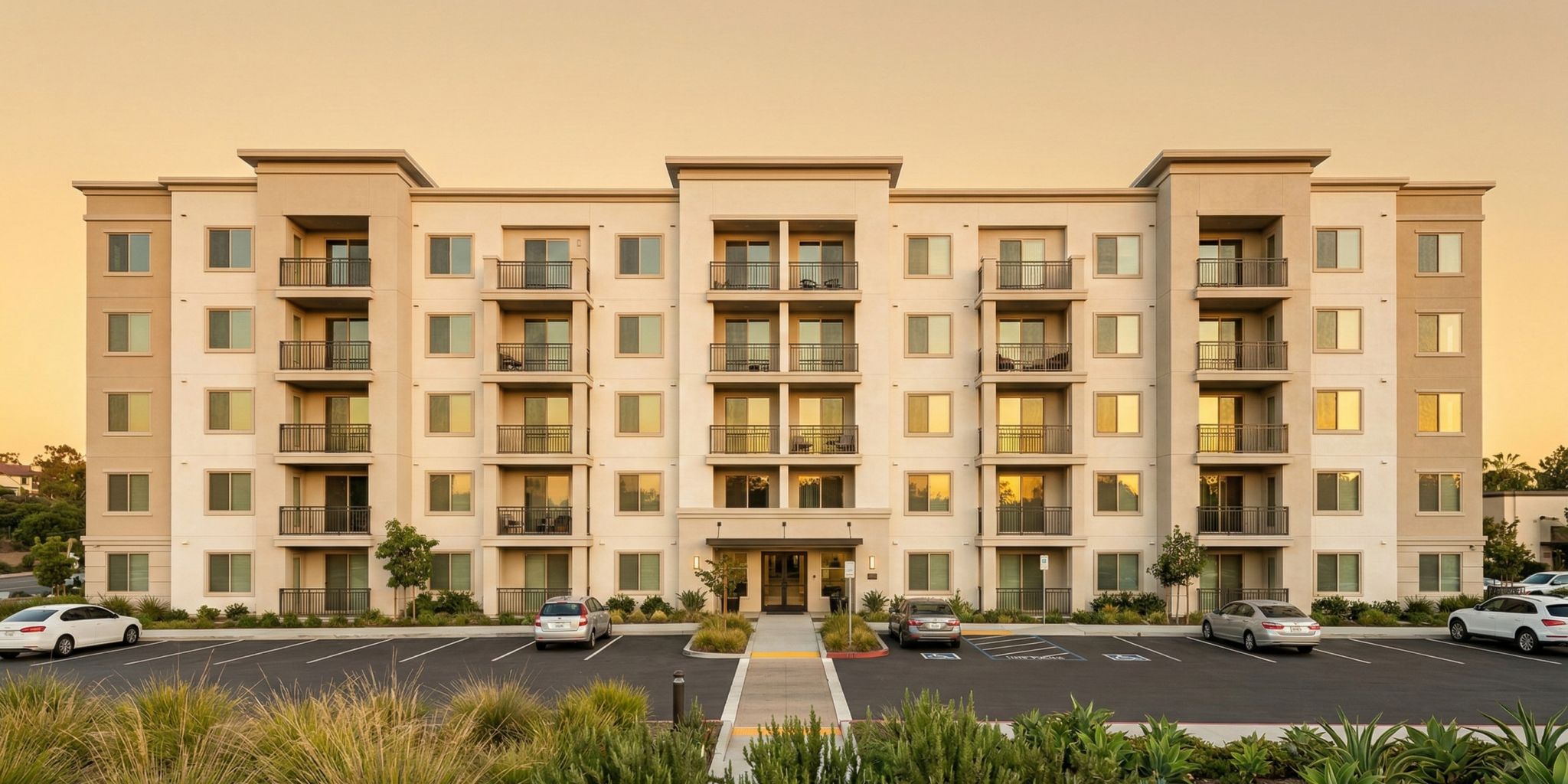
While single-family homes rely on “emotional” photos, commercial and multifamily assets (2-20 units) require “functional” visuals.
- Small Multifamily: Focus on “Turn-Key” consistency. Show that every unit in the building meets the same high standard.
- Retail Storefronts: Highlight foot traffic potential, signage visibility, and ease of delivery access.
- Office Suites: Focus on natural light, ADA compliance, and modular space potential.
Professional photos for commercial assets are essential for “Broker-Ready” packages. In the commercial world, brokers drive the deals; if your photos aren’t high-resolution and professionally staged, you aren’t even making it into the “Top 5” list for their clients.
Amateur vs. Professional Listing Outcomes
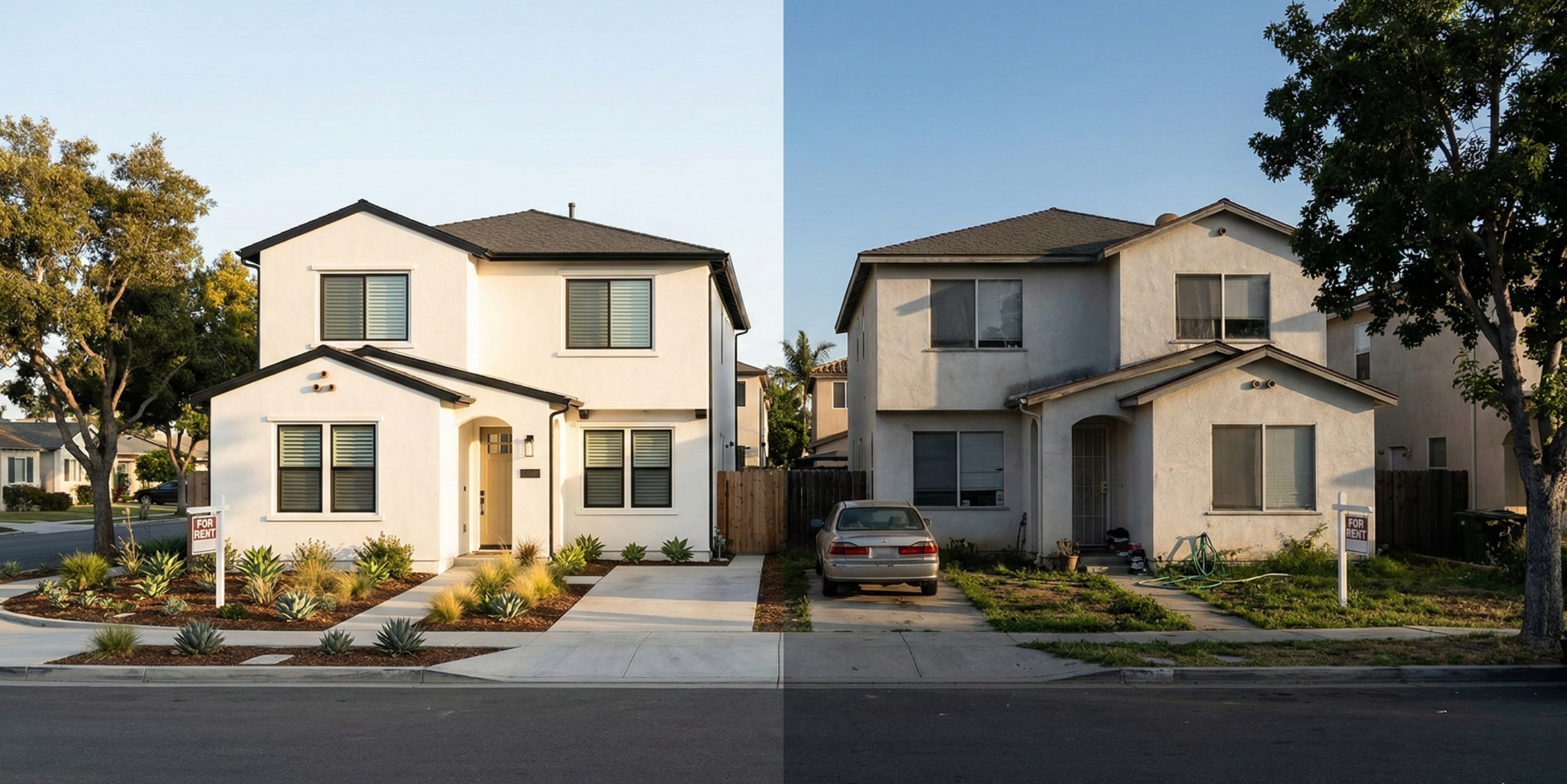
| Metric | Amateur Smartphone Photos | Professional Performance Photography |
| Average DOM | 25-45 Days | 10-14 Days |
| Inquiry Volume | Low / Mixed Quality | High / Pre-Qualified Professionals |
| Rent Concessions | Frequently required (1 month free) | Rarely required |
| Deposit Disputes | High (Lack of evidence) | Low (Documented baseline) |
| Lease Renewal Prob | Lower (Perceived poor management) | Higher (Signals asset value) |
FAQ
- How do professional photos impact cap rate valuation?
By reducing vacancy and securing higher-tier tenants who pay market rent without concessions, you increase your Net Operating Income (NOI). Since valuation is calculated as NOI divided by Cap Rate, every $1,000 in saved vacancy directly increases your property’s value. - Do lenders review listing performance?
During a refinance, lenders often look at “marketability” and historical vacancy. A portfolio of professionally marketed properties with low DOM signals to the lender that the asset is well-managed and lower risk, which can lead to better loan terms. - Does professional photography reduce eviction risk?
Yes, indirectly. High-quality marketing attracts higher-credit-score tenants who have more to lose. Conversely, “cheap” marketing often attracts desperate applicants who were filtered out by better-marketed properties. - How do photos affect tenant credit profile?
Professionals with high incomes and strong credit are busy. They use photos to “filter out” properties quickly. If your photos are poor, you never even get the chance to screen the highest-quality applicants. - What happens if I reduce rent after 30 days?
You are chasing the market down. Once a property has been on the market for 30 days, tenants perceive it as “stale” or “defective.” It is much more effective to invest $300 in photos on Day 1 than to lose $3,000 in rent on Day 30. - Should I stage vacant multifamily units?
For “luxury” units or those in high-competition areas like Bankers Hill, staging (physical or virtual) is highly effective. It solves the “mental gymnastics” for the renter of trying to figure out how their furniture will fit. - Are twilight photos worth it in San Diego?
For single-family homes in neighborhoods like La Jolla or North Park, twilight photos are the single best way to “stop the scroll.” They create an emotional connection that standard daytime shots cannot match. - Does professional photography affect lease renewal?
It sets the tone for the entire tenancy. When a tenant moves into a home that was professionally marketed and documented, they perceive the management as professional and high-standard, which leads to higher satisfaction and longer retention.
Stabilize Your NOI with Premium Visual Marketing
If your San Diego rental is sitting vacant, or if you find yourself constantly reducing rent to attract leads, your marketing is likely the bottleneck. Professional photography is not a cost-it is an income-protection strategy.
If you cannot produce high-resolution, date-stamped move-in photos today, you are legally exposed under AB 2801. Don’t wait for a security deposit dispute to realize you lack the evidence to defend your asset.
Request a 14-Day Lease Diagnostic before another month of income is lost. Schedule a Free Consultation