Stop “Hoping” Your Next Tenant Pays Rent
In the 2026 legal landscape, expanded tenant protections mean “getting it right” at the application stage is your only true insurance policy. Let our team protect your asset.
Schedule a Free ConsultationThe “Math of Misery”: Vacancy vs. The Bad Tenant
Landlords often fear vacancy, leading them to rush the screening process to “stop the bleeding.” However, a vacant property is a temporary loss of income - a known, finite variable. A bad tenant is an uncalculated liability that attacks the equity and the physical structure of the home.
| Event | Cost: 30-Day Vacancy | Cost: One Bad Tenant |
|---|---|---|
| Lost Rent | $4,500 | $18,000-$27,000 |
| Legal Fees | $0 | $6,000-$9,000 |
| Property Damage | $0 | $3,000-$8,000 |
| Relocation Cost (No-Fault) | $0 | $9,000-$12,000 |
| Total Exposure | ~$4,500 | $36,000-$56,000+ |
At an average net profit of $1,500/month, it takes nearly three years of perfect performance just to break even from one bad tenant. This is why we treat every application as a high-stakes financial audit, not a customer service interaction.
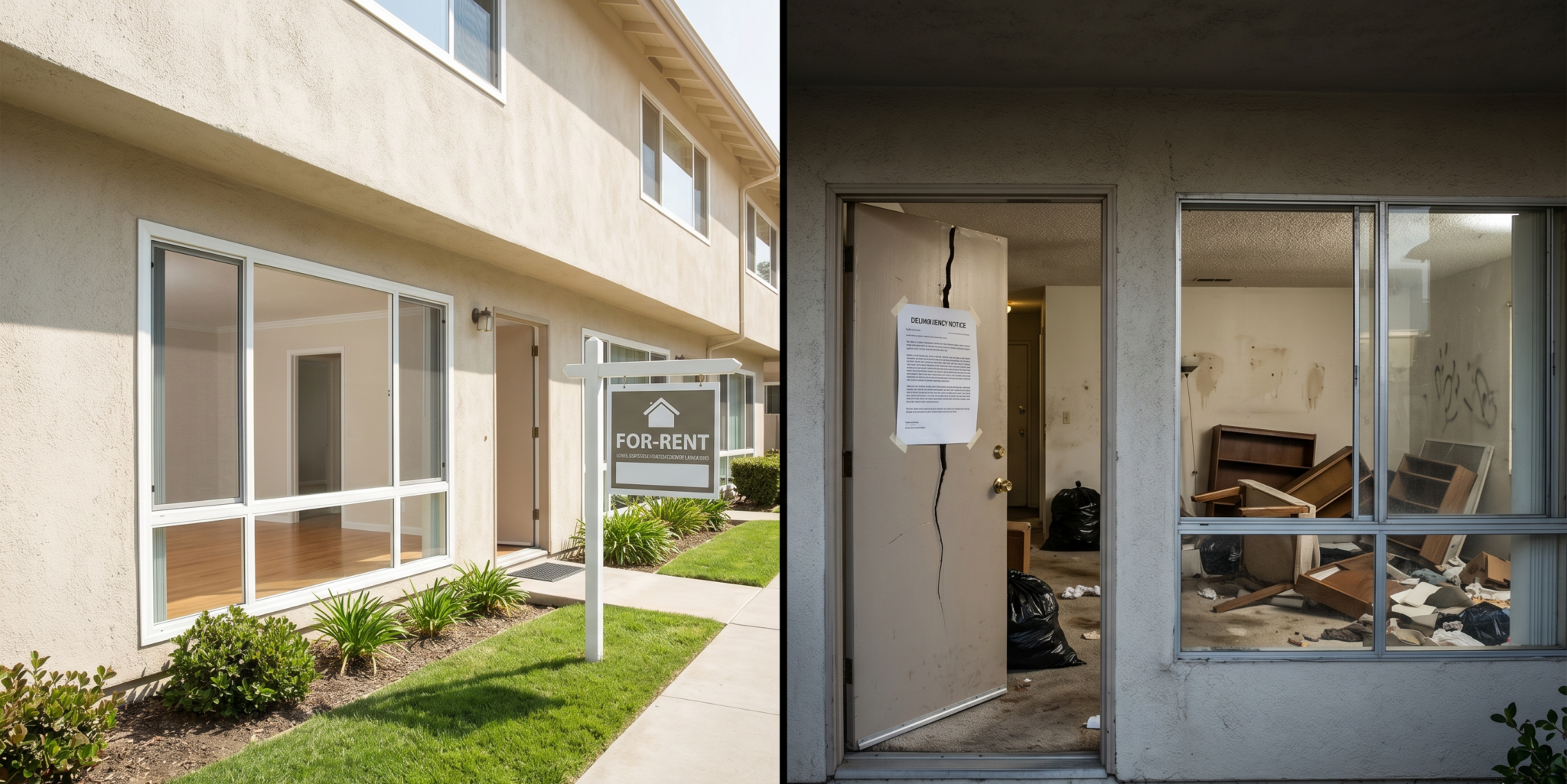
Cost of Evicting a Tenant in San Diego: 2026 Realities
Eviction (Unlawful Detainer) in the San Diego Superior Court is a highly procedural process. Any minor clerical error - an incorrectly served 3-Day Notice or a miscalculated rent amount - can reset the entire eviction clock and cost an owner months of additional lost rent.
The Current Judicial Timeline
In 2026, the San Diego courts remain backlogged. While a simple, uncontested lockout may take 8-10 weeks, the “professional tenant” knows how to weaponize the system. By filing an Answer and demanding a Jury Trial, a tenant can stay in your home for 4-6 months without paying a single dollar in rent.
Habitability Defenses and Escalated Costs
Under 2026 regulations like AB 628, tenants have expanded rights regarding appliances. A common tactic for non-paying tenants is to claim “retaliatory eviction” based on a minor maintenance issue. These claims, even if frivolous, force a hearing and dramatically increase attorney fees.
How One Application Mistake Cost an Owner $42,000
A self-managing owner placed a tenant who passed a basic credit check but had two prior evictions in Arizona - undetected because the screening provider only ran a California search. The tenant stopped paying in month four, filed a habitability defense citing a slow-draining kitchen sink, and demanded a jury trial. Total exposure: $27,000 in lost rent, $8,500 in legal fees, $4,200 in turnover damages, and $2,300 in court costs. A nationwide eviction search at the application stage would have flagged this applicant in under 90 seconds.

San Diego Tenant Screening: Our Systems-Driven Approach
At Palm Tree Properties, we use a clinical, data-driven tenant screening process to ensure we only place A-Player residents. In a high-rent market like San Diego, a tenant living “paycheck to paycheck” is one car repair away from a delinquency event. Our system is built to filter for stability, not just to verify the bare minimum.
Disparate Impact & Fair Housing Compliance
We maintain a documented “Criteria for Residency” applied consistently to all applicants, protecting our owners from disparate impact claims and ensuring compliance with all protected classes. California’s Civil Rights Department enforces these standards rigorously, and a single inconsistency in how criteria are applied can result in five-figure penalties even when the underlying decision was financially justified.

One A-Player Tenant Is Worth a Decade of Stability
Our clinical screening process has placed thousands of high-quality residents across San Diego. Find out how we protect your asset before the lease is ever signed.
Schedule a Free ConsultationSan Diego Landlord Laws 2026: The Regulatory Trap
San Diego landlords face a “double layer” of regulation. On top of California state laws like AB 1482, the City of San Diego applies some of the strictest local ordinances in the nation. Misunderstanding the interaction between state and local rules is one of the most common - and most expensive - mistakes self-managing owners make.
Just Cause Eviction Protections
In the City of San Diego, “Just Cause” protections apply on the first day of the tenancy. You cannot simply “not renew” a lease because you don’t like a tenant’s behavior. If you place a resident who becomes a nuisance, you must have a legally provable “At-Fault” or “No-Fault” reason to regain possession.
Non-payment of rent, lease violations, or criminal activity. The tenant created the cause of action, and no relocation assistance is required from the owner. Documentation must be airtight to survive a contested hearing.
Owner move-in or substantial remodel. In the City of San Diego, this requires paying the tenant two months of rent in relocation assistance - three months for seniors or disabled tenants.
If you place a bad tenant and need to move them out via a No-Fault path to avoid a long legal battle, that poor screening decision just cost you an additional $8,000-$12,000 in relocation fees on top of the lost rent and legal exposure.

The “Cash for Keys” Protocol: A Negotiated Exit
Sometimes, the fastest way to save a year of profit is to pay a bad tenant to leave. While it feels counterintuitive to pay a tenant who isn’t paying you, it is a business settlement to mitigate a $30,000 loss. Discipline beats emotion in this calculation every time.
The Strategy: Offer a set fee (typically $1,500-$3,000) for a “Broom-Clean” move-out within 7-10 days. The amount is calibrated to the eviction cost it replaces, not the tenant’s emotional appeal.
The Protection: No funds are released until the keys are physically in hand, the property is fully vacant, and a legally binding “Release of Liability” is signed by all adult occupants.
The Result: Shaving four months off an eviction timeline saves the owner over $15,000 in lost rent and legal fees, while returning the property to a rentable condition months earlier.

San Diego Landlord Risk Mitigation Checklist
The following 25-point checklist represents the operational discipline required to protect a San Diego rental in the 2026 regulatory environment. Each item exists because skipping it has cost an owner real money in a real case.
The Screening Phase
- Written “Criteria for Residency” provided to every applicant (Fair Housing compliance).
- 3x Gross Income verification via direct bank pull or HR contact.
- Credit score minimums (680+) enforced without exceptions.
- Nationwide eviction search including aliases and maiden names.
- Multi-state criminal background check (sex offender and violent crime focus).
- Social Security number verification to prevent “identity borrowing.”
- “Prior-Prior” landlord reference check completed.
The Lease & Compliance Phase
- Lease contains a specific “No Short-Term Rental / No Subletting” clause.
- AB 1482 Exemption notice served (specific language for SFR owners).
- 2026 Habitability Disclosures (AB 628) regarding appliances included.
- Security deposit collected via certified funds only.
- Move-in inspection documented with 100+ time-stamped, high-res photos.
- Service animal/ESA requests documented via professional 2026 legal standards.
- Detailed “Rules and Regulations” addendum to support HOA compliance.
The Operational Phase
- Rent collection is 100% automated (no physical checks or cash).
- 3-Day Notice served within 24 hours of the grace period expiring.
- Semi-annual interior “Wellness & Maintenance” inspections performed.
- HOA violation notices forwarded to tenants within 2 business hours.
- Maintenance requests tracked in a timestamped portal for habitability defense.
- “Cash for Keys” framework ready as an alternative to UD filing.
- Utility “Landlord Agreement” in place with SDGE to monitor shut-off notices.
- Fair Housing training documented for all management staff.
- Documentation retention policy (7 years) for all tenant and applicant files.
- Insurance “Rent Loss” rider verified and active on the owner’s policy.
- Professional manager acting as the clinical “emotional buffer” for all disputes.

Frequently Asked Questions
How much does a San Diego eviction attorney cost in 2026?
What is the current rent cap in San Diego?
Can I deny a tenant for low credit legally?
Is “Cash for Keys” legal in San Diego?
Can I refuse Section 8 tenants?
What is the difference between an Unlawful Detainer and an Eviction?
Do I need a license to manage my property professionally in California?
How long does the full eviction process really take in San Diego?
Can I do my own tenant screening to save money?
What happens if a tenant claims a habitability defense?
Are professional management fees tax-deductible?
What’s the single most important thing I can do to avoid a bad tenant?
Next Steps for San Diego Landlords
The financial success of your San Diego rental is decided at the moment of tenant placement. Our guide to San Diego fair housing violations to avoid documents the compliance failures that turn good placements into legal liabilities. Protect your income. Enforce standards. Operate with discipline.

Protect Your Income. Enforce Standards. Operate With Discipline.
One bad tenant should never erase a year of profit. Our team applies clinical screening, airtight documentation, and 2026-compliant lease frameworks to every property we manage in San Diego.
Schedule a Free Consultation