A 1031 exchange helps you defer all of these taxes, and it sounds great until you try to do one in San Diego’s market. The same crazy appreciation that made your property worth this much has also made it almost impossible to find a replacement property that qualifies. Most decent listings in San Diego get multiple bids and go under contract in just a few days, and sometimes in hours. The IRS only gives you 45 days to find your replacement options, and the clock starts ticking after you close on your sale. I’ve seen experienced investors lose their minds during this process because they’re watching perfect properties slip away as their deadline gets closer and closer.
That’s why quite a few savvy investors have started to expand their search outside of San Diego completely. They’ll sell that $1.2 million duplex in La Jolla and pick up a 20-unit apartment building in Phoenix or Las Vegas instead, and suddenly they’re collecting three times the monthly rental income. Other investors go with Delaware Statutory Trusts when they’re short on time and options. DSTs let you buy a fractional share in a big institutional property, and while it’s not right for everyone, it beats paying the taxes if you can’t find anything else. What matters is if the effort, the stress, and the restrictions make sense for your goals.
Let’s talk about when a 1031 exchange could be the right move for you!
Tax Bills That Trap Property Owners
San Diego property has done really well for property owners over the past few years. Let’s say that you bought a place in Hillcrest for $500,000 back in 2015. That same property is probably worth somewhere around $850,000 now. A $350,000 gain is great. But then there’s the tax situation when you decide to sell.
The tax bill on a sale like that can be pretty crushing. Federal capital gains tax and California’s state rate mean you might owe well over $100,000 to the government agencies. And if your income is high enough to trigger the net investment income tax, that number goes up even more. A lot of homeowners who are ready to retire or maybe just want to downsize and rethink their plans once they see these numbers.

Property values in San Diego have grown way faster than almost anywhere else in the country. It’s been great for everyone’s net worth. But it also creates this big tax problem for anyone who actually needs to sell their property. I’ve seen plenty of longtime owners who feel trapped by this exact situation. Maybe they want to move somewhere else, or they need that cash for something. But they just can’t bring themselves to write that massive check to the IRS.
And then Proposition 19 came along and made everything even more complicated. Inherited properties get reassessed to market value automatically unless you’re planning to move in and make it your primary residence. A lot of families have owned properties for decades, and suddenly they’re forced to make tough decisions about what they should do with them.
Some property investors have a name for this whole situation. They call it the luxury handcuffs problem. Your property has gone up so significantly in value that it becomes almost financially impossible to sell. That equity is sitting there in the property, and if you want to access it, you have to hand over a big portion of it to the IRS and the state of California. A 1031 exchange could be the answer that lets you defer those taxes and have all your money invested and working. The question is whether the numbers actually make sense for your goals.
The 45-Day Property Hunt Challenge
A 1031 exchange in San Diego seems nearly impossible when you start the process. The IRS gives you just 45 days to find your replacement property and then just 180 days total to close on it. Those deadlines are set in stone, and they don’t budge for anyone or anything.
San Diego County’s market moves very fast these days. Most properties that are even halfway decent will sell within a week after they hit the market. Some of the best ones will disappear in two or three days. This speed turns into a massive headache when you’re racing against those federal deadlines to find the perfect replacement property. The IRS does let you name as many as three possible properties without any value restrictions. You can also name more than three if the combined value stays under 200% of your original sale price.
Because the local inventory is so limited, lots of investors have to cast a much wider net than they originally planned. Riverside County starts to look appealing. Orange County starts looking like a genuine possibility. Some investors even look at properties way out in Nevada or Arizona just to make their exchange work within the time limits.

The stress level during this process is something else. One investor described it to me as an attempt to defuse a bomb as you house hunt at the same time. That comparison isn’t even that far from the truth since you lose everything when you blow past those deadlines. The Tax Court case of Dobrich v. Commissioner is a perfect example of how unforgiving these requirements are. Missing your identification deadline by even one day means that your entire exchange will collapse.
What makes this whole situation especially maddening is that the same very hot market conditions that helped you score those big gains on your sale are now working against you. Every other buyer wants those same properties that you’re looking at. You have to adjust your expectations and get creative about what might work as your replacement property.
Trade Your House Rental for Higher Cash Flow
Many landlords in San Diego own a single rental house in North Park or Pacific Beach, and at some point, most of them start to ask themselves if there’s a better way to invest. The numbers do tell an interesting story when investors dig into them. A rental house in these neighborhoods might give you a 3% or 4% return, and that’s if everything goes well. Compare that to a small apartment building in El Cajon that could deliver 5% or 6% returns on the exact same amount of money.

Once investors see the math laid out like this, it tends to get their attention pretty quickly. What’s even more interesting is the benefit that most investors never see coming until after they’ve already made the switch. You won’t have to drive all over San Diego County to check on eight different houses in eight different neighborhoods - you have one single building to manage. One roof that is going to need replacement every 20 years. One parking lot to repave when the time comes.
A 1031 exchange lets you make this transition without a massive tax bill in the process. You can sell that expensive single-family rental property and then move all of the money into a different type of property. I’ve seen investors who buy industrial flex spaces near the border where the demand remains strong year after year. Other investors go for student housing near SDSU because college kids are always going to need somewhere to live.
Medical offices in Kearny Mesa have also become an increasingly popular option. Healthcare practices need stable locations for their patients, and they usually sign much longer leases than residential tenants ever would. The steady, predictable income is perfect for landlords who are tired of yearly turnover.
Need bridge or private financing to close a 1031 exchange on time? EZ Loans funds San Diego investors in days, not weeks.
A 1031 exchange fixes two big problems that San Diego property owners run into. One is the capital gains tax bill that eats up a massive chunk of your sale profits. The other is San Diego’s terrible rental yields. With a 1031, you can move that money into properties that actually generate steady cash flow each month. Plenty of investors go even farther and move their money out of San Diego County.
DSTs When You Can’t Find Benefits
A suitable replacement property for a 1031 exchange is hard to find in San Diego’s market right now. You could look at twenty buildings, and none of them will work for what you need. Cash buyers are everywhere in this market, and they’ll grab the property that you want before you can get a chance.
Delaware Statutory Trusts could be just what you need to solve this problem. A DST lets you buy a fractional share of a much bigger commercial property instead of buying an entire building yourself. You own part of something like a large apartment building, but without any of the management responsibilities that normally come with property ownership.
DST properties are a far cry from your standard San Diego rental house or duplex. Most of these investments are massive apartment communities in fast-expanding markets across the country. Others include distribution warehouses with Amazon as the anchor tenant. Medical office buildings that have established healthcare systems on 10-year leases are another popular option. Each one of these properties comes with professional management already in place. Monthly distributions arrive like clockwork, and you never have to field a maintenance call.
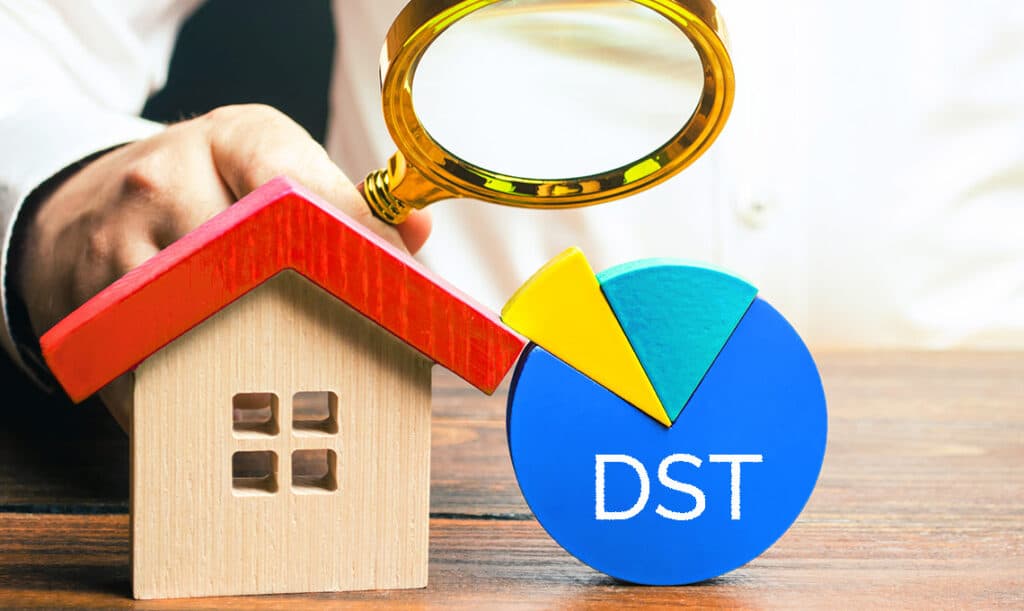
Of course, this convenience means you give up all control over the property. Want to update the landscaping or negotiate a rent increase? Not happening. DST investors also forfeit the ability to execute another 1031 exchange later since fractional shares don’t qualify as direct property ownership. Many San Diego investors who are approaching retirement find this arrangement perfect, though. After decades of running their properties themselves, passive income without the work sounds pretty appealing.
Back in 2004, the IRS officially approved DSTs for 1031 exchanges through Revenue Procedure 2004-86. This was a big deal because it meant DST ownership could qualify as “like-kind” property for tax-deferred exchanges. Most DSTs pay out between 4% and 6% annually. When you consider all of the problems and costs that traditional rentals have, like property management fees and maintenance reserves, DST distributions actually perform just as well or better than what you’d get from direct ownership.
Minimum investment requirements usually start around $100,000, and accredited investor status is mandatory. Still, when the alternative is a massive check to the IRS because your exchange deadline has passed, these barriers to entry seem manageable.
Want to go deeper on San Diego commercial real estate and investing? Listen to the EZ Deals Podcast, where Erik interviews top CRE brokers, investors, and lenders.
FAQ
What is a 1031 exchange and what does it do?
What are the 1031 exchange deadlines?
How many replacement properties can I identify?
Can I trade a rental house for higher cash flow?
What is a DST and when does it help?
Maximize Your San Diego Rental Property
The right choice about a tax-deferred exchange depends entirely on your goals and where you want your investments to go. Now that we’ve covered all these points, you probably have a better sense of whether it fits into your plans. Smart decisions come from a hard look at your numbers first. You also need to think about where you want your portfolio to be in five or ten years. And of course, you have to be honest about how much complexity you’re comfortable handling. Some property owners discover that the tax savings change their financial outlook. Others decide they’d rather keep it simple and flexible for now.
These exchanges can turn a single property sale into something that can build your family’s financial legacy over time. Every year that you defer those taxes, you’re receiving an interest-free loan from the government so your investments can keep growing. All that money that would have gone straight to the IRS stays in your accounts instead and continues to work and build wealth that will eventually pass down to your children and grandchildren. San Diego property values have exploded over the years, and in a market like this, a tax-deferred exchange can be the difference between a modest inheritance and genuine generational wealth that changes your family’s entire financial trajectory.
Most investors never understand how tight the timeline actually is until they’re in the middle of it. You get 45 days to find replacement properties and 180 days to close on them - that sounds like time, but it goes fast. Thousands of investors successfully work through these deadlines each year, though. Your best bet is to start your property search way before you sell. Have backup options lined up and ready to go. Work with experts who have done this dozens of times and know the possible problems. Even if your perfect property falls through at the last minute, alternatives like Delaware Statutory Trusts can save the day. You won’t lose your tax benefits just because one deal didn’t work out.

At Palm Tree Properties, we see every day how the right tax strategies paired with great property management can change the investment returns. We help property owners all across San Diego County maximize their rental income and build wealth, whether they’re holding local properties or exchanging to expand into new markets across the country. Our team knows the San Diego market better than just about anyone, and we love to help investors make smart decisions about their estate portfolios.
Maybe you’re curious about what your property is actually worth in the market. Or you want to know what it could rent for with the right management. Our resources section has tons of guides on building wealth through property investments, too. Let’s have a conversation about how we can help so you can reach your investment goals and put more of your hard-earned money where it belongs!