
San Diego landlords who want to move back into their rental properties are going to run into quite a few local laws. Getting something wrong along the way can cost you thousands of dollars. An owner move-in eviction is legal, and it’s designed for situations where the property owner (or some of their family members) needs to live in the unit as their main home. The process itself involves a few steps - the right notification periods, relocation payments to your tenants and set time periods for how long the owner actually should be in the property. Most landlords have no idea just how long the whole process takes from start to finish.
San Diego’s Tenant Protection Ordinance made the situation much riskier for landlords when it passed in 2023. The city actually checks to make sure that landlords are occupying the unit for the entire 12-month period. Any bad-faith eviction comes with fines of as much as $15,000!
This guide will show you the full picture of owner move-in procedures in San Diego - who qualifies as an occupant, how much relocation money different tenants receive and the important details that can make or break your case. Landlords will find the exact wording that their termination letter should say, the timeline for when those relocation payments need to go out, what records you’ll have to keep to protect against any claims down the line and the common missteps that result in expensive court cases. The Ellis Act also covers anyone who wants to leave the rental business altogether instead of going through the owner move-in process.
Key Takeaways
- San Diego landlords must provide tenants at least 60 days written notice including specific mandatory language about primary residence intentions.
- Landlords must pay relocating tenants one month’s rent within 15 days of serving eviction papers; this is non-negotiable.
- Owners or qualifying family members must genuinely occupy the unit as their primary residence for a full 12 months.
- Bad-faith evictions carry penalties up to $15,000, plus attorney fees, and former tenants have two years to file complaints.
- The Ellis Act offers an alternative exit for landlords leaving the rental business entirely, but carries higher relocation costs.
Notice Requirements for the Owner Eviction
San Diego has its own set of standards for owner move-in evictions, and they’re way stricter compared to what the state calls for. You’ll need to give your tenant a written notification that gives them at least 60 days to move out. The notification also needs to spell out what you’re planning for the property - you can’t leave any room for uncertainty or questions about your intentions.
The notification has to include some very particular language and needs to state that either you or an eligible family member will be moving into the unit to live there as a primary residence for at least 2 full years. Information about relocation assistance also has to be right there in the document, along with all of the payment specifics.

San Diego has all these strict standards in place because judges in this county take notification violations seriously. If you accidentally leave out some of the mandatory language or if you get any of the main parts wrong, the court will throw out your whole eviction case. When that happens, you’ll have to start the whole process over with a brand new notification, and you’ll be waiting another full 60 days until you can move forward with the eviction. Learn more about how to evict a tenant in San Diego before you begin.
San Diego’s local rental standards are actually stricter than what California state law calls for. The city has added extra tenant protections on top of the baseline state laws. Over the years, a handful of landlords have tried to fight these local standards in court. Nearly all those legal challenges have been unsuccessful, and these stricter San Diego standards are here to stay for the long haul.
Recent court cases have been landing heavily in favor of tenants, and the pattern is pretty steady across most jurisdictions. Landlords who miss even minor specifics in their eviction notices wind up losing these cases. The same goes for landlords who can’t actually prove that they had real, legitimate plans to move into the property themselves. Every bit of information in your notification needs to be accurate and complete, or you’re probably going to wind up on the wrong side of a legal battle. Understanding California eviction laws in full can help you avoid these costly mistakes.
Required Relocation Payments for Your Tenants
San Diego enforces relocation assistance when landlords want to move into one of their own rental properties. If you own a rental unit in the city and decide you want to live there yourself, you’re going to need to pay your existing tenant before they move out. The city’s Tenant Protection Ordinance sets the amount at 1 month’s rent, and it isn’t optional. The money is there to help the tenant with the costs that they’ll face when they have to relocate. We’re talking about moving costs, application fees at the new properties and of course, that security deposit that they’ll need to put down at their next place.
Landlords need to make this payment within 15 days after they serve the eviction papers. You can also wait and make the payment anytime before the tenant actually moves out - either timing works just fine. When to send that payment matters if you’re trying to follow the city’s process correctly throughout the eviction.

Owner move-in evictions aren’t cheap when you add the relocation payment into the mix. Properties with a higher monthly rent mean you’ll be writing a much bigger check to that tenant. It’s worth taking the time to calculate these costs ahead of time because the total can get pretty high.
San Diego created this policy to protect tenants who have to move out, even when they haven’t done anything wrong. When a landlord wants to take back their property for personal use (maybe they want to move in themselves, or they need it for a family member), the tenant still has to leave. It takes time and money to find a new place in San Diego, and the rental market is notoriously expensive. Relocation assistance helps cover at least some of the costs, so tenants aren’t left on their own during the transition.
But landlords actually have a few more responsibilities to take care of after their tenant moves out.
Requirements for Your Primary Residence
After your tenant moves out and you’ve paid them their relocation assistance payment, you’ve still got one more big step to take care of. A primary residence is the place where you actually live on an everyday basis. Just crashing there a few nights each week won’t cut it, and it obviously can’t be something that you use like a vacation home. This has to be the address where your mail arrives, where you store your belongings, and where you’re spending the majority of your nights. If this ever ends up in court, they’ll want to see your utility bills and similar records to verify that you were actually living there as your main home.
That 12-month commitment doesn’t change when you’re moving in a family member instead of yourself. San Diego defines immediate family pretty narrowly for this - spouse, children, parents or grandparents only. A cousin or a close friend won’t make the cut, even if you think of them as family.

Bad-faith evictions happen when a landlord abuses the owner move-in process to get rid of a tenant without a real reason. Judges and courts take this behavior extremely seriously. Landlords have dealt with harsh consequences for re-listing their property on the rental market within just a few months of forcing their tenant out. Selling the home shortly after the eviction counts as a violation, too, and the same applies if you move in anyone who doesn’t meet the immediate family definition. This can lead to legal penalties that cost the landlord far more than the original relocation assistance payment.
The best way to protect yourself is pretty easy - just follow through on what you have committed to and actually live in the property for that full year. From day one, keep careful track of everything that shows it’s where you live. Hold onto all your utility bills, mail delivery records and anything else that can prove that this was your primary residence.
Keep All Your Moving Records Safe
Strong records are going to save you plenty of problems if a tenant decides to challenge your owner move-in eviction. San Diego has become much stricter about enforcing these types of evictions over the last few years, and city officials will take every tenant complaint. It’s become pretty common for them to launch an investigation and verify that you actually did move into the property like you said you would.
You’ll have to keep documentation showing that you moved in and lived there for the full period. Utility bills are going to be your best option here - as long as they show your name and the property address, they’re some of the strongest proof available. Receipts from your moving company help, too, because they back up the fact that you physically relocated. The change of address form from the post office is another solid bit of evidence - when you submit it, this becomes part of the official government record, and that’s extremely hard for anyone to dispute.

These documents actually matter quite a bit because tenants will want to verify that you followed through on what you said. A handful of them will even drive past the property to see if you really did move in. When a tenant believes you didn’t fulfill your owner-occupancy obligation, they can file a formal complaint with the city. Once that complaint reaches the housing department, you’ll need to have your documentation ready to back up your claims and prove that you did what you promised.
Landlords who save solid records of everything have been able to defend themselves successfully when tenants file complaints or take legal action against them. Landlords who skip the documentation process usually wind up paying big fines and dealing with penalties. The city won’t take your word for it either - they’ll want concrete proof that you moved into the unit and lived there full-time just as you told your tenant you would.
My advice is to save every one of these documents right from day one of your move. Waiting until after a tenant has a question or concern means you’ll be scrambling to find proof when you’re already under pressure. Store everything together in a single file so you can pull it out right away when the time comes. If you’d rather have a professional handle difficult tenant situations and the documentation burden that comes with them, working with an experienced property manager is worth considering.
Penalties That You Could Face
San Diego has strict laws for owner move-in evictions, and the city actually enforces them. A landlord who files a false owner move-in notice could face penalties of as much as $10,000 per violation, and that’s not even counting the attorney fees that will pile on top of the base fine. Tenants also have the legal right to take you to court over a wrongful eviction claim if they believe that you never intended to move in yourself. If they can prove their case and the court decides in their favor, they’ll get reimbursed for their moving costs, along with any increase in rent they’re now paying at their new place. A judge can even order you to let them move back into the unit if the evidence proves that you weren’t being honest about your original claim.
The city has seen this happen over and over - a landlord claims they need the unit for personal use, then never moves in at all. In most of these cases, the landlord just stays at their own place and rents the same unit back out to a new tenant at a much higher monthly rate. Another common version is when a landlord moves in for a month or maybe for two (just long enough to make everything look legitimate) before turning around and listing the apartment again with rent that’s substantially higher compared to what the previous tenant was paying. Property owners usually don’t win these cases. When the evidence proves you lied about your intention to move in, the financial hit can be pretty brutal. Phone records, utility bills and even mail delivery logs will all work against you - they’ll show that you never actually lived at the property.

Another common mistake landlords make is when they confuse an owner move-in eviction with the Ellis Act, or when they try to use an OMI to get around what the Ellis Act calls for. The Ellis Act is a separate law, and it has its own protocols, waiting periods and steps you’ll have to follow. An owner move-in eviction isn’t a shortcut to leave the landlord business. If you’re unsure how these rules intersect with AB 1482 and rent control in San Diego, reviewing the full compliance picture is worth your time.
Most violations come to light when a former tenant decides to file a complaint with the local housing authority. Former tenants have as long as 2 years from their eviction date to report what they believe was an improper use of the owner move-in exemption. Beyond tenant complaints, housing advocates and building inspectors will also actively monitor landlords who appear to be misusing these laws on a regular basis. Understanding your fair housing obligations as a San Diego landlord can help you stay on the right side of these rules from the start.
The Ellis Act as Your Exit Option
The Ellis Act could be worth a look if you’re ready to exit the rental business for the long term. It lets you pull your rental units off the market permanently and can be a relief for landlords who are just done with the whole situation. You don’t have any obligation to move into the property yourself after your tenants vacate, and you can do whatever you want with the property once it’s empty.
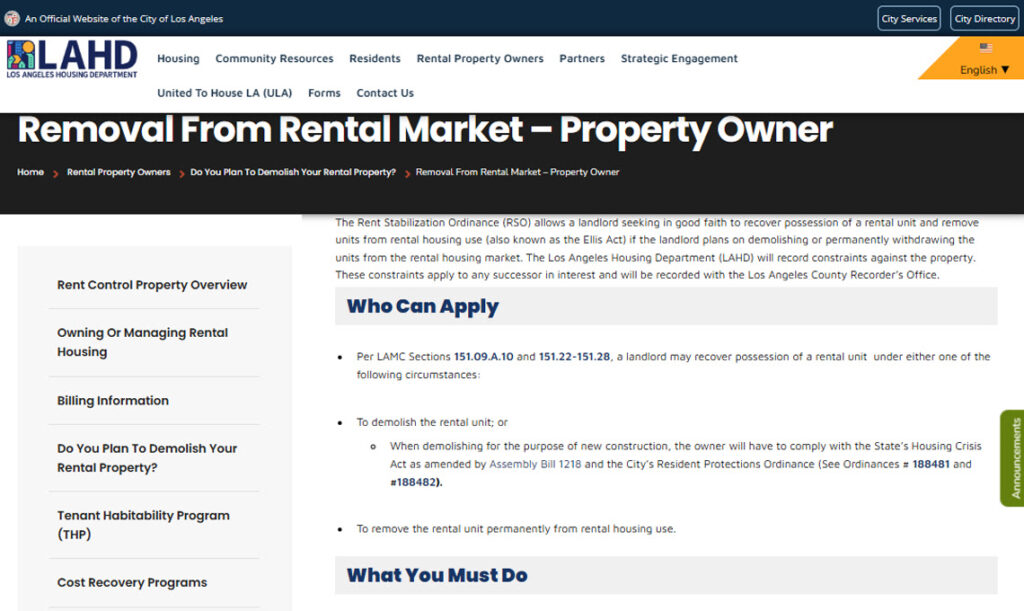
Cost and flexibility are the two main factors you’ll have to balance when you choose between these options. Ellis Act relocation payments are going to cost you quite a bit more money compared to what you’d spend on an owner move-in eviction. But with the Ellis Act, you get a lot more freedom to work with because you don’t have to actually move into the property and live there yourself.
It tends to work best if you want to get out of the landlord business for the long term. This could be just what you need when you’re exhausted from tenant problems every month, or you’d rather list your property without anyone living in it.
Don’t make the mistake of thinking that it’s a way to get around owner move-in laws - it’s not. The Ellis Act has a whole bunch of complicated regulations attached to it. Going in this direction means you’ll need to follow each one. You’ll have to wait a mandatory period before you’re allowed to rent the property out again. Slipping up and violating any of these can result in extremely harsh penalties.
You’ll also need to file the correct paperwork with the city and hit your notification deadlines. The whole process takes time to work through. It does give you more flexibility than an owner move-in eviction would, and that’s a benefit. It won’t be easier or faster to finish.
FAQ
How much notice do I need for an owner move-in eviction in San Diego?
How much relocation assistance do I have to pay?
Who counts as family for an owner move-in eviction?
What records prove I actually moved in?
What are the penalties for a bad-faith owner move-in eviction?
Maximize Your San Diego Rental Property
San Diego housing laws change a lot, and the penalties for mistakes can be harsh and expensive. Your lawyer will review your situation, make sure that your paperwork is filled out and confirm you’re following everything the city legally requires. The cost up front might sound like too much to spend, and I get that. A lawsuit or thousands of dollars in fines later on will cost you a lot more in the long run.

Rental property owners in San Diego usually do better when they have an experienced team to help them out. Palm Tree Properties is here to help owners with the tough parts of property management, and it frees them to focus on whatever else they need to do. Our clients get strong returns on their investments, and we take care of the legal details at the same time. Maybe you need help with property management, or maybe you want to know what your rental could bring in for you each month, or maybe you’re just curious about what property options are available around San Diego - whatever the case, we’re here to answer your questions! We have a free rental property evaluation that gives you a look at what your property could earn, and we have plenty of other resources available if you want more tips about how to make property management easier. Every property that we manage gets treated with the same care and attention that we’d give to our own properties because the results you want don’t happen without that level of commitment.