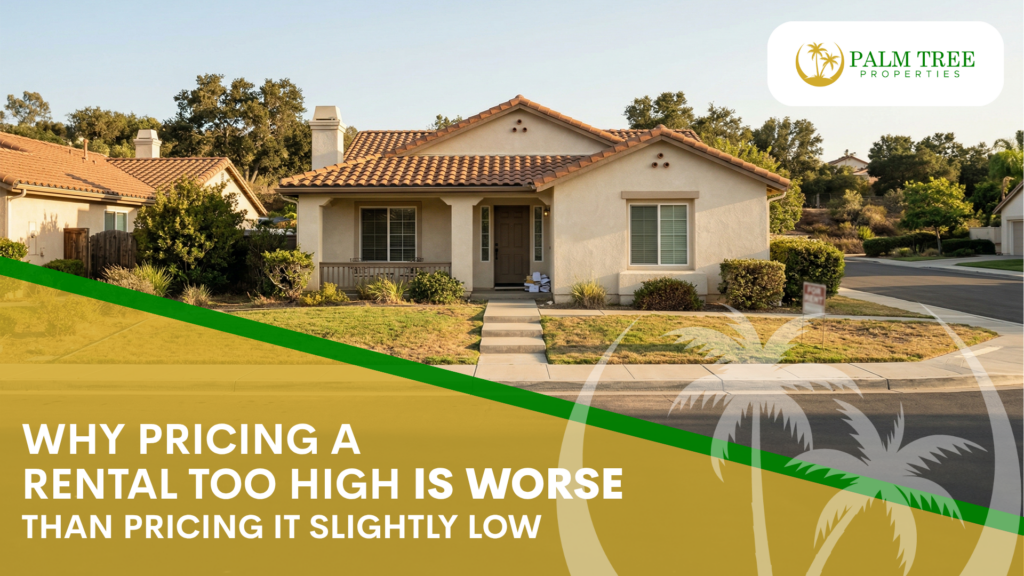
Every San Diego rental owner wants to maximize their return on investment. It is a natural impulse to look at Zillow, see a neighbor in Carmel Valley (92130) or North Park (92104) asking $4,800, and think, “My property has a newer HVAC system and upgraded flooring; I should ask $5,100.” This impulse-while understandable-is the single most expensive mistake a residential investor can make. In our experience as disciplined asset managers, we have seen that “testing the market” with an overpriced rental San Diego listing often results in a 15-20% reduction in annual net operating income (NOI).
In the San Diego market, where carrying costs like property taxes and insurance are at historic highs, a pricing error is not just a minor delay; it is a financial erosion. Overpricing doesn’t just increase vacancy; it fundamentally degrades the quality of your applicant pool and exposes you to higher long-term risk. Every day your property sits empty, you lose approximately $150-$200 in realized wealth.
Stop the Financial Bleed: Request a Free Rental Pricing Audit
Get a professional, data-driven audit of your property’s market positioning. We provide real “closed” comp data, not just asking prices.
The Golden Window: Why the First 10 Days Determine Your ROI
Many owners believe there is no harm in “testing” a higher price for a few weeks. This is a fallacy of the modern rental market. San Diego renters are highly educated; they use automated alerts on Zillow, Redfin, and HotPads. They have viewed dozens of listings before they ever contact you.
The Psychological Impact of a Stale Listing
Your listing receives 70% of its total engagement within the first 10 days of going live. This is when the most qualified, “A-Player” tenants-those with 750+ credit scores, stable 3x income, and clear move-in deadlines-are looking.
If you price your home even $200 above market, these tenants will not even book a showing. Once a property has been on the market for 21+ days in San Diego, a psychological shift occurs. Prospective tenants begin to wonder what is wrong with the home. By the time you finally drop the price to the correct market level, you have missed the initial surge of high-quality leads.
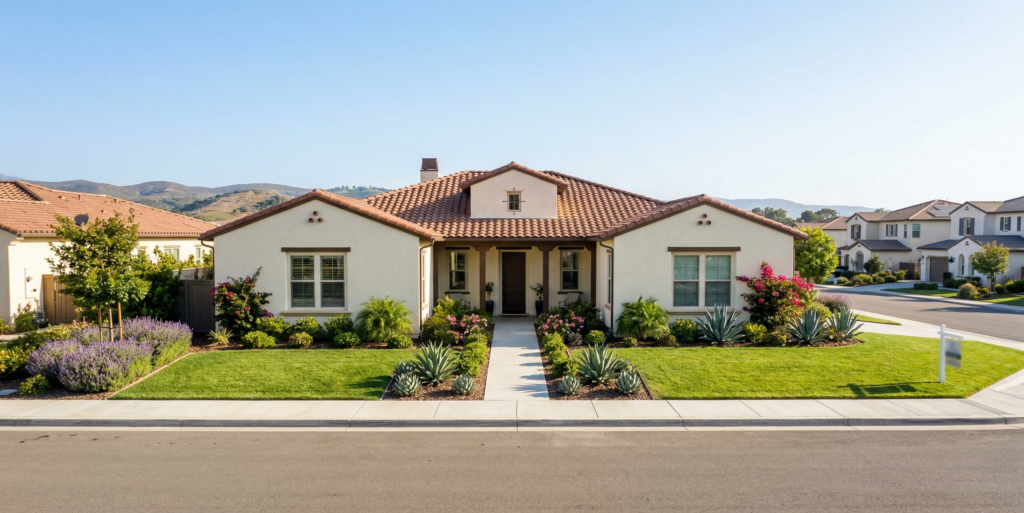
Operational Metrics: The Mathematics of Leasing
To manage a rental property successfully, you must track conversion metrics like a clinical asset manager. We use these benchmarks to determine if a price is “Market Correct.” If your property manager isn’t reporting these numbers, they aren’t managing your asset; they are just observing it.
The Performance Benchmarks
- Inquiry-to-Showing Ratio (Target: 40-50%): If 20 people email you and only 2 show up, your marketing is attracting the wrong demographic or your response time is too slow.
- Showing-to-Application Ratio (Target: 20-30%): If 10 people walk through the home and nobody applies, your price does not match the interior condition (cleanliness, smell, or outdated fixtures).
- Application-to-Approval Ratio (Target: 50%): If you have 5 applications but they all have 550 credit scores, your overpriced rental San Diego listing is attracting “bottom-feeder” risk.
- Days-to-Deposit (Target: 14 Days): If you do not have a signed lease and a holding deposit within 14 days, your pricing strategy has failed.

The 5/5/14 Pricing Decision Tree
We don’t guess-we operate using a defined decision tree. This scannable logic helps you identify exactly where your leasing process is breaking down.
If after 7 days you have:
- <5 Inquiries: You have a Price or Marketing Visibility problem. The market isn’t even seeing the value. Immediate 3-5% price reduction recommended.
- 10+ Inquiries, 0 Showings: You have a Photos or Exterior issue. Your digital “curb appeal” is failing. Refresh professional photography or mulch the front yard immediately.
- 5 Showings, 0 Applications: You have a Condition Mismatch. Your price is fine for the neighborhood, but the property’s interior (smell, paint, or old appliances) is driving leads away.
- 3 Applications, All Low Credit: You have a Risk Attraction problem. Your price is too high for qualified tenants, leaving only desperate, high-risk applicants.

The Risk Profile: Who Actually Applies for Overpriced Homes?
This is the most dangerous consequence of overpricing. Qualified tenants do not overpay because they don’t have to. A tenant with a 780 credit score and 3.5x income knows their value.
So, who applies for the overpriced home? Desperate tenants.
Typically, these applicants have been rejected elsewhere due to prior evictions, marginal credit, or unstable employment. They are often willing to pay an inflated price because they are banking on your desperation. By chasing an extra $300 a month, you are inviting a tenant who is statistically more likely to cost you $15,000+ in eviction fees and property damage.
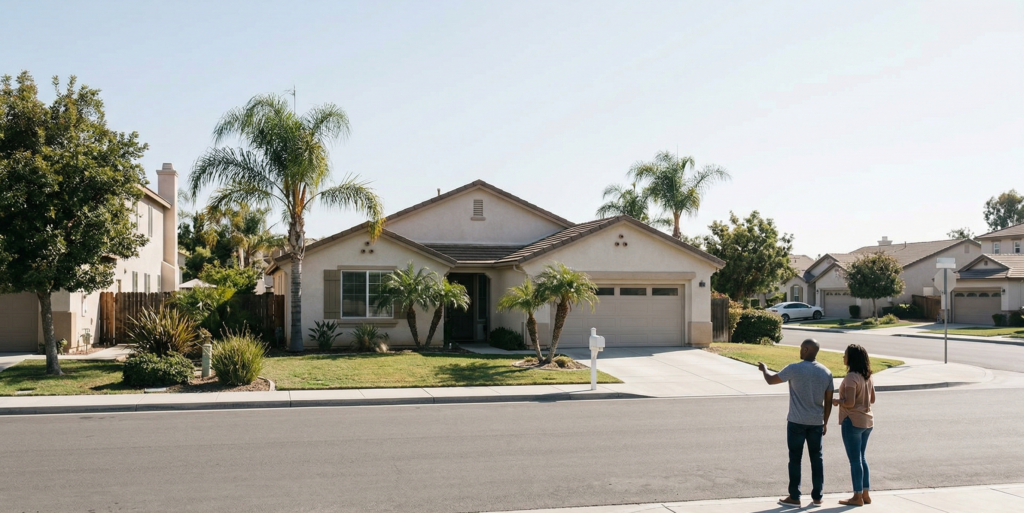
Case Study: The Scripps Ranch (92131) Recovery
The Property: 4-bedroom single-family home located in Scripps Ranch. The Problem: The owner listed the home for $5,500-roughly $400 over market. It sat vacant for 52 days. The Financial Damage: The owner lost $9,533 in gross rent, plus $900 in utility/landscaping carry costs. Total loss: $10,433. Our Strategy: We took over management, performed a 48-hour “refresh” (deep cleaning and window washing), and re-listed at $5,100. The Result: We received 12 inquiries in 24 hours and secured a tenant with an 810 credit score. The Break-Even Math: By “holding out” for an extra $400/month, the owner lost over $10,000. It would have taken 2.5 years of that higher rent just to break even on the initial vacancy loss.
Micro-Market Precision: San Diego Zip Code Data
San Diego is not one market; it is a collection of micro-climates. Pricing a rental in La Jolla (92037) requires a different data set than Mira Mesa (92126).
- Coastal Hubs (92037, 92109, 92014): Demand in La Jolla and Del Mar is condition-heavy. If the property lacks A/C or modern flooring, you must price 10% below “premium” comps.
- Inland Suburban (91910, 92126, 92020): In Chula Vista and Mira Mesa, pricing is the primary lever. These are highly price-sensitive markets where a $50 difference determines if you rent in 3 days or 30.
- University & Military Zones (92122, 92054, 92131): Near UCSD or Oceanside, pricing must align with BAH (Basic Allowance for Housing) rates. If your rent exceeds the O-3 or E-7 housing allowance for that zip code, you lose a massive segment of stable military leads.

The Hidden Profit Killer: Asset Erosion & Turnover Math
Every time a tenant leaves, your property loses value through “wear and tear” and “turnover friction.”
The Depreciation Cycle
- Paint Life: A standard rental paint job has a 3-year life cycle. An overpriced home attracts tenants who treat the home as a “temporary stop,” increasing the frequency of $2,500 repaints.
- Carpet & Flooring: Frequent turnover doubles the rate of carpet replacement. Each move-in/move-out cycle adds the equivalent of 6 months of normal wear in just a few days of furniture moving.
- Appliance Stress: Tenants who overpay often have higher maintenance expectations. They will call for every minor issue, increasing your vendor dispatch costs.
The Owner Time Cost
If you are self-managing, every hour you spend answering inquiries for an overpriced rental San Diego listing is an hour you aren’t spending on your own career or family. If you value your time at $100/hr, a 30-day vacancy can cost you $2,000 in “hidden” labor alone.
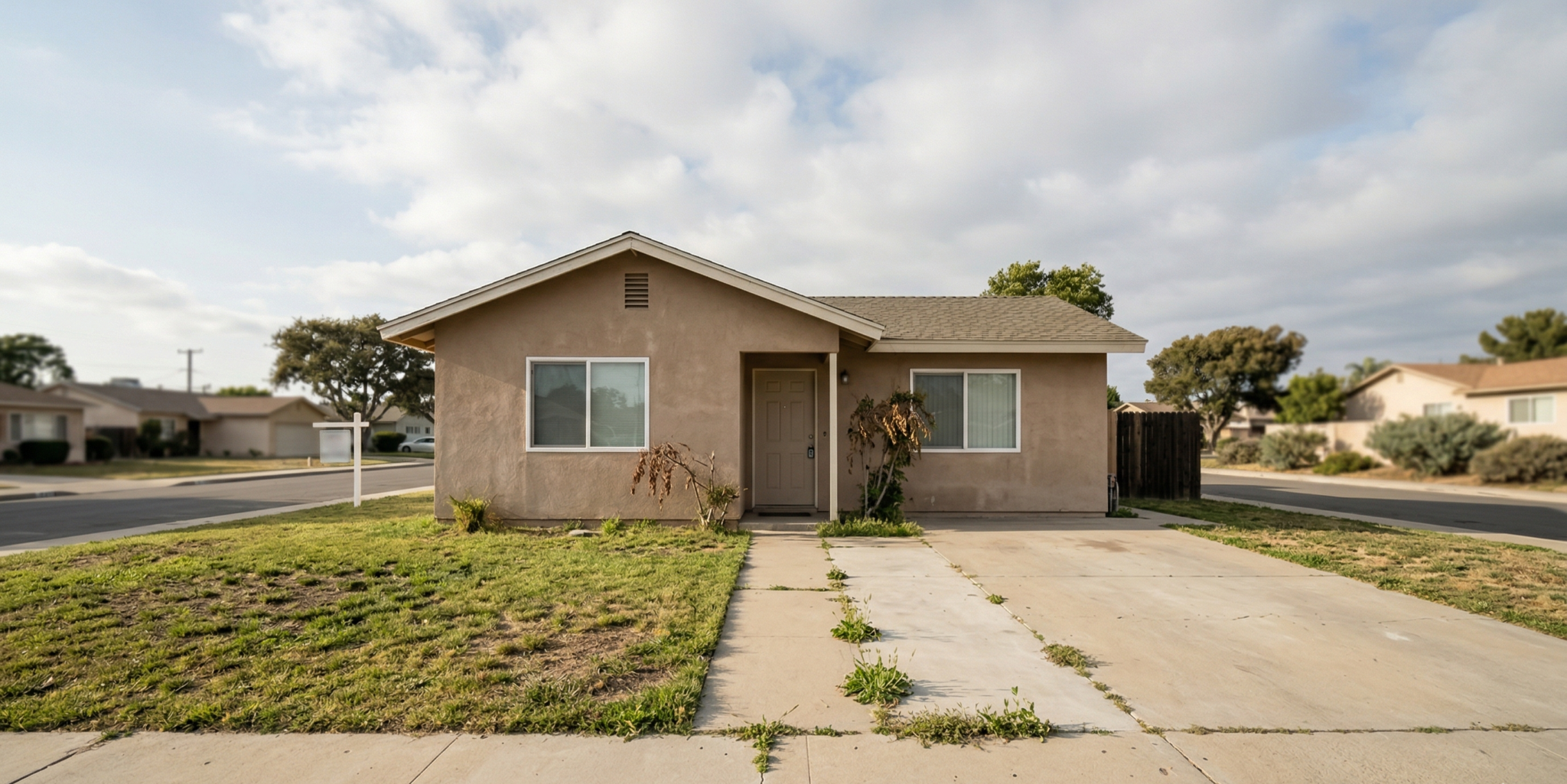
Compliance & The Rent Cap Trap (AB 1482)
California’s Tenant Protection Act (AB 1482) has changed how landlords must view pricing. Since you are capped on how much you can raise rent on an existing tenant (currently capped at 8.8% in San Diego for the 2024-2025 period), some landlords try to start “high.”
This is a mistake. It is far more profitable to start at a “Market Correct” price and retain a high-quality tenant for 4 years than it is to start high, have the tenant leave after 12 months, and incur a $5,500 turnover cost.
The New Security Deposit Limit (AB 12)
As of July 1, 2024, California law limits security deposits to one month’s rent for most residential properties. You no longer have a “2x rent” buffer for bad tenants. Correct pricing is now your primary tool for attracting tenants who don’t damage the property.

San Diego Pre-Listing Pricing Checklist
Market Context
- Review “Closed” comps from the last 60 days (not active Zillow listings).
- Factor in seasonality (Is it Nov-Dec? Price 5-8% lower to avoid a 60-day void).
- Verify the current BAH rates for your zip code (92126, 92131, 92054).
- Audit the parking value (In North Park 92104, an assigned spot is worth $150/mo).
Property Condition
- Professional cleaning completed (including window tracks and baseboards).
- Curb appeal refresh (fresh mulch and power washing).
- “Rent Ready” check: All bulbs, leaks, and smoke detectors verified.
- A/C functionality test (mandatory for 90%+ of San Diego renters).
Financial Audit
- Calculate the 3x income requirement based on your price.
- Verify price allows for an 8.8% increase under AB 1482 next year.
- Factor in the San Diego Rental Unit Business Tax (RUBT).
FAQ
- How long does a San Diego eviction take right now?
Expect 4 to 7 months for a standard contested eviction. This is why attracting the right tenant via correct pricing is so vital. One month of vacancy is cheap compared to an eviction. - What is the rent cap in San Diego for 2025?
Under AB 1482, the cap for San Diego County is currently 8.8% (5% + CPI). This applies to most multifamily and corporate-owned SFRs. - How do I price my rental in Mira Mesa (92126)?
Mira Mesa is extremely competitive. We look at closed comps within a 1-mile radius from the last 30 days. We typically aim to be in the 45th percentile of the market to ensure multiple applications. - Does overpricing affect my insurance?
Directly, no. Indirectly, yes. Extended vacancy increases the risk of vandalism or squatting, which can lead to claims and premium spikes. Some policies actually exclude coverage if the property is vacant for more than 30-60 days. - How do I determine rental comps in San Diego?
Avoid Zillow “Zestimates.” Use a professional property manager to access “RentRange” or “MLS Closed” data. You need to see what properties actually rented for. - What happens if my rental sits vacant for 30 days?
Beyond lost rent, your “Days on Market” counter makes the property look tainted. You will likely have to drop the price below market value to reignite interest. - Should I allow pets to increase the rent?
Yes. 70% of San Diego renters have pets. Allowing pets increases your lead volume by 3x. Charge “Pet Rent” ($50-$100/mo) to increase NOI without overpricing the base rent.
How do military relocations affect pricing?
Military families move on strict PCS timelines. If you price near the BAH rates for your zip code, you can often secure a tenant in under 7 days. - Can I raise rent after 6 months in California?
Generally, no. Under AB 1482 and standard lease terms, you are limited to one increase per year. - What neighborhoods rent the fastest?
Mira Mesa (92126), Clairemont (92117), and Chula Vista (91910) have the lowest average days on market due to their central locations. - Should I offer a “Move-In Special” instead of dropping the rent?
Only as a last resort. Incentives attract “deal seekers.” A lower base rent attracts stable, long-termers. - What is a Rental Business Tax (RUBT)?
In the City of San Diego, landlords must pay a small annual tax per unit. It is an often-overlooked carry cost. - What are the “Big Three” amenities for San Diego?
Air conditioning, in-unit laundry, and dedicated parking. If you lack one, you must price below the neighborhood average.
Next Steps for San Diego Landlords
Overpricing is a vanity metric that hurts your bank account. As a performance-driven property management company, our goal is to protect your cash flow through disciplined, data-backed operations.
Request a Zero-Vacancy Strategy Session
Stop guessing. We will provide a side-by-side comparison of your current vacancy loss vs. our managed performance benchmarks.
Get a Professional Portfolio Performance Review
Is your property underperforming? We provide a deep dive into your NOI, vacancy rates, and risk exposure.