Charming Single-Family Home Just Sold in Ramona – See How We Did It

Table of Contents

$18K
Seller Credits
$800K
Purchase Price
3 / 2
Bed / Bath
14 Days
to Close
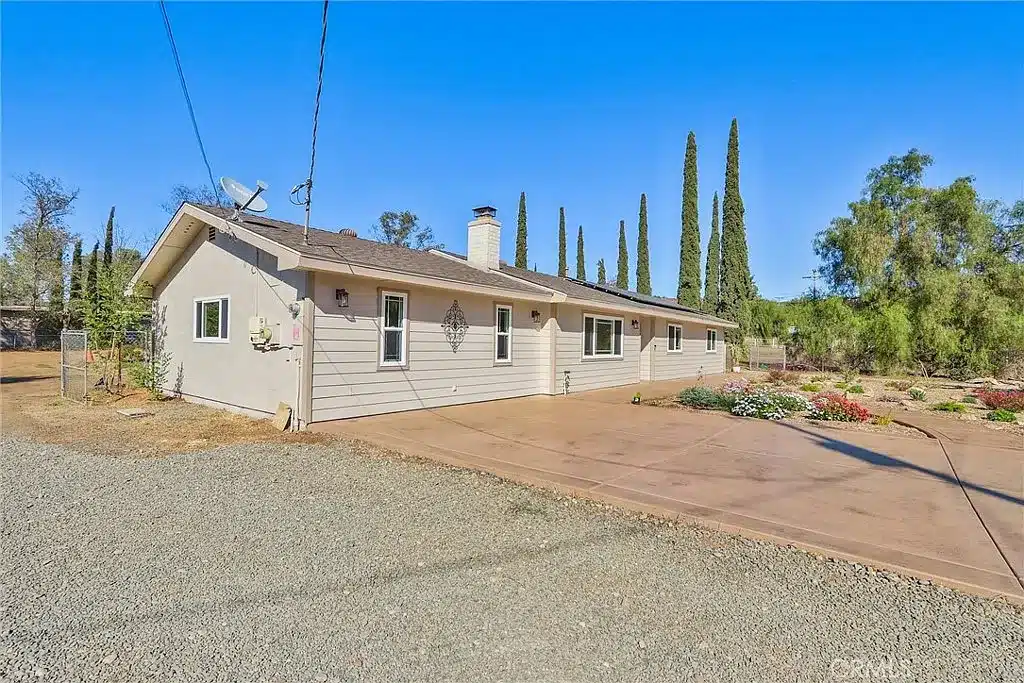
Most buyers leave money on the table during inspection negotiations — or they assume a VA loan puts them at a disadvantage. We operate differently. VA buyers are often underestimated, and that's exactly where we create leverage.

This is the full breakdown of how we navigated the purchase of a remodeled property at 1566 Wilson Rd in Ramona, California. We didn't just win the bid. We executed a 14-day close and negotiated $18,000 in seller credits back to our buyer.

Here's a look at the market context, the strategy, and how we got it done.

Why Most VA Buyers Lose Negotiation Leverage

It's almost never about the buyer's qualifications. It's about how the deal is structured and presented. Three issues come up over and over.

Weak Agent Strategy

Most agents react during escrow. We build leverage before the offer goes out. The average agent submits a boilerplate offer with a 30-to-45-day timeline, asks the seller to pay for termite, and hopes for the best. In a market where sellers want certainty, that approach signals risk. If your agent isn't actively dismantling the VA stigma before the offer is even submitted, you've already lost your leverage.

The Slow Lender Problem

Speed only works if underwriting is already handled. Big retail lenders process loans in 30, 45, sometimes 60 days. When a seller sees a pre-approval from a slow-moving bank, they price in delays. A VA buyer using a slow lender can't use timeline pressure as a tool.

The "Zero Down = Zero Power" Myth

Because VA loans offer 100% financing, many buyers assume they have to bow to every seller demand. That's not true. A fully underwritten VA loan backed by a top-tier lender is as strong as cash to a seller — when the execution is clean.

⚠️

Weak Agent Strategy

Boilerplate offers and slow timelines kill leverage before negotiations start.

🏦

Slow Lender Problem

Retail lenders cause delays that sellers price into the deal — hurting your position.

💡

Zero Down Myth

100% financing does NOT mean zero power — fully underwritten VA offers compete with cash.

Speed as a Negotiation Weapon: The 14-Day Close

We didn't just offer $800,000. We offered a 14-day close. A two-week closing timeline on a VA loan is virtually unheard of.

Why it worked here: The seller wanted a frictionless exit. Once a seller mentally "moves out," every day in escrow is a burden. A 14-day close removes that burden almost instantly. That psychological relief became our primary bargaining chip.

When Speed Doesn't Work

This isn't a silver bullet. If a seller needs to sell their current home first, a 14-day close terrifies them — it leaves them without a place to go. In those cases, leverage comes from offering a standard timeline with a free seller leaseback. The strategy has to match the seller's situation.

How We Engineered the $18,000 Credit

Getting the offer accepted was step one. Pulling $18,000 back to the buyer required precise mid-escrow negotiation.

When the inspection uncovered minor, non-structural items — as it does with even the most polished remodels — we didn't ask the seller to hire contractors. That would have killed our 14-day timeline.

Instead, we put the seller in a simple decision:

🔨

Option A: Fix the Issues

Extend escrow by three or more weeks to coordinate contractors. Delays the close. Adds uncertainty.

🚫

Option B: Cancel the Deal

Put the home back on market. Take the hit of "Back on Market" stigma. Start the entire process over.

Option C: Credit the Buyer

Issue a credit from closing proceeds. Stay on the 14-day timeline. Close and move on.

The seller took Option C. We traded minor cosmetic items for $18,000 in financial value for our buyer.

Where the $18K Went: The Rate Buydown

Closing costs are only part of the equation. We applied a large portion of the $18,000 credit toward a permanent interest rate buydown.

That means the buyer used the seller's money to purchase a lower interest rate for the full 30-year term. The result: lower monthly payments by hundreds of dollars and tens of thousands saved in compound interest over the life of the loan — all without touching the buyer's own cash.

Why This Property Was Low-Risk for a VA Loan

The physical condition of 1566 Wilson Rd wasn't just good for the buyer — it was a strategic reason the 14-day timeline was even possible.

🛡️

MPR Compliance Built In

The VA requires homes to be safe, structurally sound, and sanitary. This home had a newer roof, fully updated plumbing, and new electrical. The usual VA red flags — peeling paint, dry rot, faulty mechanics — were not a factor.

📈

Strong Appraisal Support

A converted garage media room, heated marble floors, paid-off solar, CAT5 cabling, and water-wise landscaping gave solid justification for the $800K valuation.

Condition Risk Eliminated

On a high-speed close, you can't afford to discover foundation issues on day 8. The turnkey condition let us underwrite physical risk in days, not weeks.

Risk Factors and How We Handled Them

Fast, high-value deals carry real risk. Here's what could have gone wrong — and how we prevented it.

RiskHow We Mitigated It
14-day timeline fails Our lender fully underwrote the buyer before we wrote the offer. The file was essentially clear-to-close pending appraisal and title. VA appraisal ordered on Day 1.
Termite / Section 1 delays We requested a copy of a recent pest inspection upfront — before entering escrow — to rule out structural pest issues.
Seller remorse on $18K credit We framed the credit as the exact mathematical cost of keeping the 14-day timeline intact. Not a penalty — a business decision.
VA appraisal comes in low We ran comps beforehand, packaged them with the property's upgrades, and delivered the data to the appraiser proactively. The appraisal came in at value.

VA Buyer Negotiation Checklist

This is the system we use to build leverage for VA buyers. Eighteen steps, three phases.

Phase 1 — Pre-Offer Strategy
  • Get fully underwritten (not just pre-approved) by a lender experienced in sub-21-day VA closes
  • Analyze days on market to identify seller motivation and leverage points
  • Pull property history to check for flipped status or back-on-market history
  • Direct agent-to-agent contact to uncover the seller's primary motivation
  • Prepare a proactive comp package for the VA appraiser
  • Confirm the property appears to meet VA Minimum Property Requirements
Phase 2 — Writing the Offer
  • Shorten inspection contingencies to 5–7 days to signal high intent
  • Offer an aggressive but realistic closing timeline (14–21 days)
  • Include a sound escalation clause if competing against multiple offers
  • Request Section 1 termite clearance upfront in contract language
  • Write a fact-based cover letter explaining the strength of fully underwritten financing
Phase 3 — Inspection and Escrow Execution
  • Order the VA appraisal on Day 1 — no exceptions
  • Schedule the home inspection within 48 hours of acceptance
  • Review the inspection report for structural, safety, or major mechanical defects only
  • Request seller credits instead of physical repairs to protect the timeline
  • Apply seller credits toward an interest rate buydown when possible
  • Monitor the VA appraisal portal daily to catch any Tidewater notifications early
  • Clear all lender conditions 3 days before closing

This Works for Investors Too

The same strategy applies to small multifamily (2–4 units) and light commercial acquisitions. Aggressive timelines combined with seller credits can fund immediate renovations, cover reserves, or buy down commercial debt to improve year-one cash flow. Whether you're a veteran buying a primary residence or an investor acquiring a fourplex, the mechanics — speed, certainty, and strategic concessions — stay the same.

🏘️

2–4 Unit Properties

Same VA loan benefits apply to duplexes, triplexes, and fourplexes. Use seller credits to cover reserves or upfront repairs.

🏢

Light Commercial

Aggressive close timelines give you negotiation power for credits that improve debt service coverage ratios.

📦

Renovation Funding

Redirect seller credits straight into value-add improvements instead of using your own operating capital.

For More Information

Justin Verdugo

Sales Manager | Realtor

Professional Licenses
DRE#: 02137419
Broker DRE#: 02194966

FAQ

Can you get seller credits with a VA loan?

Yes. VA guidelines allow sellers to contribute up to 4% of the purchase price toward closing costs, prepaid expenses, and even paying off existing buyer obligations. Normal discount points (rate buydowns) don’t count against that 4% cap, which gives buyers significant flexibility.

It depends on the specific neighborhood and the property’s days on market. In hyper-competitive bidding wars on day one, they’re rare. But when you use an aggressive timeline to build leverage, negotiating credits becomes realistic.

The VA requires homes to be safe, structurally sound, and sanitary. Common issues that flag MPR problems include peeling lead-based paint, missing handrails, broken windows, exposed wiring, or active termite infestations.

Historically, VA buyers couldn’t pay for Section 1 termite repairs — the seller was responsible. Recent guideline updates now allow VA buyers to cover these costs if they choose to, adding flexibility to keep deals together.

There’s no legal minimum. The national average is 35–45 days because of slow underwriting at big banks. A well-organized team with a fully underwritten buyer can close in 14–21 days.

Scroll to Top