
For apartment owners and investors in San Diego, turnover isn’t just an operational nuisance - it’s one of the most controllable drains on your returns. The costs come from multiple directions at once: cleaning, repairs, paint, appliances, leasing fees and lost rent all stacking up in a compressed window you can least afford delays. But most owners don’t have full visibility into where the money actually goes until they’re already in the middle of it.
This guide breaks down the full apartment turnover process from move-out to move-in, identifies where costs like to pile up, and walks through helpful strategies to cut back on tenant turnover costs without cutting corners on unit quality. Whether you’re taking care of a handful of units or a bigger portfolio, tightening your turnover operation is one of the highest-value improvements you can make to your bottom line.
Key Takeaways
- Average turnover costs $3,976 per unit, combining lost rent ($1,598), concessions ($1,240), and repairs ($775).
- San Diego’s turnover rate rose to 19.1% in 2024, while per-unit operating costs climbed 36.7% since 2021.
- Following the correct turnover sequence-inspection, cleaning, repairs, then marketing-prevents costly delays and extended vacancies.
- Common overspending includes rushed vendor calls, unnecessary cosmetic upgrades, and delaying marketing until work is fully complete.
- Tracking days vacant, cost-per-turn, renewal rate, and maintenance callbacks helps identify patterns and control long-term costs.
What Unit Turnover Actually Costs San Diego Owners
Most owners think about turnover in terms of the repair bill; it’s understandable. But it’s only one part of the picture. The cost comes from a few layers that add up across every vacancy.
Zego’s 2022 industry data puts the average turnover cost at $3,976 per unit. That breaks down into lost rent ($1,598), concessions like move-in specials or free parking ($1,240), and repairs or unit prep ($775). None of the categories is small on its own, and they all hit at the same time.
| Cost Category | Average Amount |
|---|---|
| Lost Rent | $1,598 |
| Concessions | $1,240 |
| Repairs & Unit Prep | $775 |
| Total | $3,976 |
Then there’s the vacancy window to consider. RealPage found that at the end of 2024, the average unit sat empty for 34.4 days before a new tenant moved in. Back in 2020, that number was closer to 30 days. Those extra four days add roughly $275 in lost income per unit on their own.
That’s not a dramatic jump. But it’s moving in the wrong direction. And it’s worth mentioning that these are national averages - San Diego’s rental market has its own dynamics that can push vacancy windows in either direction depending on the season and the neighborhood.
Take the $3,976 figure and multiply it by the number of turnovers your portfolio sees in a year. Ten turnovers puts you close to $40,000. Twenty puts you near $80,000. For a mid-size building, that’s a line item - not a rounding error.
The concessions category is worth a look too. When a unit sits vacant, owners sometimes sweeten the deal to draw a tenant faster. That money is easy to treat as a marketing expense. But it belongs in the turnover column - it’s a direct result of the gap between one lease ending and the next one starting.
This full cost picture is the foundation for everything else covered here. If you want to go deeper on the operational side, the property operations center covers these processes in more detail.
San Diego’s Turnover Rate Is Climbing - Here’s Why It Matters
San Diego County’s renter turnover rate reached 19.1% in 2024, up from 17.1% in 2022 according to First Tuesday Journal. That two-point jump might not sound like much. But across a mid-size portfolio it can add up to a few extra units turning over each year, and each one of those units carries the costs outlined in the previous section.
The frequency of turnover isn’t the only thing changing - the cost per turn is rising too. The National Apartment Association found that per-unit operating costs in San Diego rose 9.6% in 2024 alone and have climbed 36.7% since 2021. Owners are seeing more turnovers and paying more for each one at the same time.
That combination is what makes the current environment worth close attention. Turnover is not a new problem. But the financial difference between a well-managed turn and a poorly managed one is wider than it used to be.
Part of what’s driving costs up is San Diego’s labor market for skilled trades. Painters, flooring crews, and licensed contractors in this region command higher rates than in most of California’s inland markets. Material costs have stayed elevated since supply chain disruptions earlier in the decade. Owners here don’t have the same margin for inefficiency that they may have had a few years ago.
Rent levels in San Diego also create pressure. Because rents are high, the revenue loss from even a short vacancy period is steeper than in lower-cost markets. A unit sitting empty for three weeks in San Diego represents real money - not a minor inconvenience.
It’s worth comparing your own numbers to the county average. If your portfolio is turning over at 25% or higher, that gap tells you something worth investigating - pricing, maintenance responsiveness, or lease renewal habits. If you’re running well below 19%, that’s an actual benefit worth protecting.
The county average is a helpful reference point - not a target. Some turnover is natural and even healthy. Long-term tenants at below-market rents can create their own financial drag. You want to know what’s behind your own rate so you can make well-educated decisions about where to focus.
What happens after a tenant leaves is where most of the cost is either controlled or lost; it’s where the process itself comes in.
The Apartment Turnover Process From Move-Out to Move-In
Every turnover follows the same basic sequence, and the order of steps matters more than most owners expect. When steps get skipped or done out of sequence, vacancy windows stretch well past the San Diego average. That lost rent piles up fast.
It starts with the move-out inspection - this should happen as soon as the tenant hands over keys, best with the tenant present so there’s no dispute later about the unit’s condition. Document everything with photos and written notes before anyone touches the unit.
Security deposit reconciliation comes next. Calculate what, if anything, to deduct for damages past normal wear and tear, then send the itemized statement to the former tenant within 21 days as California law requires. Getting this step done early keeps you legally protected and lets you move forward without it hanging over the process.
Once the inspection is documented and the deposit is handled, the physical work begins. Professional cleaning comes first - before any repairs or paint - so contractors aren’t working around a dirty unit and you can see the full scope of what needs to be fixed. After cleaning, look at what repairs are needed, schedule vendors, and repaint where necessary.
Appliance checks are easy to push to the end. But it’s better to run them during the repair phase. A broken dishwasher or a stove with a faulty burner found on move-in day gives you a bad first impression and may push back your lease start date.
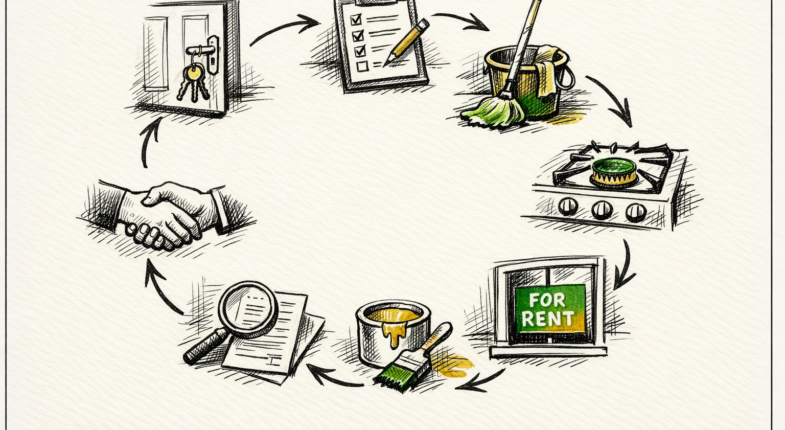
Marketing the unit shouldn’t wait until the work is finished. You can list the unit with latest photos while repairs are still underway, as long as you’re honest about the available date - this lets you start screening applicants in parallel with the final prep work, which is one of the most helpful ways to shorten your vacancy window.
Applicant screening covers credit, rental history, income verification, and references. San Diego has tenant screening laws under local and state fair housing law, so it’s worth having a steady, documented process before accepting applications. Once you’ve selected a tenant, move into lease signing and collect the security deposit and first month’s rent before handing over keys.
That full sequence - inspection, deposit reconciliation, cleaning, repairs, appliance checks, marketing, screening, and lease signing - is the operational foundation of every turnover. The operations guide breaks each step down in more detail.
Where Owners Overspend During a Unit Turnover
Unit turnovers are one of the most predictable costs in rental property management, yet a few spending patterns show up again and again - and most of them are preventable.
The first is rushed vendor calls. When a unit sits empty and the pressure is on, it’s easy to call whoever is available instead of whoever is affordable. Emergency or short-notice scheduling usually carries a price premium - and those extra charges can quietly inflate a turnover budget without anyone finding out until after the invoice arrives.
Another place owners overspend is on cosmetic upgrades that don’t change what the unit can rent for. New cabinet hardware, trendy paint colors, or a bathroom refresh might look great. But if the rental market in that neighborhood doesn’t support a higher rate, that spend doesn’t come back to you. The goal of a turnover is to restore the unit to a rentable condition - not to renovate it.
Related to that is over-scoping repairs - it’s worth getting a second opinion before approving a full replacement when a repair will do. Scope creep during a turnover is a budget drain, and that’s also the case when decisions get made in a hurry.

Delayed marketing is another cost that’s easy to miss because it doesn’t show up on a vendor invoice. Some owners wait until the work is finished to list a unit. But you can start marketing during the final stretch of repairs. Every extra day of vacancy is lost rent.
There’s also a less talked-about factor: maintenance staff turnover. According to the National Apartment Association, onsite maintenance technicians turn over at a rate of 39.2% annually. When you lose an experienced tech, you lose institutional knowledge about the property - and you lose speed. A new person takes longer to work through a unit - and that slows down your whole timeline.
A helpful exercise is to pull your last three turnovers and look at where the timeline slipped. Ask who made the call at each stage and if the work was scoped before or after a vendor walked the unit. That audit tends to surface patterns you wouldn’t see otherwise.
Most overspend during a turnover isn’t the result of one big mistake - it builds through a series of small decisions made under time pressure, which is what makes it worth looking at closely.
Strategies That Actually Reduce Tenant Turnover Costs
The best place to start is before the tenant even moves out. A pre-move-out inspection - done two to four weeks before the lease ends - lets you walk the unit with the tenant and flag anything that needs to be addressed. This gives tenants a chance to fix small things themselves and gives you a head start on scheduling vendors before the unit goes vacant.
That head start matters more than most owners know. Having your painter, cleaner, and any repair trades lined up while the tenant is still in place means work can start the day after move-out instead of the day you finally get on the phone. Fewer vacant days between turns translates directly to less lost rent.
If you have multiple units turning around the same time, try to batch them. Vendors will sometimes give you better pricing when they can move from one unit to the next in the same building, and you spend less time coordinating schedules. Even two or three units turned together matters for small portfolio owners.

Scope creep is one of the quieter ways costs get out of hand. If you don’t have a written scope-of-work template, every turn can become a fresh negotiation and work tends to expand. An easy checklist that covers your standard paint, clean, carpet, and repair expectations gives vendors a fixed target and gives you a steady baseline to compare costs against over time.
Keeping Good Tenants in Place
The cheapest turnover is the one that never happens. Lease renewal incentives don’t have to be elaborate - a small rent discount for early renewal, a fresh coat of paint, or a carpet cleaning can be enough to keep a reliable tenant from shopping around. The cost of a renewal incentive is usually less than the cost of a full turn.
It’s helpful to reach out early. Contact tenants about renewal intentions at least 60 to 90 days before the lease ends so you have time to respond if they do leave. That window also gives you more flexibility to negotiate terms instead of scrambling to fill a vacancy.
When you put these pieces together - early inspections, pre-scheduled vendors, standardized scopes, and proactive renewal conversations - the results show up in predictable ways. Your vacancy periods get shorter, your vendor relationships get more stable, and your per-turn costs become much easier to forecast from one cycle to the next.
How to Evaluate Your Turnover Performance Over Time
Putting processes in place is one thing. But learning whether they’re working is another. The only way to tell the difference between a bad quarter and a pattern is to track your numbers over time.
There are four numbers worth watching closely. The first is your average days vacant per unit, which tells you how long you’re losing rent between tenants. The second is your cost-per-turn, which is the total you spend on cleaning, repairs, and prep for each vacancy. Your renewal rate shows what percentage of tenants stay, and your maintenance callback rate after move-in flags work that wasn’t done right the first time.
None of these numbers mean much on their own. But with six months or a year of data, patterns start to show up. You might see that vacancies in certain months take longer to fill, or that units with shorter lease terms exit early. You might find that one vendor’s work gets called back more than others. These are the types of things that are impossible to see without a record to look back on.

If you don’t have a turnover log, it’s worth starting one now - even a basic spreadsheet works fine. For each unit turnover, track the move-out date, the move-in date, the total cost, and any maintenance items flagged after the new tenant settled in; it’s enough to build helpful data over time.
The goal isn’t to hit a perfect number - it’s to give yourself a baseline so you can tell when something changes and why.
San Diego’s rental market has enough seasonal movement that a simple log will start revealing helpful patterns within the first year. You may find that certain floor plans turn over more, or that tenants who signed in spring stay longer than the ones who signed in fall. That information helps you make better decisions about pricing, lease terms, and where to put your maintenance budget.
Controlling turnover costs is a standard management habit - not something you fix once and walk away from. The owners who keep their costs down over the long run aren’t necessarily doing anything dramatic - they’re paying attention to the right numbers and adjusting when the data points to a problem.
Tighter Turns, Healthier Returns
The market conditions pushing turnover costs higher - rising labor rates, longer lead times on materials, and a competitive rental environment that raises resident expectations - aren’t going away. But those same conditions make the difference between a well-run turnover process and a reactive one wider and more expensive. The process, the execution, and the tracking behind it all compound over time, in either direction.

A basic next step is to pull the costs from your last two or three turnovers and compare them against your latest renewal rate. If the numbers don’t line up in a way that makes sense, that’s usually where the conversation about process improvement starts. The Operations Guide for San Diego Rental Properties covers vendor coordination and cost benchmarks in more detail if you want a framework to work from.
FAQs
What is the average cost of apartment unit turnover?
According to Zego’s 2022 industry data, the average turnover cost is $3,976 per unit, broken down into lost rent ($1,598), concessions ($1,240), and repairs and unit prep ($775).
What is San Diego’s current apartment turnover rate?
San Diego County’s renter turnover rate reached 19.1% in 2024, up from 17.1% in 2022, meaning more units are turning over while per-unit operating costs have also risen 36.7% since 2021.
What is the correct sequence for apartment turnover?
The correct order is: move-out inspection, security deposit reconciliation, professional cleaning, repairs, appliance checks, marketing, applicant screening, and lease signing. Following this sequence prevents delays and reduces extended vacancy periods.
How can landlords reduce costs during unit turnover?
Key strategies include pre-scheduling vendors before move-out, batching multiple unit turnovers together, using standardized scope-of-work templates, starting marketing before repairs are complete, and conducting pre-move-out inspections two to four weeks early.
What metrics should landlords track for turnover performance?
Track average days vacant per unit, cost-per-turn, lease renewal rate, and maintenance callback rate after move-in. Monitoring these figures over time reveals patterns that help control long-term turnover costs.
Ready to Talk About Your Multifamily Property?
Palm Tree Properties helps San Diego owners with reporting, maintenance, vendor oversight, and day-to-day management. Schedule a free consultation and see how we can support your investment.
Schedule a Free Consultation