
That assumption isn’t wrong. But it does skip over something that matters. Multifamily vs. single-family property management isn’t just a difference in scale - it’s a difference in kind. The day-to-day responsibilities, the tenant process, the maintenance structure, the financial tracking, and even the way you communicate with residents all change in ways that catch owners off guard. What worked well for a house in Chula Vista or a condo in Mission Valley doesn’t automatically translate to taking care of a six-unit building in El Cajon.
This isn’t an argument for one type of investment over the other. Single-family rentals have advantages, and so do small multifamily properties. San Diego’s housing market supports both, and plenty of experienced landlords hold a combination of each. The goal here is to give you an honest look at how apartment management vs. single family rental management actually differs in practice - so if you’re weighing a move into multifamily, or trying to choose how to structure oversight for a portfolio you already own, you’re working with an accurate picture of what each one means.
Key Takeaways
- Multifamily properties yield 6-10% ROI versus single-family’s ~4.83%, but vacancy hits proportionally harder with fewer units.
- Single-family rentals involve simpler operations; multifamily generates significantly more maintenance calls, lease tracking, and tenant communication.
- Management fees run ~8% for single-family and ~6% for larger multifamily, but extra charges often apply beyond the base rate.
- Multifamily properties with five-plus units require commercial loans, costing 0.25-0.375% more in interest than single-family financing.
- California’s AB 1482 rent control and just-cause eviction laws apply differently depending on property type, age, and unit count.
How Income and Returns Actually Compare Between Property Types
Single-family rentals in San Diego average around 4.83% gross yield. Multifamily properties land in the 6% to 10% ROI range depending on the asset. That gap matters, and it’s worth understanding what drives it.
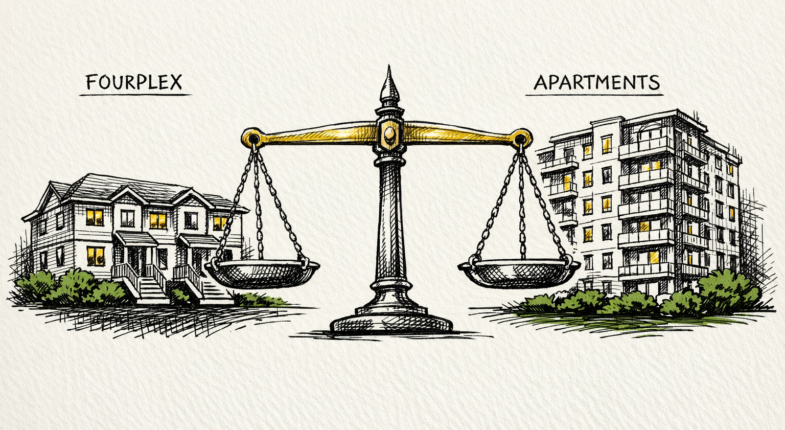
The core reason multifamily pulls ahead on returns is unit count. More units means more rent coming in each month and less exposure to any single vacancy. If a tenant leaves a fourplex, you’re down 25% of your income temporarily. If a tenant leaves your single-family home, you’re at zero until someone new moves in.
Multifamily also showed a 128 basis point appreciation benefit over single-family according to Trepp data; it’s not a small difference over a long hold period, and it goes well with how lenders and investors value multifamily assets based on income performance instead of neighborhood comps alone.
Single-family rentals don’t deliver those numbers. But they draw a different tenant profile. Families and long-term renters who treat the home as their own stay longer and turn over less frequently. Lower turnover cuts back on costs in ways that raw yield numbers don’t always capture.
| Metric | Single-Family | Multifamily |
|---|---|---|
| Average Gross Yield | ~4.83% | 6%-10% |
| Vacancy Impact | 100% income loss | Partial income loss |
| Appreciation Driver | Market comps | Income performance |
| Tenant Turnover | Generally lower | Varies by unit mix |
A higher return on paper doesn’t automatically translate to a better outcome for every owner. Capital reserves, management bandwidth, and financing structure all shape what a property delivers in practice.
What Day-to-Day Operations Look Like for Each Property Type
The financial picture only tells part of the story. How you actually spend your time taking care of a property depends quite a bit on what you own.
With a single-family rental, the operational load is pretty contained. You have one tenant relationship to manage, one lease to track, and one set of maintenance requests to respond to. When something breaks, you call one person to fix it and move on. The coordination is straightforward, and most owners are able to manage it without a formal system in place - at least in the early stages.
Multifamily is a very different situation. Every unit can add more communication, another lease renewal date to track, and another resident with their own needs and expectations. A four-unit building might not sound like much. But it can generate four times the maintenance calls, four separate rent collection follow-ups, and four sets of move-in and move-out logistics in the same year. If you don’t have a reliable system to track this, things start to slip.
Vacancy is another area where the two property types behave differently in practice. According to Rental Beast Q4 2024 data, single-family homes in San Diego average about 19 days on market compared to 23 days for multifamily units. That gap matters because a vacant unit in a small multifamily building hits harder proportionally - losing rent on one of four units is a 25% revenue drop for that period.
A single-family home also tends to feel more personal to prospective tenants. They want to tour the space, ask questions, and sometimes negotiate small details. With multifamily, you’re running a higher volume of showings and applications, which takes more time to screen and process.
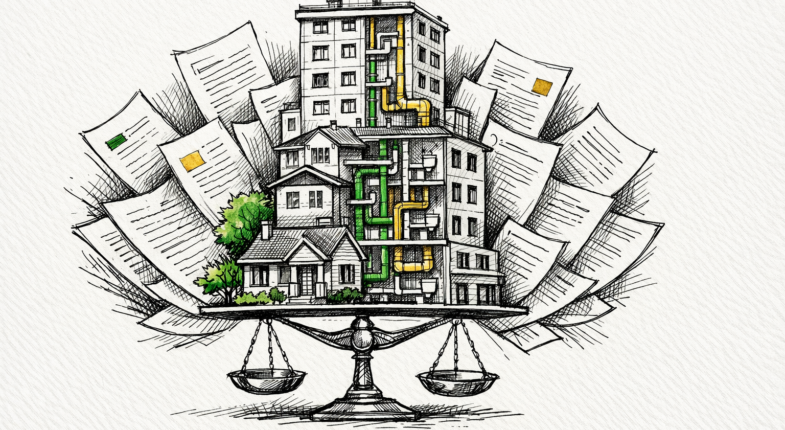
Maintenance coordination is where multifamily owners feel the most friction. Shared systems like roofing, plumbing, and common area maintenance affect multiple residents at once, so a single problem can quickly turn into multiple conversations to manage.
Management Fees, Staffing, and What San Diego Owners Actually Pay
Fee structures in San Diego tend to follow the size of the property. Single-family homes and smaller residential rentals usually land around 8% of monthly rent. Larger multifamily buildings with five or more units come in closer to 6%, because the volume of units makes the work more efficient for a management company to manage.
That percentage difference is easy to understand. But the question is what the fee actually covers. Most base fees include rent collection, tenant communication, and coordination of maintenance. Leasing fees, vacancy marketing, lease renewals, and eviction support are frequently billed separately, so the headline rate doesn’t tell the full story.
It’s helpful to think in terms of total annual cost instead of just the monthly percentage.
For multifamily properties, on-site staffing can become a conversation worth having at around 50 units or more. A live-in manager or part-time on-site coordinator can cut back on response times and manage day-to-day needs without routing everything through a third party. San Diego labor costs are on the higher end, so owners need to weigh what that staffing arrangement saves versus what it costs to run.
Smaller multifamily properties, say a fourplex or an eight-unit building, don’t need on-site staff. An off-site management company works well with those, as long as the contract is structured in line with the work involved.
Contracts are where owners should spend some time before they sign. Watch for how maintenance markups are handled, what triggers extra fees, and how the agreement handles early termination. Some contracts are flexible and fair, and some lock you in without much recourse if the relationship is not working. The fee percentage is the starting point for what professional management will actually cost you in San Diego.
Financing Differences and How Loan Type Shapes Your Strategy
How you finance a property has a direct effect on what you can afford for it. That includes management, maintenance, and future improvements - so it makes sense to know the basics before you go too deep into operations.
Single-family rentals in San Diego can usually be financed with conventional loans at standard residential rates. Multifamily properties with five or more units move into commercial lending territory, and that comes with a rate premium. Lenders usually charge between 0.25% and 0.375% more in interest for these loans compared to single-family financing. On a property in San Diego’s price range, that difference can add up each month.
The underwriting process is different too. For single-family loans, lenders focus heavily on your personal income and credit profile. For multifamily, they look more at the property’s income history and expected rent rolls - it means your approval and your loan terms are tied closely to how well the property performs, not just how strong your finances are.
That matters for cash flow planning. A multifamily property with higher borrowing costs needs stronger rent income to stay profitable after debt service. Owners who go in with thin margins can find themselves with little room to manage vacancies or unexpected repairs without it affecting the bottom line.

Multifamily assets in commercial lending can also be refinanced based on increased property value from rent growth, which gives owners a path to pull equity out as the portfolio matures. Single-family rentals can do this too, but the numbers tend to be smaller and the process is more tied to the wider residential market.
If you’re looking to scale your portfolio over time, your loan structure shapes how easy that can become. Commercial multifamily loans sometimes include limitations on early payoff or portfolio transfers that residential loans don’t have.
Local Rules, Rent Control, and San Diego Compliance Gaps to Know
California’s AB 1482 puts a cap on annual rent increases for residential properties. But it doesn’t apply to everyone. Single-family homes owned by private landlords are usually exempt, as long as tenants get written notice of that exemption. Multifamily buildings older than 15 years are usually covered, which means rent increases are capped at 5% plus local CPI each year.
San Diego also has its own tenant protection laws that sit on top of state law. That layering is where owners get into hot water - not because the laws are hidden, but because they apply differently depending on your property type, your unit count, and even when your building was constructed.
Just-cause eviction laws are an example of this. Under AB 1482, landlords covered by the law can’t terminate a tenancy without a valid legal reason after the first 12 months. For a single-family owner, this might not apply at all. For a multifamily owner with an older building, it almost certainly does.
Notice requirements also get more demanding at scale. With one rental home, you’re tracking one lease, one tenant, and one set of deadlines. With a 10-unit building, every notice - for entry, rent changes, or lease termination - has to be handled correctly across every unit. How much notice is required to enter a rental is one of those details that trips up owners more often than it should.
Habitability standards are another area where the compliance workload grows with unit count. A single repair in a single-family home is easy. In a multifamily building, shared systems like plumbing, HVAC, and electrical mean one problem can affect multiple units and trigger disclosure or repair timelines under California law.
None of it makes multifamily the wrong path - it does mean the administrative side of ownership is heavier, and learning about the laws for your property type before a complaint is filed is a much better use of your time than learning them after.
Choosing the Right Management Approach for Where You Are Now
San Diego adds its own layer to that choice. Between rent control considerations, local licensing requirements, and a rental market that moves faster, property types demand more than passive ownership. Multifamily raises the stakes on it - more units means more moving parts, and more opportunity to run a tighter, more profitable operation when it’s managed well.
If multifamily is the direction you’re leaning, the right property management partner makes a difference in how that investment performs. Explore our multifamily property management services to see how we help San Diego owners get through the operational side so they can focus on the returns.
FAQs
What is the average gross yield for single-family rentals in San Diego?
Single-family rentals in San Diego average around 4.83% gross yield, compared to 6-10% ROI for multifamily properties.
How does vacancy impact single-family versus multifamily properties?
A vacant single-family home means 100% income loss. In multifamily, vacancy only affects a portion of income, reducing financial exposure.
What do property management fees typically cost in San Diego?
Single-family management fees average around 8% of monthly rent, while larger multifamily properties typically run closer to 6%, though additional charges often apply.
Does AB 1482 rent control apply to single-family homes?
Single-family homes owned by private landlords are usually exempt from AB 1482, provided tenants receive written notice of that exemption.
When do multifamily properties require commercial financing?
Properties with five or more units require commercial loans, which typically carry 0.25-0.375% higher interest rates than standard single-family residential financing.
Ready to Talk About Your Multifamily Property?
Palm Tree Properties helps San Diego owners with reporting, maintenance, vendor oversight, and day-to-day management. Schedule a free consultation and see how we can support your investment.
Schedule a Free Consultation