
Most owners spend the bulk of their due diligence focused on the monthly management fee. That number matters. But it tells you almost nothing about how a company actually operates. The property management agreement - and the questions asked before signing it - shows far more. It will teach you how a company works with maintenance decisions, what financial reporting you can expect, how they respond when things go wrong, and where their incentives are lined up with yours versus where they diverge.
For multifamily owners specifically, the stakes are layered. You are not taking care of a single tenant relationship or one roof - you are overseeing a community of residents, a physical asset with complex systems, and a financial instrument with performance benchmarks. A management agreement that works reasonably well for a single-family rental portfolio may leave gaps when applied to an apartment community with 50, 100, or 200 units.
The questions outlined in this post are designed so you can read past the standard contract language and understand what you are actually agreeing to. Asking the right questions to ask a property management company before signing gives you clarity and the ability to identify red flags before they turn into expensive problems. Knowing what to look for in a property management agreement is not about distrust - it is about making sure that you and your management partner are starting from the same page.
Key Takeaways
- Monthly management fees reveal little; the actual agreement exposes how a company handles maintenance, reporting, and resident relations.
- Maintenance approval thresholds and vendor markup fees can quietly compound into significant costs across multifamily units.
- Vague leasing language like “reasonable efforts” offers no accountability; agreements should specify vacancy timelines and escalation steps.
- Termination clauses, penalty fees, and handover procedures for deposits and records should be clearly defined before signing.
- Reporting schedules and owner portal access should be written into the agreement with specific timelines, not left vague.
What the Agreement Actually Controls at a Multifamily Property
A property management agreement is the document that defines how your asset gets run day to day - it covers leasing authority, maintenance decisions, vendor relationships, rent collection, and how the management company communicates with your residents. In a multifamily context, that scope is large enough that the agreement functions more like an operating manual than a simple service contract.
That distinction matters. A single-family management agreement might cover one tenant, one lease, and a fairly predictable set of responsibilities. A multifamily agreement has to account for multiple units turning over at different times, shared spaces, building-wide maintenance needs, and a much higher volume of resident interactions. There are more moving parts, and the contract has to spell out who handles each one.
Leasing authority is one area worth paying close attention to. The agreement will state how much power the management company has to approve applicants, set rent prices, and execute leases on your behalf. Some agreements give broad authority with minimal owner involvement and others are more collaborative. Neither approach is automatically better. But you’ll need to know which one you’re agreeing to.
Maintenance and vendor relationships are another layer. The agreement should say how maintenance requests get handled, what dollar threshold will require your approval before work gets done, and whether the company uses its own in-house team or outside vendors. If they use preferred vendors, it’s worth finding out whether those relationships have any financial arrangements that benefit the management company.
Rent collection and resident communication policies round out the core of what these agreements govern. The contract will usually address how late fees are handled, what the process looks like for delinquent accounts, and who residents contact when something goes wrong. These details shape the day-to-day experience for your tenants and the financial performance of your property.
Reading this document with that lens - as an operating manual instead of a formality - changes the questions you think to ask. I’ll work through those questions one category at a time.
How to Evaluate Their Leasing and Vacancy Process
Leasing is where most multifamily owners feel the most friction. High turnover, slow lease-ups, and inconsistent tenant screening can quietly eat into your returns before you ever see a pattern. So before signing anything, it pays to ask some pointed questions about how they actually fill units.
Start with marketing. Ask them to talk about where they post listings and how they adjust when a unit isn’t getting traction. A property manager should have a process here - not a vague answer about “getting exposure” across places.
Screening is worth a close look too. Ask what their screening criteria are for multifamily applicants and if those standards are applied the same way across every unit. You also want to know who has final approval on a tenant. Some agreements leave this entirely up to the manager, which may be fine - but you’ll want to know that going in instead of finding out later.
One of the most important things to pin down is what happens when a unit sits vacant for too long. Some agreements don’t set any performance timeline at all. That means a manager could leave a unit empty for 60 or 90 days with no contractual pressure to escalate their strategy. Ask if there’s a defined threshold and what steps they take when that threshold is crossed.

Watch for vague language around vacancy. Phrases like “reasonable efforts to lease” or “market-appropriate timelines” don’t give you much to work with. You want the agreement to spell out what actions they’ll take and when. Understanding the real cost of vacancy makes this conversation much easier to have.
It also helps to ask how they manage lease renewals. In a multifamily property, renewals are just as important as new leases - losing a tenant in unit 4B while you’re still trying to fill unit 2A compounds the problem fast. A manager with a proactive renewal process is a sign that they think about occupancy as an ongoing responsibility - not a one-time job. Long-term tenants often matter more than maximizing rent, and a good manager should understand that tradeoff. In fact, high turnover costs in multifamily housing can significantly erode annual returns when renewal strategies aren’t prioritized.
Maintenance Authority and Vendor Oversight - Know Who’s in Control
Maintenance is where money moves quietly, and a property management agreement can give a manager an interesting amount of spending power if you don’t look closely. One of the first things to ask is what the approval threshold is - meaning, how much can a manager spend on a repair before they have to contact you first? Some agreements set this at $250, others at $1,000 or more. For a single-family rental that might feel manageable. But in multifamily housing with dozens of units, that threshold applies to every single work order.
It piles up fast across a building. Make sure the number in the contract actually aligns with your comfort level and the scale of the property.
Next, ask about the vendors. Some management businesses use third-party contractors with no connection to the business, and others use in-house maintenance teams or vendors they have a financial relationship with. Neither setup is automatically a problem. But you do want to know who’s doing the work and why they were chosen.
The bigger question is whether the manager marks up vendor invoices. A markup of 10-20% on top of what vendors charge is a common practice, and it’s the thing that gets written into agreements in vague language instead of spelled out plainly. You might see something like “an administrative fee on maintenance services” without a percentage attached. Ask directly what that means in dollar terms and request that any markup be stated as a fixed percentage in the contract.

In a multifamily context this matters more than you might like to know. A 15% markup on a handful of repairs each month across 30 or 40 units is a real cost over a year. A manager charging this is not necessarily wrong. But you’ll need to know about it before you sign - not after you’ve reviewed six months of invoices. Understanding how much maintenance to budget for your rental can help you set realistic expectations going in.
Ask for a sample maintenance report and a list of preferred vendors too. How a manager works with this part of the job tells you quite a bit about how they’ll manage everything else.
Lease Enforcement, Evictions, and Resident Relations Policies
How a property manager works with lease violations and late rent can have a direct result on your income and your legal standing as an owner - this part of the agreement tends to be loosely written, so it pays to read it and ask pointed questions before you sign.
Start with late fees. Find out what the policy is, who sets the fee amount, and if it lines up with your local landlord-tenant laws. Some managers apply fees automatically and others give tenants a grace period first. You want to know what that process looks like.
Evictions are worth a separate conversation. Ask who starts the eviction process and at what point that choice gets made. You should also find out if you’ll have to approve it first or if the manager can move forward without your sign-off. For owners with multifamily properties, this matters quite a bit - enforcement situations come up more and vague language in the agreement can leave you exposed. It helps to understand how California eviction laws actually work before those conversations happen.

Documentation is another thing to pin down. Ask how lease violations get recorded and what the escalation process looks like from a first warning through to formal action. A well-run operation will have a steady process for this and should be able to explain it to you plainly. Clear lease agreements make that escalation path much easier to follow and defend.
One thing worth raising is when the manager’s internal policies don’t line up with local law. Landlord-tenant laws change and they can vary from one jurisdiction to the next. If a management company applies its own standard playbook without accounting for local laws, that can put you in a tough position as the property owner. Ask directly how they stay current with local requirements and who takes responsibility if a policy turns out to be non-compliant. How property managers reduce legal risk is something every owner should understand before signing an agreement.
Resident relations also fall into this space. Find out how the manager works with complaints between tenants or standard disputes with a resident. You don’t want to find out after the fact that a situation was mishandled or that you were kept in the dark about something that affected your property. A manager with solid landlord-tenant relationship strategies will handle these situations with a lot more consistency.
Termination Clauses and What Happens If Things Go Wrong
Most owners spend quite a bit of time looking over what a management company will do for them and very little time thinking about how they’ll get out of the relationship if it stops working; it’s worth reviewing before you sign anything.
The first thing to ask is how long the contract term is and what notice you’ll have to give to terminate it. Some agreements run for a full year with a 60 or 90-day notice period, which means you could be stuck in a bad situation for months before you can make a move; it’s a long time to wait if performance has broken down on a multifamily portfolio.
Early termination penalties are another thing to look at closely. Some businesses charge a flat fee and others charge the equivalent of a few months of management fees if you end the contract before the term is up. Ask what the penalty is and under what circumstances it gets waived - just to give you an example, if the company is the one failing to meet its obligations.
The end of a management relationship also means moving parts that owners don’t always think to ask about. What happens to existing leases? Who holds the security deposits and how are they transferred? Will you get access to all tenant files, maintenance records, and payment history? These aren’t small details - they directly affect how you hand things off to a new manager or take over yourself.
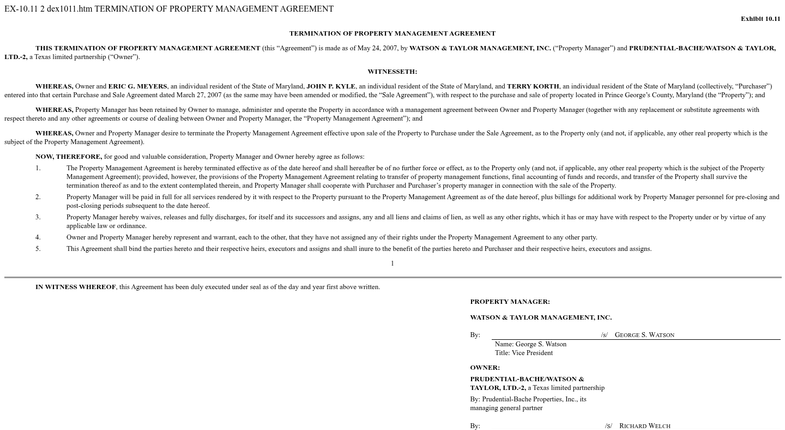
A poorly written termination clause can create financial consequences for owners who want to move on. You want language that outlines timelines for the handover of funds and documents, and that puts a hard deadline on how long the transition period lasts. If the agreement is vague about any of this, ask for language to be added before you sign.
You want to know what leaving looks like on day one so you’re not working it out under pressure later.
Reporting, Communication, and Owner Access to Your Own Data
You need to know how and when your property manager will share financial information with you. Ask directly how you’ll receive statements and what those statements include. Monthly reporting is standard. But the detail level can vary quite a bit from one company to the next.
If you own multifamily property, this matters even more. Net operating income and occupancy rates are the numbers you use to make decisions - about refinancing, selling, or expanding. An agreement that leaves reporting timelines vague can quietly cut you off from the data you’ll need to run your investment well.
Find out if the management company gives you a portal to access your own data in real time. Some places let you log in and pull financials, maintenance histories, and lease statuses whenever you want. Others send a monthly PDF and call it done. Both strategies have tradeoffs. But you’ll need to know what you’re signing up for before you commit. Owner portal access and resources can make a real difference in how connected you stay to your investment.

It’s also worth asking who your point of contact will be. Some firms assign a dedicated manager to your account and others route everything through a general inbox. Knowing this first saves frustration later when something time-sensitive comes up. How quickly your manager responds is something worth understanding before you sign anything.
Read the reporting section of any agreement. If it uses language like “periodic updates” or “as requested” without spelling out a schedule, that’s worth pushing back on. Vague language around reporting is not a small detail you can sort out later - it’s a sign of how that company works with accountability.
Ask for the reporting schedule to be written into the agreement itself with timelines. You have every right to know when your statements will arrive, what they will contain, and how to get answers if something looks wrong. A property manager who is comfortable putting those commitments in writing is showing you something that matters about how they work.
Sign Smart - Your Agreement Is the Foundation, Not a Formality
Approach the agreement review as a negotiation, not a formality. A professional management company should expect well-educated questions and be willing to explain or adjust terms that don’t align with your preferences as an owner. If a company resists basic questions or presents the contract as an absolute take-it-or-leave-it on every point, that resistance tells you something important before you have committed to anything.

If you are currently looking at management options or thinking about a switch, explore what the switching process looks like and what to look for in a management partner that can meet the standard your portfolio deserves.
FAQs
What does a property management agreement actually control?
A property management agreement governs leasing authority, maintenance decisions, vendor relationships, rent collection, and resident communication. In multifamily properties, it functions more like an operating manual than a simple service contract.
What maintenance approval questions should I ask before signing?
Ask what the spending threshold is before manager approval is required, whether vendors are third-party or in-house, and if the company marks up vendor invoices. Markup fees can compound significantly across multiple units.
What should termination clauses include in my agreement?
Termination clauses should specify contract length, required notice periods, early termination penalties, and handover procedures for security deposits, tenant files, and maintenance records. Vague language here can create costly problems.
How should reporting be structured in a management agreement?
Reporting schedules, statement formats, and owner portal access should be written into the agreement with specific timelines. Vague language like “periodic updates” offers no accountability and should be pushed back on before signing.
What vacancy performance standards should the contract specify?
The agreement should define a maximum vacancy timeline and outline escalation steps if that threshold is crossed. Vague language like “reasonable efforts to lease” provides no measurable accountability for your property manager.
Ready to Talk About Your Multifamily Property?
Palm Tree Properties helps San Diego owners with reporting, maintenance, vendor oversight, and day-to-day management. Schedule a free consultation and see how we can support your investment.
Schedule a Free Consultation