
Switching property management companies can feel like a bigger undertaking than it actually is. The fear of disruption, of something falling through the cracks during the handoff, of tenants caught in the middle - it’s enough to make owners stay put longer than they should. But here’s something that gets ignored: roughly one in three owners who partner with a new management company have already been through a transition before - this isn’t some rare process reserved for legal teams and endless time - it’s something owners get through successfully all the time.
What matters is learning about what to expect and having a path forward to make the move. A well-organized property management transition checklist isn’t just a nice-to-have - it’s what keeps things running for your tenants, your finances, and your security during the switchover.
I’ll talk about how to switch property management companies, from recognizing the right time to make a change, to handling leases and security deposits, to finding a new team that’s actually built to serve your investment the way it deserves.
Key Takeaways
- Recurring problems like poor communication, unexplained fees, and high vacancy rates signal it’s time to switch management companies.
- Review your contract carefully for notice periods, termination fees, and auto-renewal clauses before giving notice to anyone.
- A successful transition requires collecting all leases, security deposits, keys, maintenance records, and vendor contracts from your outgoing manager.
- Notify tenants two to four weeks before the switch, clearly stating the new manager’s contact details and updated payment instructions.
- When vetting replacements, ask about their onboarding process, fee structure, termination terms, and request references from similarly sized properties.
Signs It’s Time to Switch Property Management Companies
Most owners don’t wake up one day and make a change- it’s usually a slow build - a maintenance request that went nowhere, a month with no leasing updates, a fee on your statement that no one warned you about. At some point, you start thinking if this is how property management works, or if something is actually wrong.
Something is wrong when the same problems keep coming back. A single missed call or a delayed repair is worth a conversation. But when poor communication is the norm and your tenants are frustrated month after month, that’s a very different situation.
Vacancy rates are one of the clearest tells. If your units are sitting empty longer than the local market would explain, it’s fair to ask what your management company is doing to fill them. A good manager will have an answer. A bad one will have excuses.
Surprise fees are another pattern to watch for. Some charges are legitimate and spelled out in your contract. But fees that appear with no explanation can point to a billing process that isn’t being managed carefully. You should always know what you’re paying for.
It also helps to separate frustration from evidence. Ask yourself if your problems are about one bad month or a pattern that stretches back a few months. If you’ve already raised these problems and nothing changed, that tells you something important about how much weight your feedback carries. Knowing the property management red flags to watch for can help you evaluate whether what you’re experiencing is a fixable lapse or something more systemic.
Switching isn’t always the answer. Sometimes a direct conversation with your manager’s supervisor can fix a lapse in service. But if you’ve had that conversation and things stayed the same, or if the relationship has broken down, it’s time to start looking at your options. Understanding what makes a property management agreement fair can give you a clearer sense of what you’re entitled to expect.
The goal here isn’t to talk you into anything- it’s so you can trust what you’ve already been finding.
How to Read Your Current Contract Before You Give Notice
Before you contact anyone or start comparing new management businesses, pull out your existing contract and read it. What you find there will shape your entire timeline.
The first thing to look for is the notice period. Most property management contracts require 30 to 90 days of written notice to terminate. If you give notice too early without checking this, you could end up paying two management businesses at the same time for a period of overlap. That gets expensive fast.
Early termination clauses are the next thing to check. Some contracts let you leave before the end of the term, but with a fee attached. That fee can run anywhere from $300 to $500 or more depending on the contract- it’s worth learning what you’d owe before making any moves, so you can factor it into your choice. If you’re weighing the real numbers, it also helps to understand why low fees don’t always mean lower costs in the long run.
Auto-renewal language is easy to miss because it’s not necessarily in an obvious place. Some contracts automatically roll into a new term - sometimes a full year - if you don’t give notice within a window. Missing that window can lock you in for another cycle even if you were ready to leave.

Notice format matters too. Many contracts state that termination notice has to be in writing and sent by a method like certified mail or email with confirmation. A phone call or casual email might not count, which could delay your exit or create a dispute.
If you’re not sure how to read the contract language, a local real estate attorney can review it quickly and flag anything that needs attention- it’s a small cost compared to the fees you could face if the transition doesn’t go smoothly. Taking care of this step gives you a foundation to move forward on your own terms.
Your Property Management Transition Checklist
Once you know what your contract allows, the next move is to get organized. A smooth handoff depends on making sure every document, key, and dollar is accounted for before your old management company walks out the door.
Think of this less as a confrontation and more as a structured transfer of responsibility. You want to collect everything a new manager would need to run your property from day one.
What to collect from your outgoing manager
Start with the paperwork. You want all signed lease agreements, tenant contact details, and a full record of any open maintenance requests. Vendor contracts - things like landscaping or pest control agreements - need to move too. Some of them run on auto-renewal and a new manager won’t know to cancel or continue them.

Security deposits deserve extra attention here. These funds are legally owed to your tenants - not your management company, so you need a full accounting of every deposit held and written confirmation that the money has been transferred. Mishandled deposits are one of the more common legal problems in a transition, so treat them as a priority instead of an afterthought.
Physical access matters just as much as online records. Collect all property keys, mailbox keys, parking passes, gate codes, and any lock credentials. A new manager can’t do their job without these, and tracking them down after the fact is a time sink.
How long does the handoff take?
Industry groups like REBNY set a standard expectation that all materials be transferred within 60 days; it’s a basic window to plan around when you set your transition date. Put the move deadline in writing with your outgoing manager so there’s no ambiguity later.
| What to Transfer | Why It Matters |
|---|---|
| Signed lease agreements | New manager needs lease terms to enforce rules and track renewals |
| Tenant contact information | Needed to communicate the management change directly |
| Security deposit records | Legal liability stays with you if these aren’t properly transferred |
| Maintenance history | Helps the new manager pick up on open or recurring repairs |
| Vendor contracts | Prevents lapsed services or surprise auto-renewals |
| Keys and access codes | New manager can’t operate the property without physical access |
How to Notify Tenants During a Management Switch
Tenants don’t need to know everything about your transition. But they do need the basics fast: who they pay rent to, who they call for a repair, and when the change takes effect. Leaving any of these out will create uncertainty fast.
Not knowing who’s in charge of your home is unsettling, and tenants who feel left in the dark get frustrated fast. A simple, direct letter goes a long way toward keeping that trust.
Send written notice before the switch happens - not after. Two to four weeks of lead time is a basic target. The letter should name the new management company, list contact details, and spell out where and how to send rent payments going forward. If anything is changing about how rent gets paid - a new portal, a new mailing address - it needs to be front and center.

New payment instructions deserve extra attention because this is where problems like to start. A tenant who sends rent to the wrong place through no fault of their own creates a headache for everyone. Be direct and repeat the payment information more than once if you need to. Understanding what late fees you can legally charge California tenants is also worth reviewing before the transition is complete.
Most new management companies will also send their own introduction letter to tenants, which is worth coordinating in advance. You want letters to say the same thing and to arrive close together so there’s no gap where tenants feel uncertain. Ask your incoming manager what their standard tenant onboarding process looks like and make sure it lines up with your transition timeline.
The goal is for tenants to feel like nothing fell through the cracks on their end - even if quite a bit is happening silently on yours.
What to Look for When Choosing Your Next Property Management Company
Choosing a replacement property management company is about finding the right fit for your property type, your tenant base, and the way you like to communicate with your manager.
Start by asking candidates how they manage the onboarding period specifically - something owners forget to ask about, and it matters more than you’d expect. A good company will have a structured process to get familiar with your leases, your maintenance history, and any open work orders before they officially take over. If a candidate is vague about this step, that’s worth noting.
Fee structures can be hard to compare across companies because they are not necessarily set up the same way. One company might charge a flat monthly percentage while another layers in fees for leasing, renewals, and maintenance coordination. Ask each candidate to walk you through a sample monthly statement so you can see what you’d be paying for - knowing what owners should expect from monthly reports helps you ask the right questions.

On the contract side, look at the termination clause. You want to know how much notice you’d need to give if things don’t work out and whether there are any exit fees. Some contracts also have exclusivity clauses around maintenance vendors, which can limit your options.
The National Apartment Association publishes resources that can help owners review and vet property management candidates - it’s a helpful starting point if you want a framework that goes beyond word-of-mouth recommendations.
Beyond the paperwork, trust your read on how responsive they are during the sales process itself. A company that takes three days to return a call when they’re trying to win your business is giving you helpful information about what comes next.
References matter too. Ask specifically for references from owners with a similar number of units to yours. The experience at a 200-unit complex doesn’t always translate to a 12-unit building.
Making the Switch Without Losing Sleep (or Rent Checks)
The steps covered here work best when treated as a sequence instead of a checklist to rush through, and each piece - the paperwork, the tenant notices, the onboarding coordination - sets the next one up for success. Give yourself the time to do it right, and the new management relationship starts on solid footing from day one.
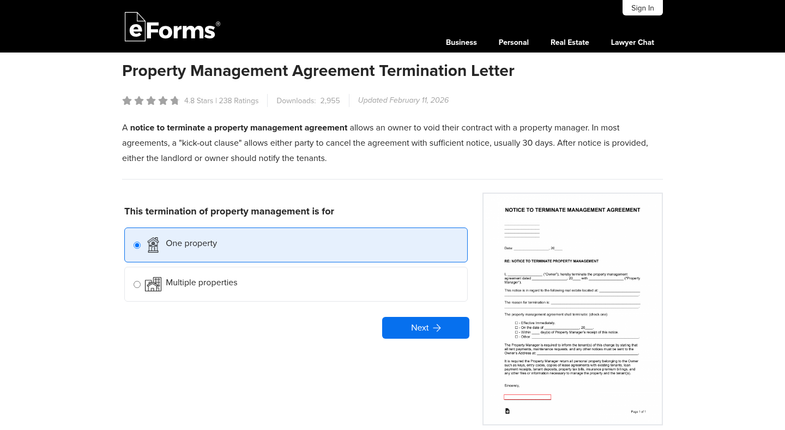
If you’re ready to move forward, the most helpful next step is to pull out your latest management agreement and review the termination terms. That single document will tell you when you can make your move and what notice you’ll have to give. From there, you’ll have everything you need to start the conversation with a new company - and get your property in better hands.
FAQs
When should I switch property management companies?
Switch when recurring problems like poor communication, unexplained fees, or high vacancy rates persist after you’ve raised concerns and nothing has changed.
How much notice is required to terminate a management contract?
Most property management contracts require 30 to 90 days of written notice. Always review your contract first to avoid paying two companies simultaneously during overlap.
What documents should I collect during the transition?
Collect signed leases, tenant contact info, security deposit records, maintenance history, vendor contracts, and all keys and access codes before your outgoing manager leaves.
How should I notify tenants about the management change?
Send written notice two to four weeks before the switch, clearly stating the new manager’s contact details and updated rent payment instructions.
What should I ask a new property management company?
Ask about their onboarding process, full fee structure, termination terms, and request references from owners with a similar number of units to yours.
Ready to Talk About Your Multifamily Property?
Palm Tree Properties helps San Diego owners with reporting, maintenance, vendor oversight, and day-to-day management. Schedule a free consultation and see how we can support your investment.
Schedule a Free Consultation