
Owning a home in San Diego comes with incredible perks beyond the city’s coastal beauty and vibrant lifestyle. One of those perks is the potential for significant tax savings. As year-end approaches, now is an ideal time to evaluate how your homeownership can positively impact your 2026 tax return. This post explores key federal and California tax deductions and credits available to San Diego homeowners, along with practical tips to help you maximize your savings before December 31.
Disclaimer
The information provided in this blog is for general informational purposes only and should not be considered financial or tax advice. Palm Tree Properties is not a CPA, financial advisor, or tax consultant. Please consult a licensed CPA or tax professional to discuss how these points apply to your specific situation.
Key Takeaways
- San Diego homeowners can deduct mortgage interest on loans up to $750,000 (post-2017) or $1 million (pre-2017), requiring itemized deductions.
- Proposition 13 caps annual property tax assessment increases at 2%, protecting 91% of San Diego properties and saving over $300 million collectively.
- Federal energy credits remain available in 2026: 30% for clean energy systems (no cap) and 30% for home improvements (capped at $1,200-$2,000 annually).
- Homeowners selling their primary residence may exclude up to $250,000 (single) or $500,000 (married) in capital gains if residency requirements are met.
- Only self-employed individuals qualify for the home office deduction; W-2 remote employees cannot claim it under current federal law.
San Diego’s Property Tax Landscape in 2026
San Diego’s 2024 gross assessed value reached a record $768 billion - a 5.58% increase over the prior year - according to the San Diego County Assessor’s Office. That strong equity growth is good news for homeowners building long-term wealth, but it also makes understanding your available deductions and exemptions more important than ever. Roughly 91% of properties (approximately 929,563) are protected by Proposition 13, which limits annual assessed value increases to 2% regardless of market conditions.
The Mortgage Interest Deduction
For most San Diego homeowners, the mortgage interest deduction remains one of the largest available federal tax deductions. If your loan originated after December 15, 2017, you can deduct interest on mortgage debt up to $750,000. Loans originated on or before that date retain the higher cap of $1 million. Given San Diego’s median home prices, many buyers are carrying mortgages close to or at these thresholds, making this deduction especially valuable here. To take advantage, you must itemize deductions on your federal return rather than claiming the standard deduction. Rental property owners may also want to review the rental property deduction list for San Diego landlords for additional write-offs beyond mortgage interest. IRS Publication 936 provides the full rules for home mortgage interest deductions.
State and Local Tax (SALT) Deduction
The federal deduction for state and local taxes - which includes California income tax and San Diego property taxes - remains capped at $10,000 per year ($5,000 if married filing separately) for tax year 2026. Despite considerable Congressional debate over the past two years about raising this cap, the $10,000 limit was preserved under current federal law. California’s relatively high property tax assessments and state income tax rates mean many San Diego homeowners hit this ceiling quickly, so it’s worth tracking all eligible state and local taxes paid throughout the year to ensure you’re capturing the full allowable deduction.

The Homeowner’s Exemption
California’s Homeowner’s Exemption reduces the assessed value of your primary residence by $7,000, generating roughly $70 in annual property tax savings. While modest, it’s essentially free money - and surprisingly easy to miss. The filing deadline with the San Diego County Assessor is February 15 for the full benefit. Homeowners who file between February 16 and December 10 receive 80% of the exemption (approximately $56). If you purchased a home recently and haven’t yet filed, this should be on your immediate to-do list.
Disabled Veterans’ Exemption
Qualifying disabled veterans in San Diego may be eligible for a significant reduction in their property’s assessed value. For the 2024 tax roll (the most recently published figures from the San Diego County Assessor), the Basic Exemption stands at $169,769 and the Low-Income Exemption reaches $254,656, with a household income limit of $76,235. These figures are adjusted periodically, so eligible veterans should confirm current amounts directly with the San Diego County Assessor’s Office. The 2024 assessment roll delivered over $300 million in combined property tax savings for homeowners, disabled veterans, and small businesses - a meaningful reminder that these exemptions are worth pursuing. If you own a rental property in San Diego, it’s also worth understanding whether forming an LLC makes sense for your overall ownership structure.
Medical Expense Deduction
Homeowners who have made medically necessary modifications to their property - such as wheelchair ramps, widened doorways, or accessible bathrooms - may be able to deduct a portion of those costs as a medical expense. For tax year 2026, the IRS allows a deduction for qualifying medical expenses that exceed 7.5% of your adjusted gross income (AGI). The deductible amount for home modifications is generally limited to costs that exceed any increase in the property’s fair market value. As with all itemized deductions, this only benefits you if your total itemized deductions exceed the standard deduction.
Energy Tax Credits in 2026
This is an area where the rules have changed meaningfully. Under legislation enacted in 2025, two key residential energy credits were modified, and some previously available credits expired at the end of 2025. Here is what remains available for tax year 2026:
Residential Clean Energy Credit
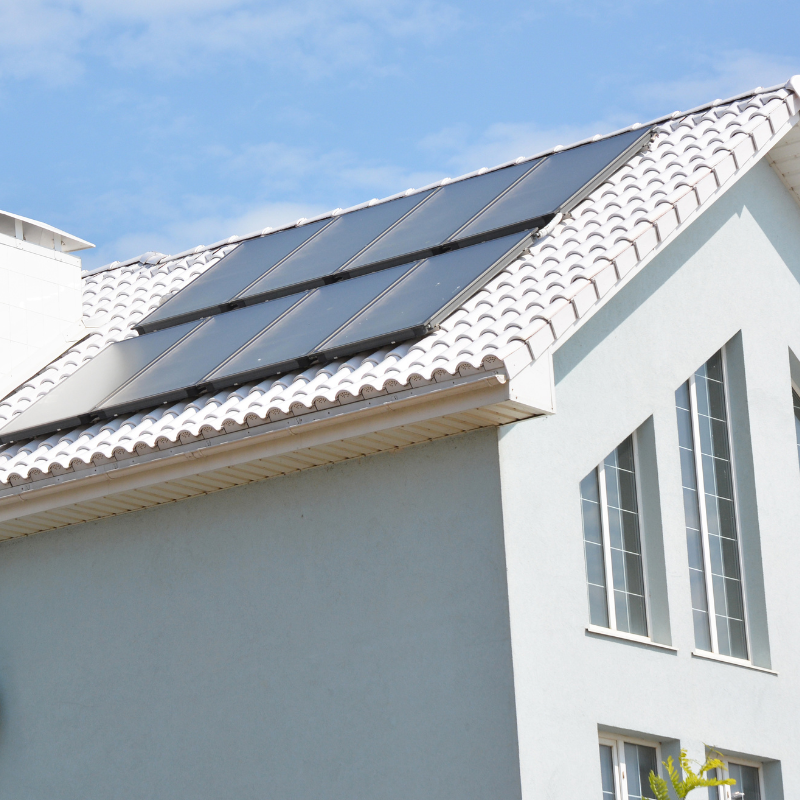
The Residential Clean Energy Credit allows homeowners to claim 30% of the cost of qualifying clean energy systems installed in their primary or secondary residence. Eligible systems include solar electric panels, solar water heaters, small wind turbines, geothermal heat pumps, battery storage systems (with a capacity of at least 3 kWh), and fuel cells. San Diego’s year-round sunshine makes solar installations particularly cost-effective, and this credit directly reduces your federal tax liability dollar-for-dollar. Consult the IRS Residential Clean Energy Credit page to confirm which systems qualify for 2026.
Energy Efficient Home Improvement Credit
The Energy Efficient Home Improvement Credit covers 30% of the cost of eligible upgrades, subject to annual per-category caps. Qualifying improvements include exterior doors, windows and skylights, insulation, heat pumps, heat pump water heaters, central air conditioners, biomass stoves, and electrical panel upgrades needed to support qualifying systems. The annual credit limit is $1,200 for most improvements combined, with a separate $2,000 cap specifically for heat pumps and biomass stoves. Unlike the Residential Clean Energy Credit, this credit has annual limits rather than a lifetime cap, meaning you can claim it again in future tax years for new improvements. Note that some upgrades that qualified in prior years may no longer meet current efficiency standards - always verify eligibility before purchasing.
Important: Several energy incentives that were available in 2024 and 2025 were not extended beyond December 31, 2025 under 2025 federal legislation. If you are referencing older blog posts or tax guides, confirm that any credit you intend to claim is still in effect for 2026 before filing. A qualified tax professional or the IRS website should be your primary reference when distinguishing eligible improvements from routine expenses.
Capital Gains Exclusion When You Sell
If you’re considering selling your San Diego home, don’t overlook the federal capital gains exclusion. Homeowners who have owned and used their home as a primary residence for at least two of the five years prior to the sale can exclude up to $250,000 in capital gains from federal income tax (or $500,000 for married couples filing jointly). Given how significantly San Diego home values have appreciated over the past decade, this exclusion can represent a substantial tax benefit. Partial exclusions may be available if you don’t meet the full two-year requirement due to a job change, health reasons, or other qualifying circumstance.
Home Office Deduction
San Diego’s growing base of remote workers, freelancers, and self-employed professionals may qualify for the home office deduction. To be eligible, you must use a dedicated space in your home regularly and exclusively for business. The simplified method allows a deduction of $5 per square foot of your home office space (up to 300 square feet), while the regular method calculates the actual percentage of home expenses attributable to the office. This deduction is only available to self-employed individuals - employees who work from home are not eligible under current federal law.
Proposition 13 and Reassessment Protections
California’s Proposition 13 caps property tax rates at 1% of assessed value and limits annual increases to 2%, regardless of market appreciation. For long-term San Diego homeowners, this creates a significant and compounding advantage over time. Additionally, Proposition 19 (effective since February 2021) allows eligible homeowners aged 55 or older, severely disabled homeowners, and wildfire or disaster victims to transfer their existing assessed value to a replacement home anywhere in California - in many cases even if the replacement home is more expensive. If you’re considering downsizing or relocating within the state, understanding Prop 19’s rules could meaningfully affect your tax planning and market timing. Explore San Diego real estate options with Palm Tree Properties if you’re evaluating a move.
Year-End Tax Planning Tips for San Diego Homeowners
- Make your January mortgage payment in December to capture an extra month of deductible interest in tax year 2026.
- Prepay property taxes due in early 2027 before December 31, 2026, if you are not yet hitting the $10,000 SALT cap - though most San Diego homeowners will reach it quickly.
- Complete energy-efficient upgrades before year-end to claim the 2026 credit on your return filed in spring 2027. For a real-world example, see how energy-efficient features added value in this Ramona home sale.
- Gather documentation: mortgage interest statements (Form 1098), property tax bills, receipts for home improvements, and any energy credit certificates from contractors.
- Review whether itemizing beats the standard deduction for your household. Run the numbers with a CPA before assuming one approach is better. Owners holding rentals should also consider how structuring through a trust or LLC affects their overall tax picture.
Tax Benefits for Homeowners in San Diego
Owning a home in San Diego comes with more than just sunshine and equity - it also unlocks a meaningful set of tax advantages that can reduce what you owe each year. Whether you’re a first-time buyer or a long-time homeowner, understanding these benefits before year-end 2026 could make a real difference on your tax bill. From federal deductions on mortgage interest to California-specific property tax protections, here’s what San Diego homeowners should know heading into tax season.
Disclaimer: This article is for general informational purposes only and does not constitute tax or legal advice. Tax laws change frequently. Please consult a qualified tax professional regarding your individual situation.
Proposition 13 and San Diego’s Property Tax Protections
California’s Proposition 13 remains one of the most powerful financial protections available to homeowners in the state. It caps property tax rates at 1% of a property’s assessed value and limits annual increases in that assessed value to no more than 2% - regardless of how much the market rises. According to the San Diego County Assessor’s 2024 tax roll, roughly 91% of properties in the county - over 929,563 in total - benefited from this protection, even as San Diego’s gross assessed value reached a record $768 billion, a 5.58% increase over the prior year. That Prop 13 protection translated to more than $300 million in property tax savings for homeowners, disabled veterans, and small businesses across the county.
Because San Diego home values have risen dramatically over the past decade, Prop 13’s 2% annual cap is especially valuable. A homeowner who bought in 2010 is still being taxed on an assessed value far below current market value - a benefit that compounds every year they stay in the home. The San Diego County Treasurer-Tax Collector provides tools to look up your current assessed value and tax obligations online.
Homeowner’s Exemption
San Diego County homeowners who occupy their property as a primary residence are eligible for the Homeowner’s Exemption, which reduces the assessed value of your home by $7,000 - saving you roughly $70 per year in property taxes. While that may sound modest, it’s automatic in subsequent years once you’ve filed, and every dollar counts. The filing deadline is February 15 for the full exemption. Homeowners who miss that date but file between February 16 and December 10 will receive 80% of the benefit, or approximately $56. You only need to file once as long as you remain in the same home. The San Diego County Assessor’s Office handles all exemption filings and can confirm your current exemption status.
Disabled Veterans Property Tax Exemption
Qualifying disabled veterans in San Diego may be eligible for a significant reduction in their assessed property value. For the 2024 assessment year (applied to the 2024-25 tax bill), the Basic Exemption is $169,769 in assessed value. Veterans who meet income requirements may qualify for the Low-Income Exemption, which exempts $254,656 in assessed value, subject to a household income limit of $76,235. These figures are adjusted periodically, so veterans should confirm the current year’s figures directly with the San Diego County Assessor’s Office when filing.
Mortgage Interest Deduction
For homeowners who itemize deductions on their federal return, the mortgage interest deduction remains one of the most valuable tax breaks available. For loans originated after December 15, 2017, you may deduct interest on up to $750,000 in mortgage debt. If your loan predates that cutoff, the higher $1 million limit still applies. Given that San Diego’s median home price regularly exceeds $800,000, many buyers with newer loans are bumping up against the $750,000 cap - making it worth reviewing carefully with a tax advisor to understand how much of your interest is actually deductible. The IRS provides guidance on the mortgage interest deduction at IRS.gov.
State and Local Tax (SALT) Deduction
The SALT deduction allows itemizing homeowners to deduct state and local property taxes, income taxes, or sales taxes paid during the year. Under the Tax Cuts and Jobs Act of 2017, this deduction was capped at $10,000 per household ($5,000 for married filing separately). As of the time of publication, that $10,000 cap remains in effect for tax year 2026 - legislation to raise or eliminate the cap has been debated in Congress but has not resulted in a confirmed change for 2026 filers. San Diego homeowners, especially those in higher-value properties with substantial property tax bills, should verify the current SALT rules with a tax professional before filing, as this remains an active area of federal tax policy.
Medical Expense Deduction
Homeowners who have made medically necessary modifications to their property - such as installing wheelchair ramps, widening doorways, or adding grab bars - may be able to deduct those costs as medical expenses. For tax year 2026, the IRS allows you to deduct qualified medical expenses that exceed 7.5% of your adjusted gross income (AGI). To qualify, the modification must be primarily for medical care, and any amount that increases your home’s value may need to be subtracted from the deductible total. This deduction only benefits taxpayers who itemize.

Energy Tax Credits for 2026
Federal energy tax credits have undergone significant changes in recent years, and homeowners should be cautious about relying on information from prior tax years. Here is what is confirmed for tax year 2026:
The Residential Clean Energy Credit - which covers solar panels, solar water heaters, battery storage, geothermal heat pumps, small wind turbines, and fuel cells - remains available at 30% of eligible installation costs for 2026. This credit applies to your primary residence and, in most cases, a secondary home as well. There is no dollar cap on this credit for most eligible technologies.
The Energy Efficient Home Improvement Credit (formerly the Nonbusiness Energy Property Credit) also remains in place for 2026 at 30% of eligible costs, but it carries annual caps by category: $600 for most individual improvements (such as windows, skylights, and certain insulation), $150 for home energy audits, and up to $2,000 for heat pumps and biomass stoves and boilers. The overall annual cap for this credit is $3,200. Note that some efficiency products that qualified under prior law may no longer be eligible - confirm specific product eligibility with the manufacturer’s certification or via IRS guidance on energy credits before purchasing.
San Diego’s climate makes solar in particular an excellent investment, and the 30% Residential Clean Energy Credit can substantially offset installation costs. Homeowners who installed systems in 2025 or 2026 should confirm they are using IRS Form 5695 to claim these credits correctly.
Capital Gains Exclusion When You Sell
When the time comes to sell, homeowners may be able to exclude a significant portion of their gain from federal capital gains tax. Single filers can exclude up to $250,000 in profit, and married couples filing jointly can exclude up to $500,000 - provided you have owned and lived in the home as your primary residence for at least two of the five years prior to the sale. Given San Diego’s long-term appreciation trends, many homeowners have built equity that approaches or exceeds these thresholds, making it worth planning ahead before listing a property.
Home Office Deduction
If you are self-employed and use a dedicated portion of your San Diego home exclusively and regularly for business, you may qualify for the home office deduction. This can be calculated using either the simplified method ($5 per square foot, up to 300 square feet) or the regular method based on actual expenses proportionate to the office’s share of the home. Note that employees who work from home - even full-time - are not eligible for this deduction under current federal law.
Frequently Asked Questions
Can I deduct property taxes in San Diego on my federal return?
Yes, if you itemize deductions, you can deduct property taxes paid as part of the SALT deduction - but your total SALT deduction (property tax plus state income or sales tax) is currently capped at $10,000 per household for tax year 2026.
Is the Homeowner’s Exemption the same as Proposition 13?
No. They are separate programs. Prop 13 limits how much your assessed value can increase each year. The Homeowner’s Exemption reduces your assessed value by $7,000 if the property is your primary residence. Both can apply simultaneously.
Do I need to reapply for the Homeowner’s Exemption every year?
No. Once approved, the exemption renews automatically as long as you remain the owner-occupant of the same property. You will need to refile if you move or transfer ownership.
Are energy credits refundable?
No. Both the Residential Clean Energy Credit and the Energy Efficient Home Improvement Credit are nonrefundable - they can reduce your tax liability to zero, but you will not receive a refund for any excess credit amount. Some unused credit from the Residential Clean Energy Credit may be carried forward to future tax years.
What happens to my Prop 13 base year value if I renovate?
Permitted new construction or additions can trigger a partial reassessment limited to the value of the new construction, while the existing structure retains its protected base year value. Cosmetic repairs and maintenance generally do not trigger reassessment.
Where can I get more information about buying or selling in San Diego?
Our team at Palm Tree Properties works with San Diego homeowners every day and can connect you with trusted local professionals. Explore our resources on the San Diego real estate market to learn more.
