
California has some of the most tenant-protective laws in the country, which means the eviction process here is rarely quick or straightforward. From serving the first notice to the moment a sheriff carries out a lockout, the timeline can stretch anywhere from a few weeks to a few months - sometimes longer. How long an eviction takes in California depends heavily on whether the tenant contests the case, the county where your property is located, and how backed up the local courts are at the time you file.
I’ll walk you through the full California eviction process timeline, stage by stage, from serving a notice all the way through the final lockout. Whether you own a duplex in San Diego or a larger apartment building elsewhere in the state, the core process follows the same legal framework. Knowing what comes next at each step won’t make the process painless. But it helps you make better decisions, avoid expensive mistakes, and set realistic expectations for how long eviction takes in California when things go smoothly versus when a tenant pushes back.
One important note before we get into the details: this post is intended to give you an honest overview of the timeline and general process - it’s not legal advice. Because eviction law in California is complex and frequently updated, working with a qualified attorney or an experienced San Diego property management team familiar with local court procedures is strongly recommended before taking any formal action.
Key Takeaways
- California evictions take 35 days minimum uncontested; contested cases can stretch 231 days or longer depending on court backlogs.
- Choosing the wrong notice type or serving it incorrectly can invalidate your case and restart the entire eviction timeline.
- AB 2347 extended tenant response time to 10 business days, adding roughly two weeks to the post-filing timeline.
- Uncontested evictions cost $3,500-$5,000; contested cases run $7,500-$12,000+, with lost rent often being the largest expense.
- Thorough tenant screening upfront costs far less than navigating a contested eviction that can reach five figures.
Why California Evictions Take Longer Than Most Owners Expect
California has some of the strongest tenant protections in the country, and that shapes everything about how evictions work here. The legal process is layered by design, with built-in waiting periods, court schedules, and multiple points where a tenant can respond or push back; it’s not a flaw in the system - it’s intentional. But it does mean the timeline is usually longer than owners plan for.
The shortest possible eviction - one where the tenant doesn’t contest anything and leaves without a fight - still takes around 35 days from start to finish; it’s the floor, not the average. When a tenant responds to the lawsuit or raises any defense, the timeline stretches considerably. Contested cases can run 231 days or more, and some go longer depending on the court’s schedule and the difficulty of the case.
More than 160,000 eviction cases are filed in California each year. That volume puts pressure on the court system, and it means hearing dates can be weeks out even for easy cases. A landlord who files everything correctly on day one still has to wait in line like everyone else.
Each stage of the process has its own timeline that you can’t compress. The notice period has to run its full course before you can file. After you file, the tenant has time to respond before a court date gets set. After a judgment, there’s still a lockout process that runs through the sheriff’s office, which has its own schedule. None of these steps overlap.
Understanding the basic timeline matters more than most owners know. The financial side alone - carrying a unit with no rent coming in and also covering legal costs - adds up over a few months. A rough sense of how long each stage takes helps you plan cash flow instead of scrambling mid-process.
There’s also an emotional side to this. The process can seem slow and frustrating, and that’s also the case when the outcome seems obvious. Knowing that delays are a normal part of the system in California makes them easier to work through and helps you avoid reactive decisions that could hurt your case.
I’ll talk about each stage so none of this feels abstract - what to expect, when to act, and roughly how long to plan for at every step.
The Notice Stage: Choosing the Right Type and Starting the Clock
The eviction process formally begins when you serve a notice to your tenant. Getting this step right is not optional - the wrong notice type sends you back to square one, and that lost time adds up faster when a unit sits occupied without rent coming in.
California law recognizes a few notice types, and each one applies to a different situation. A 3-day notice is for nonpayment of rent or a lease violation. A 30-day notice applies to month-to-month tenants who have lived in the unit for less than one year. If a tenant has lived there for a year or more, a 60-day notice is required instead.
In a multifamily setting, most owners are dealing with long-term tenants, so the 60-day notice comes up most of the time - it’s worth double-checking the lease start date before anything else.
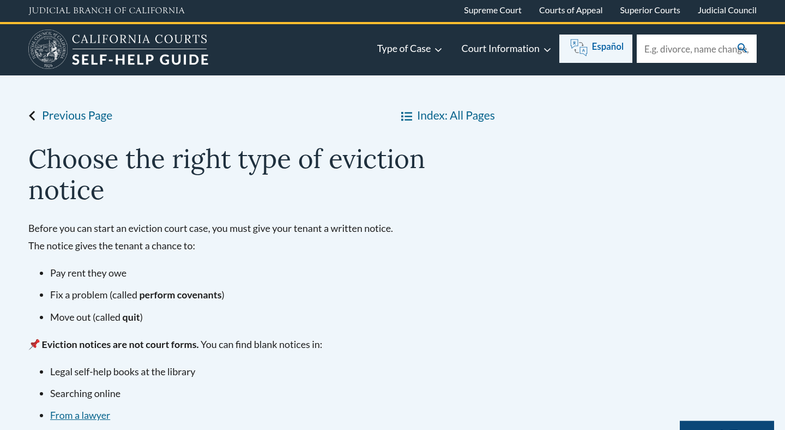
The 3-day notice comes in two forms, and that distinction matters. A 3-day notice to pay or quit gives the tenant a chance to pay the overdue rent and stay. A 3-day notice to quit gives no such option and is used when the lease violation is enough to terminate tenancy outright. Using the wrong version can invalidate your notice entirely.
For just cause evictions under AB 1482, you also need to state the reason for the eviction in the notice itself. Skipping that detail is enough to restart the process from the beginning.
| Notice Type | When It Applies | Tenant Has Option to Cure? |
|---|---|---|
| 3-Day Notice to Pay or Quit | Nonpayment of rent | Yes |
| 3-Day Notice to Quit | Serious lease violations | No |
| 30-Day Notice | Tenancy under one year | No |
| 60-Day Notice | Tenancy of one year or more | No |
Owner move-in evictions deserve a separate mention because SB 567 added stricter rules around them. You now need to have documentation in place before serving the notice, and the owner or qualifying family member has to actually move in within a set timeframe after the tenant leaves. San Diego’s owner move-in eviction rules are worth reviewing closely before you proceed.
Notice service also has legal requirements attached to it. Personal service is the most straightforward method. But substituted service or posting and mailing are allowed under certain conditions. The service method can affect when the notice period officially starts, so it feeds directly into the rest of your timeline.
Filing an Unlawful Detainer and What Happens at the Courthouse
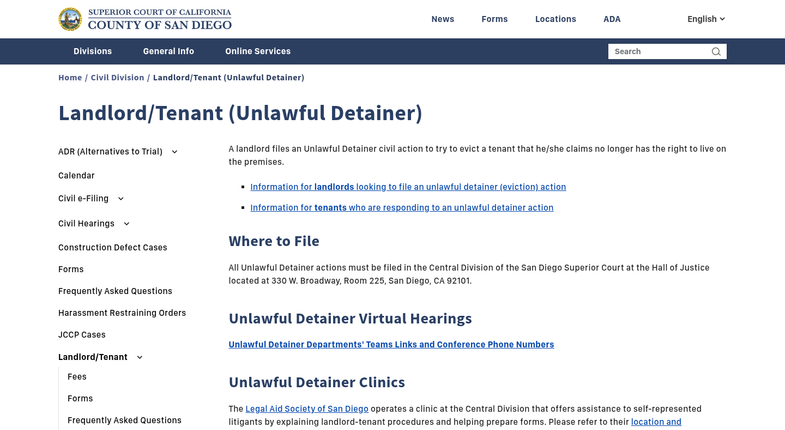
Once the notice period expires without payment or move-out, the next step is to file an unlawful detainer - which is the legal term for an eviction lawsuit in California. You file this with the Superior Court in the county where the property sits, and filing fees usually run between $240 and $450 depending on the amount of rent you’re claiming.
After you file, the court issues a summons and your tenant has to be formally served - not something you can do yourself - it has to be handled by a process server or a person who meets the legal requirements to serve court documents. That service step alone can take a few days.
AB 2347, which took effect in 2024, extended the time a tenant has to respond to an unlawful detainer from 5 business days to 10 business days. That change added roughly two weeks to what was already a tight timeline. An uncontested case that used to wrap up in about four to five weeks now runs closer to six to eight weeks from filing.
That extended response window is now part of the process, so it’s worth factoring it into your financial planning from the start. Every week without rent collected is a cost, and the courthouse timeline is not something you can speed up once the case is filed.

The court doesn’t move on your schedule. Clerks process filings in order, hearing dates get assigned based on availability, and backlogs in busier counties like Los Angeles or San Francisco can stretch things out more. You have very little control over how fast the court moves once your paperwork is in.
What you can control is how clean your filing is when you submit it. Errors in the complaint, wrong dates, or missing documentation can get your case kicked back and restart the clock. Getting the paperwork right the first time protects the time you’ve already invested in the notice stage.
At this point in the process, you’re waiting to see how the tenant responds. That response, or the lack of one, determines what the next few weeks look like.
Contested vs. Uncontested Cases: How Tenant Responses Change Everything
Once the unlawful detainer is filed, the tenant has five business days to respond. What they do next determines how long your case will take - and how much it will cost you.
If the tenant doesn’t file a response, you’re in uncontested territory; it’s the faster path. You can request a default judgment without a full hearing, and total legal costs for uncontested cases land between $3,500 and $5,000. The process moves in weeks instead of months.
When a tenant does file a response, everything changes. The case gets scheduled for a hearing, sides get to present their arguments, and the timeline stretches considerably. Contested evictions in California can cost $7,500 to $12,000 or more, given attorney fees and extra court appearances. The timeline can double or triple compared to an uncontested case.

What Tenants Typically Argue
California tenants have a number of defenses available to them, and courts take these seriously. Some of the most common ones in multifamily cases include claims that the notice was served incorrectly, that the landlord failed to maintain habitable conditions, or that the eviction is in retaliation for a complaint the tenant filed. Tenants in rent-controlled jurisdictions may also argue that there wasn’t a valid legal reason to terminate the tenancy - something worth reviewing in our AB 1482 and rent control compliance guide.
Even a technical error in your notice - a wrong date or an incorrect address - can give a tenant enough to work with in court; it’s a reason to have an attorney review your paperwork before you file.
A case that looks easy from your side might not look that way to a judge. Tenants sometimes raise defenses that seem like a stretch but still need a hearing to resolve. That can add time to the process regardless of the outcome.
| Case Type | Typical Timeline | Estimated Legal Costs |
|---|---|---|
| Uncontested | 3-6 weeks | $3,500-$5,000 |
| Contested | 2-6 months or longer | $7,500-$12,000+ |
Go into every case with the assumption that the tenant may respond. Planning for a contested case and an uncontested one is a much better position to be in than the reverse.
The Hearing, Judgment, and Writ of Possession
Once the case is in front of a judge, both sides get a chance to present their position. The hearing itself is usually short - most unlawful detainer hearings wrap up in under 30 minutes. What matters is if the paperwork is in order and if the owner followed each step of the process correctly.
If the judge rules in the owner’s favor, the court issues a judgment for possession - the legal confirmation that the tenant no longer has the right to stay in the unit. At that point, the owner can request a writ of possession, which is the document that authorizes law enforcement to remove the tenant if they don’t leave on their own.
The writ goes to the county sheriff’s office - not back to the owner. The sheriff posts a notice at the property giving the tenant a final window to vacate - usually five days. If the tenant still hasn’t left after that window closes, the sheriff returns to physically remove them and hand the property back to the owner.
Sheriff Lockout Wait Times
Sheriff lockout timelines can stretch longer than expected. Sheriff’s offices in high-volume counties like Los Angeles can have backlogs that push lockout appointments out by a few weeks. Smaller or less congested counties move faster. But there’s no instant turnaround anywhere in California. That wait period after the judgment can seem like the slowest part of the whole process.

The owner has no control over that schedule. Once the writ is submitted to the sheriff, it’s a waiting game tied entirely to that office’s workload.
What the Judgment Means for the Tenant
An eviction judgment ends the tenancy and follows the tenant on their credit report for as long as seven years - it will make it harder for them to rent elsewhere and can affect their financial record in other ways. That detail doesn’t change the logistics for the owner. But it’s part of what a court judgment actually represents.
From the owner’s side, the judgment may also include money owed for unpaid rent depending on what was included in the filing. Collecting on that is a separate process, and not all judgments result in payment even when the owner wins. The court may rule in your favor. But enforcement of a money judgment is a whole other road. What happens when a tenant stops paying rent covers more of that territory from an operator’s standpoint.
What Evictions Actually Cost Multifamily Owners in California
The filing fee is just the beginning. When you add up legal fees, lost rent, court costs and the time your unit sits empty, the total can look very different from what most owners expect when they start the process.
An uncontested eviction - where the tenant doesn’t push back - usually runs between $3,500 and $5,000. That includes attorney fees and court costs, a month or two of lost rent while the process moves forward - it’s the best-case scenario and even then it’s not cheap.
A contested eviction changes things considerably. If the tenant responds, requests a continuance, or raises legal defenses, you’re more likely looking at $7,500 to $12,000 in total costs. The legal work gets heavier and the timeline stretches, which means more lost rent on top of higher fees.
Complex cases are in a very different category. If a tenant files an appeal or the case involves a subsidized unit with extra legal layers, costs can reach $15,000 to $25,000 or more. These situations are less common. But they do happen and they can take months to resolve.

| Scenario | Estimated Total Cost |
|---|---|
| Uncontested eviction | $3,500 - $5,000 |
| Contested eviction | $7,500 - $12,000 |
| Complex or appealed case | $15,000 - $25,000+ |
Lost rent is usually the biggest line item and it doesn’t get enough attention. Depending on your unit’s rent and how long the process takes, you could lose $6,000 to $10,000 in income before a new tenant moves in.
A screening process - credit checks, income verification, rental history - can add a small amount of cost to your leasing workflow. But that investment looks very small next to a contested eviction that runs five figures.
Multifamily owners in San Diego can find extra local resources and input on the San Diego owner resource page to help with the screening side and the eviction process itself.
The numbers in this section are estimates and cases can vary based on your attorney, your county and the facts involved. Getting a cost estimate from a local eviction attorney early on is a way to plan.
Protecting Your Investment Starts with Knowing the Process
The owners who get through evictions best aren’t necessarily the ones who’ve been through it the most - they’re the ones who have the right help in their corner. An experienced local property management team brings institutional knowledge of California’s just cause requirements, the latest notice period changes, and how San Diego courts manage unlawful detainer filings. That knowledge is worth far more than it costs, and that’s especially true as state housing laws continue to evolve. Understanding California eviction laws is a critical starting point for any owner navigating this process.
Preparation is the best protection. Owners who build eviction timelines into their financial planning, maintain airtight lease documentation, and set up relationships with qualified pros before a problem comes up spend less time and money resolving tenancy problems. You want to be ready if the worst comes - not to expect it. Explore our San Diego owner resources to learn how our team helps multifamily owners stay protected, compliant, and profitable in California’s demanding rental market.
FAQs
How long does a California eviction take?
An uncontested eviction takes around 35 days minimum. Contested cases can stretch 231 days or longer, depending on court backlogs and the complexity of tenant defenses.
What notice types are used in California evictions?
California recognizes 3-day, 30-day, and 60-day notices. The correct type depends on the reason for eviction and how long the tenant has lived in the unit.
What does a California eviction cost landlords?
Uncontested evictions typically cost $3,500-$5,000. Contested cases run $7,500-$12,000 or more, with lost rent often being the single largest expense during the process.
What changed with AB 2347 for eviction filings?
AB 2347 extended the tenant response window from 5 to 10 business days after an unlawful detainer is filed, adding roughly two additional weeks to the eviction timeline.
How does tenant screening reduce eviction risk?
Thorough screening - including credit checks, income verification, and rental history - costs far less than a contested eviction, which can easily reach five figures in total costs.
Ready to Talk About Your Multifamily Property?
Palm Tree Properties helps San Diego owners with reporting, maintenance, vendor oversight, and day-to-day management. Schedule a free consultation and see how we can support your investment.
Schedule a Free Consultation